Gaza's Hunger Crisis: Why 1.4 Million People Still Can't Find Enough Food
Jessica Taylor ·
Listen to this article~4 min
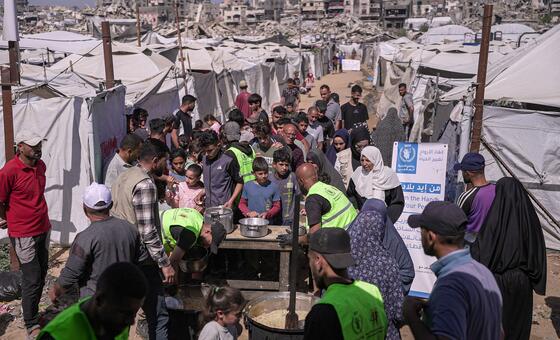
Despite slight improvements, 1.4 million people in Gaza—about two-thirds of the population—still face acute food shortages. New WFP data shows fragile progress that could reverse if external aid is reduced.
The numbers are staggering, and they're hard to wrap your head around. In Gaza, roughly 1.4 million people—about two-thirds of the entire population—are still facing acute food shortages. That's not a small pocket of need; that's the majority of a whole community struggling to put food on the table, day after day.
There's been some progress, sure. The latest report from the World Food Programme (WFP), covering July 1 through July 31, shows a slight improvement in the overall nutrition situation. But here's the thing: that improvement is fragile. It's hanging by a thread, and the thread is external support. If that support gets cut, we could see things spiral in the wrong direction, fast.
### What the Latest Data Actually Shows
The WFP's numbers tell a story of a population that's been pushed to the brink. When you break it down, the picture gets even clearer:
- **1.4 million people** are experiencing acute food insecurity, meaning they skip meals or eat less than they need.
- That's roughly **66% of Gaza's population**, which is an incredibly high proportion by any global standard.
- The slight improvement is real, but it's mostly tied to aid deliveries that could stop at any moment.
This isn't just a statistic about food. It's about families making impossible choices every single day—whether to buy bread or pay for other basics. It's about parents watching their kids go hungry because there's simply nothing left.
### Why the Situation Could Get Worse
Here's what worries analysts like me: the progress we're seeing is not self-sustaining. Gaza's local food production has been devastated, and the territory relies heavily on imports and international aid to feed its people. The WFP report specifically warns that a reduction in external support could undo the modest gains we've seen.
Think of it like this: you've got a leaky bucket, and someone's pouring water in from the top. Right now, the pouring is keeping up with the leaks, but if that faucet gets turned off, the bucket empties out pretty quickly. That's the situation we're facing here.
### The Human Cost Behind the Numbers
It's easy to get lost in the data, but let's be real about what acute food insecurity actually means in practice. We're talking about people who are:
- Surviving on less than 1,500 calories a day, which is well below what most adults need
- Relying on food distributions that may not come regularly
- Facing higher prices for basic staples like wheat and rice, when they're available at all
These aren't abstract concepts. They're the daily reality for millions of people, and the margin for error is basically zero.
### What Needs to Happen Next
If there's a takeaway from this report, it's that the international community can't afford to look away. Sustained funding for humanitarian programs like the WFP's is critical, not just for survival but for any hope of stability in the region.
The report doesn't offer easy answers, and honestly, there aren't any. But it does make one thing crystal clear: the current situation is a tightrope walk, and the safety net below is frayed. Without continued support, the progress we've seen could vanish, leaving 1.4 million people—and likely more—in an even deeper crisis.