Gaza's Farmland Crisis: A Looming Threat?
Klaus Schmidt ·
Listen to this article~4 min
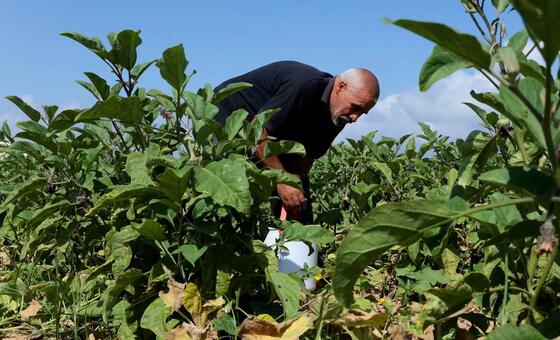
The ongoing conflict in Gaza is making it increasingly difficult for farmers to find safe and usable land for cultivating crops. This critical issue severely impacts local food production and the livelihoods of countless families, exacerbating an already dire humanitarian situation. The shrinking av
You know, when we talk about what's happening in Gaza, our minds often jump to the immediate humanitarian needs, and rightly so. But there's another, quieter crisis unfolding that's just as critical, especially for the long-term well-being of its people. We're talking about the land itself, specifically the farmland.
It's becoming incredibly tough for farmers there to find safe patches of earth to grow their crops, and honestly, it's a heartbreaking situation. Imagine trying to feed your family, your community, when the very ground you depend on is constantly under threat. It's a challenge most of us can barely comprehend, yet it's the daily reality for many in Gaza.
### The Shrinking Green Spaces
Think about it: Gaza is a pretty small place, roughly 141 square miles, which is about twice the size of Washington D.C. Within that limited area, only a fraction of the land is actually arable, meaning it's suitable for farming. And with ongoing conflicts, even that small percentage is dwindling. It's like trying to farm on a postage stamp, and that stamp keeps getting smaller.
Historically, agriculture has been a cornerstone of the Gazan economy. Farmers have cultivated everything from olives and citrus to vegetables and wheat. But now, finding a field that isn't at risk or already damaged is a monumental task. This isn't just about losing a harvest; it's about losing a livelihood, a way of life that has sustained families for generations. You can't just pick up and move your farm somewhere else when your entire territory is so constrained.
### Impact on Food Security
When farmers can't farm, it has a direct and severe impact on food security. We're not just talking about fresh produce becoming scarce; we're talking about a fundamental breakdown in the local food supply chain. Gaza already faces significant challenges in importing food, so local production is vital.
Consider this: if only a tiny fraction of the arable land is usable, say just 3% as some reports suggest, what does that mean for the 2 million people living there? It means increased reliance on aid, higher food prices, and ultimately, a greater risk of malnutrition. It's a domino effect, and the first domino to fall is the farmer's ability to plant their seeds. It's a dire situation that compounds the existing humanitarian crisis.
### Daily Struggles of a Gazan Farmer
What does this look like on the ground? It means farmers are taking immense personal risks just to tend to their fields. They might be working in areas that are close to conflict zones, or dealing with land that has been contaminated or damaged. It's not just about the physical danger; it's also about the psychological toll.
Imagine investing your time, effort, and meager resources into planting a crop, only for it to be destroyed overnight. It's soul-crushing. Equipment is hard to come by, and even harder to repair. Access to water for irrigation is a constant struggle, and the quality of the soil itself is degrading in many areas due to a lack of proper agricultural practices, which are often impossible to implement under current conditions.
* **Limited Access:** Farmers often can't reach their fields due to security restrictions.
* **Damaged Infrastructure:** Irrigation systems, greenhouses, and storage facilities are frequently damaged.
* **Contaminated Land:** Areas can be unsafe due to unexploded ordnance or environmental hazards.
* **Economic Hardship:** Lack of harvest means no income, pushing families further into poverty.
It's a complex web of challenges that makes farming in Gaza one of the toughest jobs on earth. They're not just growing food; they're fighting for survival, for their heritage, and for the future of their community. It's a testament to their resilience, but it's also a stark reminder of the urgent need for stability and support.