Gaza's Farmland Crisis: A Stark Reality
James Moore ·
Listen to this article~4 min
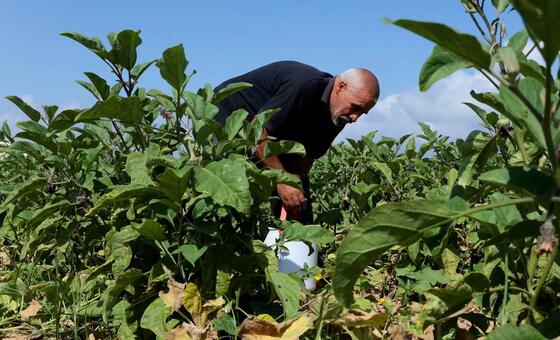
Ongoing conflict in Gaza has severely impacted its agricultural landscape, making it incredibly difficult for farmers to find safe land for crops. Reports indicate that only three percent of arable land remains usable, creating a profound food security crisis and impacting livelihoods. Rebuilding wi
You know, when we talk about what's happening in Gaza, it's easy to get lost in the headlines. But let's zoom in on something really fundamental: food. Specifically, what's happening with the land where food is grown. It's a pretty dire situation, and honestly, it's something that hits you right in the gut.
### The Shrinking Green Space
Right now, with all the ongoing conflict, farmers are having an incredibly tough time. We're talking about a struggle to find any safe patches of land where they can actually plant crops. Imagine trying to feed your family, your community, when the very ground you depend on is either too dangerous to access or simply unusable. It's not just a logistical problem; it's a humanitarian one.
Think about it: Gaza is a small, densely populated area. Every acre, every square foot of arable land is precious. And when that land is compromised, the ripple effect is enormous. It means less local produce, higher dependence on aid, and a constant, gnawing uncertainty for families.
### More Than Just Dirt: A Livelihood Lost
For many in Gaza, farming isn't just a way to get food; it's their entire livelihood. It's generations of knowledge passed down, a connection to the land that runs deep. When fields are destroyed or become inaccessible, it's not just a crop loss; it's a loss of heritage, of income, and of dignity.
We're seeing reports that only a tiny fraction of Gaza's agricultural land remains viable. We're talking about a mere three percent of what was once productive farmland still being usable. That's a staggering figure, isn't it? It means that 97% of the land that used to feed people, provide jobs, and sustain communities is now out of commission. It’s a statistic that really underscores the scale of the crisis.
### The Human Cost of Conflict on Agriculture
It's not just the immediate danger that farmers face. There are long-term consequences too. Soil degradation, contamination, and the destruction of irrigation systems mean that even if the conflict were to end tomorrow, the land wouldn't magically recover overnight. It would take significant investment, time, and effort to restore it to its former productivity.
Consider the practical challenges. Farmers can't just drive a tractor through a war zone. They can't tend to their crops if shelling is a constant threat. And even if they manage to harvest something, getting it to market is another hurdle entirely. Roads might be damaged, checkpoints might cause delays, and the entire supply chain is disrupted.
### Looking Ahead: A Path to Recovery?
So, what does this mean for the future? It means that even when the fighting stops, the struggle for food security will continue. Rebuilding agricultural capacity will be a monumental task, requiring international support, expertise, and resources. It's not just about planting new seeds; it's about rebuilding an entire ecosystem of food production.
Here are some of the critical areas that would need addressing for agricultural recovery:
* **Land Reclamation:** Clearing debris, assessing soil quality, and potentially de-mining areas.
* **Infrastructure Repair:** Rebuilding irrigation systems, wells, and farm buildings.
* **Seed and Tool Provision:** Supplying farmers with the basic necessities to restart their operations.
* **Market Access:** Re-establishing routes and systems for farmers to sell their produce.
* **Technical Support:** Providing training and resources for sustainable farming practices in challenging environments.
It's a complex web of issues, and frankly, it's heartbreaking to think about. The resilience of these farmers is incredible, but they can't do it alone. The global community has a role to play in ensuring that people in Gaza can once again grow their own food and sustain themselves.