Gaza's Farmland Crisis: A Stark Reality Check
Sarah Williams ·
Listen to this article~3 min
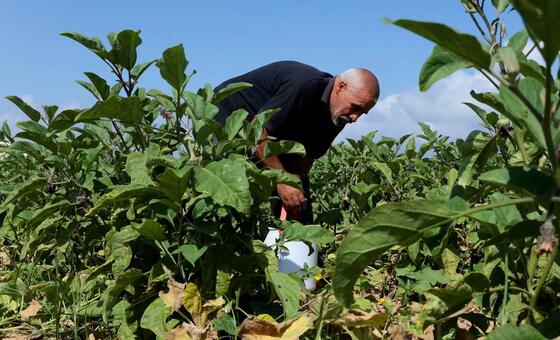
Amidst ongoing conflict in Gaza, farmers are facing immense challenges in finding safe land to cultivate crops. Only a mere three percent of Gaza's arable land remains usable, creating a critical food security issue and threatening the livelihoods of countless families.
It's tough to really grasp the human cost of conflict, isn't it? We often hear about the big picture, but sometimes it's the smaller, everyday struggles that truly hit home. Right now, in Gaza, something incredibly vital is at stake for its people: their ability to grow food. Farmers there are facing an almost impossible situation, scrambling to find any safe patch of land just to plant their crops.
### The Shrinking Green Space
Imagine trying to feed your family when the very ground you depend on is slipping away. That's the reality for many. The ongoing conflict has drastically reduced the amount of usable agricultural land. We're talking about a devastating loss, with only a tiny fraction – a mere 3% – of Gaza's arable land remaining suitable for cultivation. Think about that for a second. It's like trying to farm on a postage stamp when you need acres.
This isn't just about statistics; it's about people's livelihoods and, ultimately, their survival. When farmers can't access their fields, or when those fields are damaged or dangerous, it creates a ripple effect throughout the entire community. Food security becomes a massive, looming question mark.
### More Than Just Fields: A Community's Foundation
Agriculture in Gaza isn't just a job; it's deeply woven into the fabric of daily life. It's how families put food on the table, how communities sustain themselves, and how traditions are passed down. When this foundation crumbles, the impact is felt far and wide. We're not just talking about a lack of fresh produce; we're talking about a potential humanitarian crisis.
Consider the sheer effort involved in farming. It's back-breaking work, even in the best of times. Now, add the constant threat of danger, the uncertainty of access, and the destruction of infrastructure. It's an incredibly difficult environment to operate in. Farmers aren't just battling the elements; they're battling circumstances well beyond their control.
### The Search for Safe Ground
So, what does this mean for those trying to make a living from the land? It means an endless, desperate search for safe zones. Picture farmers carefully navigating through areas, hoping to find a plot that hasn't been impacted, a place where they can plant seeds without fearing for their lives. It's a testament to their resilience, but also a stark reminder of the immense challenges they face daily.
- **Limited Access:** Many traditional farming areas are now inaccessible due to conflict or damage.
- **Infrastructure Destruction:** Irrigation systems, greenhouses, and storage facilities have been severely impacted.
- **Safety Concerns:** The constant threat of hostilities makes working in fields incredibly dangerous.
- **Economic Strain:** The ability to sell produce is hampered, leading to significant financial losses for families.
It's a situation that demands our attention. While the geopolitical complexities are vast, the human element – the struggle for basic sustenance – is something we can all understand. The resilience of these farmers, trying to grow food against such overwhelming odds, is truly remarkable. It makes you pause and appreciate the simple act of a harvest, doesn't it?