Georgia's New AI Could Save Its Ancient Cattle Breeds
Emily Jones ·
Listen to this article~6 min
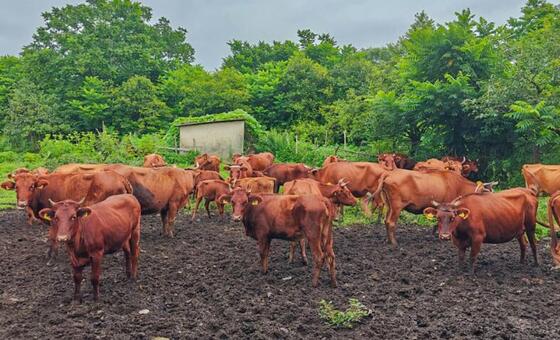
Georgia is using artificial intelligence to identify and track native cattle breeds, aiming to preserve genetic diversity in livestock for future generations.
Georgia has long been a country of dramatic mountain landscapes, deep wine traditions, and a surprisingly rich agricultural heritage. But tucked away in that heritage is something most travelers and even many locals rarely think about: the native cattle breeds that have roamed the Caucasus for centuries. Now, those hardy animals are getting a high-tech ally in the fight for survival. A new digital project is using artificial intelligence to identify and track Georgia's local cattle breeds, with the ultimate goal of protecting the country's genetic diversity in livestock.
It's easy to overlook why this matters. When we hear about genetic diversity, our minds usually jump to wildlife like pandas or tigers. But domesticated animals are just as vulnerable. Over the past few decades, industrial farming has pushed a handful of high-yield cattle breeds to global dominance. That's great for mass production, but it comes at a real cost. When local breeds disappear, we lose genetic traits that might be resistant to certain diseases, adapted to harsh climates, or simply better suited to small-scale, sustainable farming. Once those genes are gone, they're gone forever.
### Why Local Breeds Matter More Than You Think
Georgia's native cattle aren't just a curiosity. They've evolved over generations to thrive in specific conditions—steep mountain pastures, hot summers, cold winters, and rugged terrain that would challenge any modern commercial breed. These animals often require less feed, are more resistant to parasites, and can produce milk and meat on a fraction of the resources that industrial breeds demand. In a world facing climate change and rising food costs, that kind of resilience is priceless.
But here's the catch: without proper documentation and tracking, these breeds are slipping through the cracks. Many farmers still keep them, but there's no reliable record of how many exist, where they're concentrated, or how genetically distinct they are. That's where the AI system steps in. By using image recognition and data analysis, the project aims to build a comprehensive database of Georgian cattle breeds. Farmers can snap a photo of an animal, and the system can help identify the breed, log its location, and track population trends over time.
### How the AI System Actually Works
The technology itself is pretty straightforward, but its application is what makes it interesting. Here's a quick breakdown of what the project involves:
- **Image recognition**: Farmers and researchers upload photos of cattle, and the AI analyzes physical traits like coat color, horn shape, and body structure to identify the breed.
- **Geographic mapping**: Each animal is tagged with its location, building a picture of where different breeds are thriving and where they're at risk.
- **Population tracking**: Over time, the system can detect whether a breed's numbers are stable, growing, or declining, which helps prioritize conservation efforts.
- **Genetic sampling**: In partnership with local universities, the project is also collecting DNA samples to measure genetic diversity more precisely than visual identification alone.
This isn't about replacing traditional farming knowledge. It's about giving farmers and conservationists the tools they need to make informed decisions. A farmer who knows exactly what breed they have and how rare it is might be more motivated to keep it. A researcher can spot a declining population before it reaches a critical point. And a policymaker can direct funding to the areas where it will have the most impact.
### The Bigger Picture for Agriculture
This project is part of a broader global movement to rethink how we approach food security. For decades, the focus has been on maximizing yield per acre or per animal. But that narrow approach has left us vulnerable. When a disease sweeps through a monoculture of genetically identical animals, the results can be catastrophic. The 2001 foot-and-mouth outbreak in the United Kingdom, which led to the culling of millions of cattle, is a stark reminder of what happens when genetic diversity is too low.
Georgia's initiative is a small but significant step in the opposite direction. By preserving local breeds, the country is essentially building an insurance policy against future agricultural crises. It's also a way to honor the knowledge and traditions of generations of Georgian farmers who kept these animals alive through wars, economic upheaval, and changing tastes.
### What This Means for the Future
There's no doubt that AI in agriculture is a growing trend, but not all applications are created equal. Some are designed to squeeze more profit out of industrial operations. This one is different. It's using cutting-edge technology to protect something old, something that can't be replaced once it's lost. That's a pretty compelling story, and it's one that could inspire similar efforts in other countries with unique livestock heritage.
For now, the project is still in its early stages. The team is working on expanding the database, training the AI on more examples, and getting more farmers on board. But the potential is huge. If successful, Georgia could become a model for how technology and tradition can work together to preserve the genetic wealth of our planet.
So the next time you see a cow grazing on a hillside, take a moment to appreciate it. That animal might not just be a source of milk or meat—it could be a living piece of history, and with a little help from AI, it might just have a future.