Georgia's AI Cattle Project Could Rewrite Livestock Conservation
William Miller ·
Listen to this article~5 min
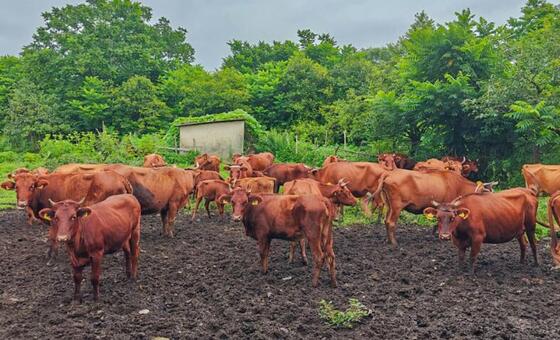
Georgia is building an AI system to recognize native cattle breeds and preserve genetic diversity. Here's why this digital project could reshape livestock conservation worldwide.
When you think about cutting-edge artificial intelligence, cattle probably isn't the first thing that comes to mind. But in the Republic of Georgia, a quiet tech revolution is taking shape—one that could change how we protect endangered livestock breeds forever.
Georgia is home to some of the oldest cattle breeds in the world. These animals aren't just livestock; they're living history. They've adapted to harsh mountain climates, survived centuries of changing empires, and carried the genetic code of a region that sits at the crossroads of Europe and Asia. Yet today, many of these breeds face extinction.
That's where the new digital project comes in. Georgian scientists and technologists are building an AI system designed to recognize and catalog local cattle breeds automatically. The goal is straightforward but ambitious: preserve the genetic diversity of the country's agricultural resources before it's too late.
### Why Genetic Diversity Matters More Than You Think
Here's the thing about livestock genetics—it's not just about keeping old animals around for nostalgia. When you lose a breed, you lose a unique set of traits. Some Georgian cattle are naturally resistant to specific diseases. Others thrive on sparse mountain grazing that would starve a modern commercial breed. These traits are essentially a biological insurance policy.
If a future disease outbreak hits the global cattle population, farmers might need those hardy genes to breed resilience back into commercial herds. Without genetic diversity, we're putting all our eggs in one basket—and that basket is getting more fragile by the year.
The AI system being developed in Georgia aims to make conservation practical. Instead of relying on manual identification, which is slow, expensive, and prone to human error, the system uses computer vision to recognize breed characteristics from photos. Think of it like facial recognition, but for cows.
### How the AI System Actually Works
The technology analyzes physical traits that distinguish one breed from another. Things like coat color patterns, horn shapes, body proportions, and even subtle features that are hard for the untrained eye to catch. The system learns from thousands of images, building a digital reference library of Georgian cattle breeds.
Once trained, the AI can help farmers and conservationists in several ways:
- Identify individual animals and log them into a national database
- Track population numbers across different regions
- Detect when a rare breed is becoming critically endangered
- Support breeding programs by matching animals with desired genetic traits
It's not just about counting cows, though. The system creates a digital record that can be shared with researchers worldwide. That data becomes a resource for future conservation efforts, both in Georgia and internationally.
### The Bigger Picture for Agriculture
This project is part of a broader movement toward using technology to protect agricultural heritage. Similar efforts are happening around the world, from Europe to South America. But Georgia's approach stands out because of the country's unique position as a genetic hotspot for cattle.
For American readers, this might feel like a distant story. But consider this: the United States has its own endangered livestock breeds, and the same AI technology could be adapted for use here. The principles are universal. If you can teach a computer to recognize a Georgian mountain cow, you can teach it to recognize a heritage breed from Kentucky or Texas.
The project also highlights a growing trend in agritech—using data and artificial intelligence to solve problems that were previously handled through manual labor and guesswork. Farmers have always been early adopters of practical technology, and this is just the latest example.
There's something deeply hopeful about this story. In a world where technology often feels like it's moving us further from nature, here's a case where AI is being used to protect it. The cows don't care about the algorithms. They just keep grazing on the Georgian hillsides, unaware that they're part of a digital revolution.
But the people behind this project know exactly what's at stake. They're not just preserving animals; they're preserving options. Genetic diversity is a form of resilience, and in an era of climate change and emerging diseases, resilience is everything.
As the system develops and more data is collected, the potential grows. What starts as a national database could become a regional one, then a global one. The technology is scalable, and the need is universal.
For now, the project is in its early stages. But the direction is clear. Georgia is showing the world that conservation doesn't have to be stuck in the past. Sometimes, the best way to protect ancient breeds is with the most modern tools we have. And that's a story worth paying attention to—whether you're a farmer, a technologist, or just someone who cares about the world we're leaving behind.