Georgia's Bold AI Project Could Save Its Rare Cattle Breeds
Sarah Davis ·
Listen to this article~5 min
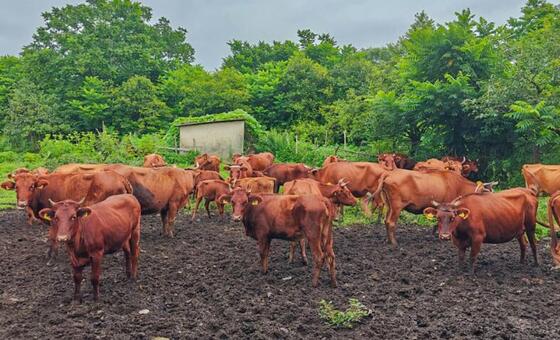
Georgia is using artificial intelligence to recognize and catalog its native cattle breeds, aiming to preserve vital genetic diversity that could protect global agriculture against future challenges.
When you think about cutting-edge technology and ancient farming traditions, they don't usually seem like natural partners. But in the country of Georgia, a fascinating digital experiment is quietly changing that narrative. The nation's native cattle breeds—some of which have roamed its valleys for centuries—are now at the center of an artificial intelligence system designed to recognize and catalog them. It's a move that could have ripple effects far beyond the farm.
Here's why this matters: Georgia's livestock genetic pool is a treasure chest. These animals have adapted to harsh climates, rugged terrain, and local diseases over generations. That resilience isn't just a historical curiosity; it's a biological insurance policy for agriculture as a whole. If we ever face new climate stresses or emerging pathogens, those hardy genes could be the key to breeding stronger herds. Losing them would be like burning a library we haven't finished reading.
### What the AI System Actually Does
The core idea is straightforward but ambitious. Developers are training machine learning models to visually recognize different Georgian cattle breeds from photos. Think of it as facial recognition, but for cows. The system learns to spot subtle differences in coat color, horn shape, body proportions, and other physical markers that even experienced breeders might miss at a glance.
This isn't just a novelty for tech enthusiasts. For farmers, it means a faster, more reliable way to document their stock. For researchers, it's a data goldmine. Instead of manual surveys that take months, they can get near-real-time insights into population numbers and breed distribution. That information is crucial for making smart conservation decisions.
### Why Genetic Diversity Is a Big Deal
You might wonder why we should care about a few local cow breeds when industrial farming already feeds millions. The answer is resilience. Monoculture in agriculture—relying on just a few high-yield breeds—is a bit like putting all your eggs in one basket. If a disease hits that one breed, the impact can be catastrophic. Local breeds often carry unique resistance traits that we haven't even fully mapped yet.
- **Adaptation to local climate:** Georgian cattle are built for the Caucasus region's variable weather.
- **Disease resistance:** Many native breeds have natural immunity to common local pathogens.
- **Genetic resources:** These animals hold genes that could improve global herd health and productivity.
- **Cultural heritage:** These breeds are part of the country's rural identity and history.
### The Bigger Picture for Conservation
This project is a small but meaningful piece of a global movement. Around the world, organizations are racing to document and preserve livestock genetic resources before they vanish. The United Nations has warned that many traditional breeds are at risk of extinction, and once they're gone, the genes are gone forever. Technology like this AI system offers a practical, scalable tool to slow that loss.
For the United States, where industrial agriculture dominates, this might feel like a distant issue. But American breeders and researchers are paying attention. Crossbreeding with hardy foreign genetics has solved problems here before, from improving heat tolerance in Southern herds to boosting disease resistance in dairy cattle. The data coming out of Georgia could inform those efforts down the road.
### A Model for the Future
The beauty of this approach is its simplicity. You don't need expensive lab equipment or invasive procedures. A smartphone photo and a decent AI model can do the heavy lifting. That makes it accessible to developing nations and small-scale farmers who are often the ones holding the rarest genetic lines.
There are challenges, of course. Training the system requires a large, high-quality dataset of labeled images, which takes time to build. And the technology needs to work in real-world conditions—bad lighting, muddy coats, and awkward angles. But the early results are promising, and the team behind it is optimistic.
So, while this story starts with cows in a faraway country, it's really about something bigger: using smart tools to protect the natural resources we can't afford to lose. It's a reminder that sometimes the most innovative tech solutions are the ones that keep us grounded in our roots.
### What This Means for You
If you're in the agricultural sector, this is a trend worth watching. AI-driven livestock identification could soon become a standard tool for herd management, not just conservation. If you're in tech, it's a great example of how machine learning can solve real-world problems outside the typical corporate use cases. And if you're just someone who cares about food security and biodiversity, it's a hopeful sign that we're finally using our digital tools to protect our natural ones.