A Grim Toll Emerges After Latest Attacks Across Ukraine
David Maxwell ·
Listen to this article~5 min
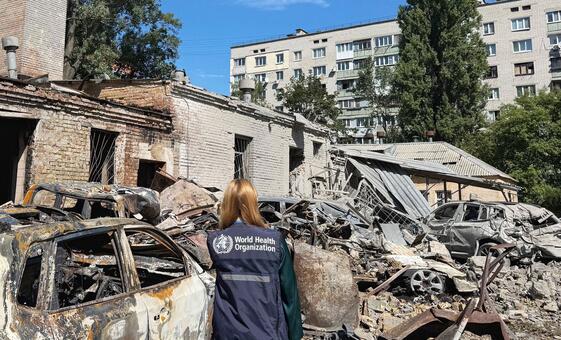
A UN report details a devastating 24-hour period in Ukraine, with at least 12 civilians killed and over 65 wounded. Frontline regions suffered the most severe impacts.
It's a stark, sobering update that reminds us of the human cost that continues to mount. The UN's Office for the Coordination of Humanitarian Affairs (OCHA) released a statement on Friday, relaying the latest figures from Ukrainian authorities. The numbers paint a grim picture of a single day's violence. Over the past 24 hours, attacks across the country have resulted in at least 12 civilian fatalities and more than 65 people wounded.
That's the cold, hard data. But behind each of those numbers is a person, a family, a community shattered. It’s a brutal calculus that’s become all too familiar, yet it never loses its power to shock and sadden. The report underscores that the frontline regions are bearing the brunt of this devastation, experiencing the most severe impacts. These are areas where daily life is already a struggle, now compounded by fresh tragedy.
### The Human Impact Behind the Headlines
When we hear '12 fatalities and 65 injured,' it's easy for the mind to gloss over it as just another statistic. We have to push past that. Think about it for a second. That’s twelve people who won’t return home tonight. Dozens more who are now facing recovery in hospitals, dealing with physical wounds and psychological trauma that will last far longer. The ripple effects through towns and cities are immense, straining local resources, medical systems, and the very fabric of community resilience.
It's a heavy reminder that conflict doesn't just shape geopolitical maps; it etches itself into the lives of ordinary people going about their day. The term 'frontline regions' encompasses towns and villages where the sound of shelling isn't a distant news report—it's the background noise to trying to get groceries, check on a neighbor, or get a child to school. The resilience shown there is extraordinary, but so is the cumulative toll.
### Understanding the Reporting and Context
This information comes via a specific and credible channel. The UN's OCHA doesn't generate these figures itself; it acts as a conduit, coordinating and relaying verified information from national authorities on the ground. This layered reporting—from local sources to national agencies to an international body—is crucial for building an accurate, if heartbreaking, picture of the situation. It helps humanitarian organizations understand where the needs are most acute and how to direct aid and support.
Why does this matter for professionals following these events? Because it provides a benchmark. It offers a data point against which to measure the scale of incidents, the effectiveness of emergency responses, and the evolving humanitarian needs. It's not just news; it's operational intelligence for those involved in relief, policy, and analysis.
- **Verified Sources:** Data is funneled from local authorities through the UN system, adding a layer of verification.
- **Focus on Civilians:** The report specifically highlights non-combatant casualties, a key metric in international humanitarian law.
- **Geographic Specificity:** Identifying frontline regions as hardest hit helps target logistical and medical support.
In moments like these, it's worth pausing on a simple truth often lost in the analysis. As one aid worker recently put it, **'Our spreadsheets track casualties, but our mission is to restore dignity.'** That quote sticks with me. It frames the entire endeavor. The numbers inform the response, but the goal is always human.
### The Ongoing Challenge of Civilian Protection
This latest report is a single snapshot, but it's part of a much larger, ongoing narrative. Each day brings new risks for civilians caught in conflict zones. The repeated targeting of populated areas, even if militarily justified by parties to the conflict, leads to these tragic outcomes. International bodies consistently stress the principles of distinction and proportionality—the rules of war designed to protect those not participating in hostilities.
Yet, reports like this one indicate those principles are being severely tested. The concentration of casualties in frontline areas isn't surprising, but it is a persistent and urgent problem. It speaks to the nature of modern warfare where battle lines can be fluid and urban centers become contested spaces. For people living there, there's often no clear 'safe zone' to retreat to.
Moving forward, the key questions remain. How can civilian infrastructure be better protected? What mechanisms can be strengthened to ensure accountability for violations? And most immediately, how can humanitarian corridors and aid delivery function more effectively under fire to reach those 65 injured and countless others in need? The answers are complex, but the need for them is screamed by every number in this Friday's update. Our focus must remain on that human cost, using the data not just to inform, but to drive action that prevents the next report from being even worse.