The Lands That Feed the World: How Kenya and Kazakhstan Are Healing Their Soil
William Smith ·
Listen to this article~5 min
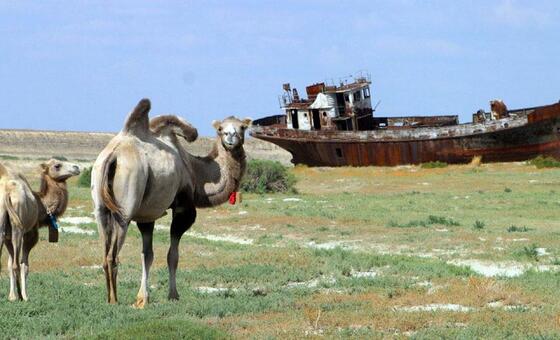
Kenya and Kazakhstan are restoring degraded pastures by blending modern science with traditional herding knowledge. The results are transforming soil health and livelihoods.
What do Botswana, Kazakhstan, and Kenya have in common? It's not a shared language or a similar flag. It's a hard-won lesson about the ground beneath our feet: restoring pastureland works best when science shakes hands with tradition.
For decades, modern agriculture pushed aside age-old practices in favor of quick fixes and chemical inputs. The result? Degraded soil, dust bowls, and struggling communities. But now, a quiet revolution is taking root across three continents, and it's changing how we think about feeding a growing planet.
### Why Pastures Matter More Than You Think
You might not spend much time thinking about grasslands, but they cover about 40 percent of Earth's land surface. They store massive amounts of carbon, filter water, and support billions of livestock. When pastures collapse, everything downstream suffers—literally.
In Kenya, overgrazing and erratic rainfall had turned once-verdant fields into cracked earth. In Kazakhstan, decades of Soviet-era farming left the soil exhausted and vulnerable to erosion. And in Botswana, drought cycles were becoming more punishing with each passing year.
The old approach was to fight nature with technology alone. But that strategy kept failing, and for good reason: it ignored the people who had been reading these landscapes for generations.
### The Power of Traditional Knowledge
Here's the part that often gets overlooked. Herders in Kenya don't need a textbook to know when to move their cattle. They've been reading weather patterns, plant growth, and animal behavior for centuries. That knowledge was dismissed as outdated, yet it turns out to be remarkably sophisticated.
- Rotational grazing: Moving herds frequently mimics the natural movement of wild game, allowing grass to recover fully before being grazed again.
- Water management: Traditional wells and seasonal ponds were designed to capture every drop of rain, a practice modern engineers are now copying.
- Seed selection: Local varieties of grasses are often more drought-resistant than commercial hybrids, yet they were nearly lost.
When researchers started listening instead of lecturing, everything changed. They discovered that combining satellite data with herder observations produced better predictions than either method alone.
### Science Meets Tradition in Action
In Kenya's Amboseli region, a project brought together Maasai elders and soil scientists. The elders identified which areas had been overgrazed and which were recovering. The scientists used drones to map vegetation density and soil moisture. Together, they created a grazing plan that boosted grass cover by 30 percent in just two years.
Kazakhstan offers a similar story. After the Soviet collapse, vast tracts of farmland lay abandoned. Rather than trying to restore them with heavy machinery, researchers turned to local herders who remembered the old nomadic routes. By reintroducing mobile grazing systems, they've seen soil organic matter increase by nearly 15 percent in test plots.
These aren't small victories. They're proof that restoration isn't just about planting trees or applying fertilizer. It's about rebuilding relationships—between people and land, and between generations of knowledge.
### What This Means for the Rest of Us
You don't need a ranch in Africa to apply these lessons. The principle is simple: the best solutions often come from blending expertise with experience. Whether you're managing a backyard garden or a corporate sustainability program, the same logic holds.
- Listen to local voices before imposing external models.
- Use technology as a tool, not a replacement, for human judgment.
- Measure success in terms of resilience, not just yield.
There's also a financial angle. Restored pastures reduce the need for expensive feed and veterinary care. In Kenya, herders using these methods report spending about $1,200 less per year on supplemental feed for every 100 cattle. That's real money in communities where every dollar counts.
### The Road Ahead
The work isn't done, and it won't be quick. Climate change is making conditions more unpredictable, and political pressures often favor short-term gains over long-term health. But the momentum is real.
Botswana, Kazakhstan, and Kenya have become unlikely laboratories for a new kind of agriculture—one that respects the past while embracing the future. The lesson they're teaching isn't just about grass. It's about humility, collaboration, and the stubborn belief that damaged land can heal.
Next time you drive past a dusty field or a struggling pasture, remember this: the answers might already be there, buried in the soil and in the memories of the people who've tended it for generations. All it takes is the willingness to listen.
The earth that feeds us all deserves nothing less.