How AI Could Save Georgia's Rare Cattle Breeds
Margriet van Dijk ·
Listen to this article~5 min
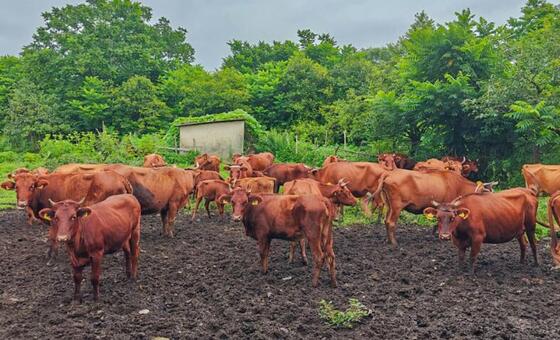
Georgia is using AI to identify and protect its native cattle breeds. This digital project aims to preserve genetic diversity before these unique animals disappear.
When you think about cutting-edge technology and ancient livestock, you probably don't picture them together. But that's exactly what's happening in the country of Georgia, where a new digital project is using artificial intelligence to identify and protect local cattle breeds. It's a fascinating blend of old and new, and it could have a big impact on how we preserve genetic diversity in agriculture.
For years, Georgian cattle have been quietly doing their thing—grazing in the highlands, producing milk and meat for local families, and carrying genes that have adapted to the region's unique climate and terrain over centuries. These aren't just any cows; they're a living library of traits that could prove invaluable for future breeding programs, disease resistance, and food security. But here's the problem: many of these breeds are disappearing. As industrial farming spreads and farmers shift to more common, high-yield breeds, the native ones are being pushed to the brink.
### Why Local Breeds Matter More Than You Think
It's easy to assume that a cow is a cow, but that's far from the truth. Local breeds are often hardier, requiring less food and water, and they're naturally resistant to diseases that might wipe out their more fragile, commercial counterparts. They're also part of the cultural fabric of a region—these animals have been part of Georgian life for generations, and losing them would be like losing a piece of history.
The new AI system aims to change that trajectory. By using image recognition and machine learning, the technology can identify individual animals and classify them into specific breeds. This isn't just a neat trick; it's a practical tool for farmers, researchers, and conservationists who need accurate data to make informed decisions about breeding and preservation.
### How the AI System Works
Imagine pointing your smartphone at a cow in a pasture, snapping a photo, and within seconds getting detailed information about its breed, estimated age, and even its genetic value. That's the kind of functionality this system promises. It's being trained on thousands of images of Georgian cattle, learning to spot the subtle differences in coat color, horn shape, and body structure that distinguish one breed from another.
The project is still in its early stages, but the potential is enormous. For one, it could create a comprehensive database of all the cattle in the country, which would be a first. This database could then be used to track population numbers, identify rare individuals, and even match animals for breeding to maximize genetic diversity. It's like a dating app for cows, but with a much more serious purpose.
### The Bigger Picture: A Global Trend
Georgia isn't alone in this effort. Around the world, countries are waking up to the importance of preserving livestock genetic resources. The Food and Agriculture Organization of the United Nations has been sounding the alarm for years, noting that a significant portion of the world's livestock breeds are at risk of extinction. Once a breed is gone, its unique genetic traits are gone forever—there's no bringing them back.
This project is a small but significant step in the right direction. It shows that technology, often blamed for homogenizing agriculture, can also be a powerful tool for conservation. It's a reminder that progress doesn't have to mean leaving the past behind.
### What This Means for the Future
For now, the focus is on Georgia, but the lessons learned here could easily be applied elsewhere. If the system proves successful, it could be adapted for use with other livestock species—sheep, goats, pigs—and in other countries facing similar challenges. The potential to scale is huge.
Of course, there are hurdles. The technology needs to be accurate and reliable, and it needs to be accessible to the people who need it most—small-scale farmers who often lack the resources for high-tech solutions. But the project's early momentum is encouraging, and it's a clear sign that innovation and tradition can work hand in hand.
So, the next time you see a cow grazing in a field, take a moment to appreciate it. It might just be carrying the future of agriculture in its genes. And thanks to a team of developers and researchers in Georgia, that future is looking a little brighter.