How Drones and AI Are Revolutionizing Humanitarian Demining
Jan de Vries ·
Listen to this article~4 min
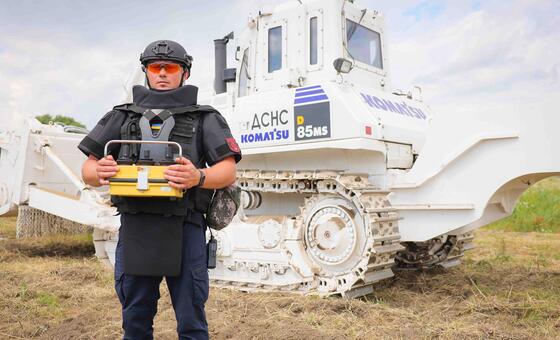
The conflict in Ukraine has created one of the most mine-contaminated regions on Earth. Discover how drones and AI are revolutionizing humanitarian demining, improving safety, and restoring land for farming and rebuilding.
The conflict in Ukraine has changed more than just modern warfare. It's created one of the most mine-contaminated regions on Earth. But here's the twist—the same technologies fueling the fighting are now being used to clean up the mess. Let me explain how drones and artificial intelligence are reshaping humanitarian demining, and why this matters far beyond Ukraine's borders.
### The Scale of the Problem
Ukraine is now one of the most mine-polluted countries in the world. Estimates suggest that over 60,000 square miles of land are contaminated with landmines and unexploded ordnance. That's an area roughly the size of Florida. The impact goes beyond immediate danger—it threatens global food security, disrupts supply chains, and stalls economic recovery.
Think about it: farmers can't plant crops on fields they can't safely walk on. Children can't play in areas where the ground might explode. And rebuilding homes, schools, and hospitals becomes nearly impossible when every square foot could hide a lethal device.
### How Drones Are Changing the Game
Traditional demining is slow, dangerous, and expensive. Teams of specialists walk carefully across suspected areas, using metal detectors and probes. It can take years to clear just a few acres. But drones are flipping that model on its head.
- **Aerial surveys**: Drones equipped with high-resolution cameras and sensors can scan hundreds of acres in a single flight. They create detailed maps that identify potential hazards without putting a single person at risk.
- **Thermal imaging**: Some drones use thermal cameras to detect temperature differences between buried mines and the surrounding soil. This helps pinpoint threats with surprising accuracy.
- **Speed and efficiency**: A drone can cover in hours what would take a ground team weeks. That means faster clearance and safer communities.
### Artificial Intelligence: The Smart Brain Behind the Operation
Drones collect massive amounts of data. But data alone isn't useful—you need to make sense of it. That's where AI steps in.
AI algorithms analyze drone imagery to distinguish between actual mines and harmless objects like rocks or scrap metal. They learn from thousands of examples, getting better over time. This reduces false positives, which means fewer unnecessary excavations and faster progress.
> "AI doesn't replace human expertise—it amplifies it. Deminers can focus on the most dangerous areas while machines handle the initial screening."
Some systems even predict where mines are most likely to be based on battlefield patterns. This helps prioritize clearance efforts and allocate resources where they're needed most.
### The Ripple Effect on Global Security
Ukraine's situation isn't isolated. Mine contamination affects food exports, especially wheat and grain. When farmers can't access land, global prices rise. Developing nations that rely on Ukrainian imports feel the pinch first. Cleaning up mines isn't just a humanitarian act—it's an economic necessity.
- **Food security**: Clearing just 10% of contaminated farmland could restore millions of tons of grain production.
- **Economic recovery**: Safe land means businesses can rebuild, jobs return, and communities thrive.
- **Environmental impact**: Unexploded ordnance leaks toxins into soil and water. Demining prevents long-term ecological damage.
### What This Means for Professionals in the US
If you work in demining, defense, or humanitarian technology, Ukraine offers a real-world laboratory. The tools being developed there—drones, AI, sensor fusion—aren't just for one country. They're prototypes for future global operations.
- **Partnership opportunities**: US companies are already collaborating with Ukrainian teams to refine these technologies.
- **Funding and contracts**: Government and NGO budgets for advanced demining are growing rapidly.
- **Career growth**: Expertise in AI-driven demining is becoming a specialized, high-demand skill.
### A Glimpse of the Future
We're moving toward a world where robots and algorithms do the heavy lifting. Imagine swarms of drones mapping entire regions in days, AI processing the data in real-time, and ground robots safely neutralizing threats. That's not science fiction—it's happening now.
The challenge is huge, but so is the opportunity. By combining human ingenuity with machine precision, we can turn minefields back into farmland, and danger zones into safe communities. Ukraine is showing us the way.