The Human Cost of Escalation: Civilian Casualties Mount in Frontline Regions
Robert Johnson ·
Listen to this article~5 min
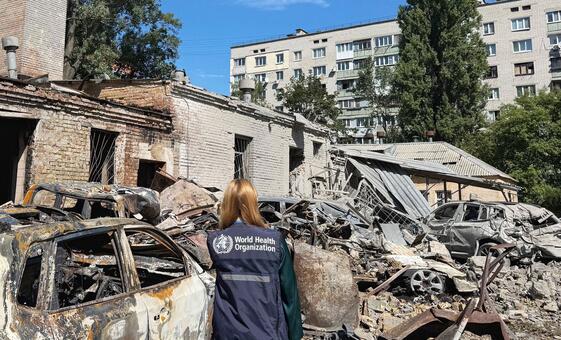
UN reports cite at least 12 civilians killed and over 65 wounded in recent attacks across Ukraine, with frontline regions suffering the most severe impacts.
Hey there. Let's talk about something serious for a moment. The news coming out of conflict zones is often a blur of numbers and locations, but it's crucial we pause and understand what those figures truly represent. Recent reports from humanitarian officials on the ground paint a stark picture of the escalating human toll, one that demands our attention and underscores the fragility of civilian life in wartime.
### The Latest Humanitarian Report
According to a Friday update from the UN Office for the Coordination of Humanitarian Affairs (OCHA), citing Ukrainian authorities, the past 24 hours have been particularly devastating. Preliminary reports indicate at least 12 civilians were killed, with more than 65 others wounded in attacks across the country. It’s not just a statistic—it’s families, neighbors, and communities shattered in an instant. The scale of the attacks, reportedly widespread, suggests a significant intensification of hostilities, moving beyond purely military targets.
What hits hardest is knowing these aren't soldiers. They're people going about their daily lives, caught in a conflict they didn't choose. The numbers, as cold as they seem on a page, represent a profound human tragedy that's unfolding in real time. We're seeing the direct consequences of warfare spilling over into residential areas, markets, and places where people should feel safest.
### The Disproportionate Impact on Frontline Areas
It’s the frontline regions that are bearing the brunt of this. These areas, already stretched thin by months or years of conflict, are now seeing a fresh wave of violence. The infrastructure there—hospitals, schools, power grids—is often already damaged or operating at a fraction of its capacity. A new attack doesn't just cause immediate casualties; it cripples the already fragile systems meant to help the wounded and support the displaced.
Think about it like this: if a hospital in a peaceful suburb gets damaged, help can come from the next town over. In a frontline region, the next town might also be under fire. The entire support network is compromised. This creates a compounding crisis where each new strike makes recovery from the last one nearly impossible. The resilience of these communities is being tested beyond any reasonable limit.
### Understanding the Ripple Effects
The impact goes far beyond the immediate casualty count. For every person killed or injured, dozens more are affected. Families are torn apart. Children are orphaned. Local economies, already on life support, grind to a complete halt. The psychological trauma inflicted on an entire population is a wound that will take generations to heal, long after the guns fall silent.
- **Displacement:** New attacks force more people to flee their homes, adding to the millions already internally displaced or living as refugees.
- **Access Blockades:** Damaged roads and railways cut off supply lines for food, medicine, and essential humanitarian aid.
- **Winter Vulnerability:** With temperatures dropping, attacks on energy infrastructure leave populations without heat or power in freezing conditions.
- **Agricultural Devastation:** Farmland and storage facilities are hit, threatening long-term food security for the nation and regions that depend on its exports.
As one aid worker recently put it, *"We're not just counting the dead. We're counting the broken systems, the lost futures, and the mounting despair that these numbers leave in their wake."* That quote sticks with me because it frames the crisis not as a single event, but as an ongoing erosion of normalcy and hope.
### Why This Matters for Global Observers
You might be reading this from thousands of miles away, wondering why it should matter to you. It's simple: in our interconnected world, regional instability rarely stays regional. The humanitarian fallout creates refugee flows, strains international aid budgets, and destabilizes global food and energy markets. Furthermore, the erosion of the principle of protecting civilians in conflict sets a dangerous precedent that can affect conflict zones anywhere.
Watching these events unfold isn't about taking a political side; it's about recognizing a shared humanity. It's about understanding that the decisions made in war rooms and capital cities have very real, very bloody consequences for ordinary people. The reported use of explosive weapons in populated areas is a major concern for groups like OCHA, as it almost guarantees high civilian casualties. Staying informed is the first step toward advocating for the protection of non-combatants and supporting the humanitarian response, which is chronically underfunded and overstretched.
In the end, behind every briefing and every report are human stories. Our responsibility is to listen to them, to understand the scale beyond the headlines, and to remember that the true cost of war is measured not in territory gained, but in lives forever altered. The path forward is murky, but it must be paved with a renewed commitment to international humanitarian law and a massive, coordinated global effort to deliver aid and protection to those who need it most.