A Single Day's Toll: The Human Cost Beyond the Headlines
Amanda Moore ·
Listen to this article~4 min
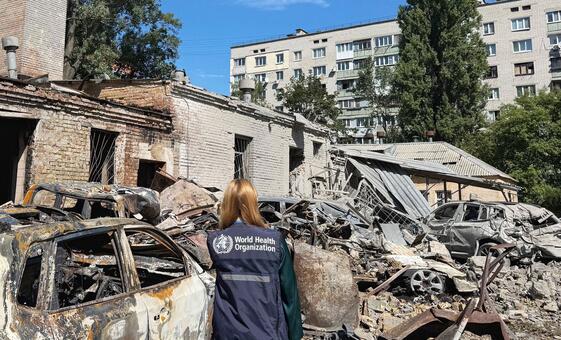
A UN report details a devastating 24 hours in the conflict, with at least 12 civilians killed and over 65 wounded, highlighting the severe toll on front-line communities.
You know, sometimes the news hits you in a strange way. You see the numbers scroll by—another update, another report. But it's easy to forget that behind each digit is a life, a story, a family. A recent report from the UN Office for the Coordination of Humanitarian Affairs, based on information from Ukrainian authorities, paints a stark picture of that human reality. It's a sobering reminder of what a single 24-hour period can hold in a conflict zone.
Let's talk about what that report actually means on the ground. It's not just abstract data. It translates to at least twelve civilians who lost their lives. More than sixty-five others were wounded. That's over seventy-five people whose worlds were irrevocably changed in one day. The impact radiates out from there, touching communities, straining medical systems, and leaving scars that are far more than physical.
### Where the Conflict Hits Hardest
The report specifically highlights that the front-line regions are bearing the brunt of this violence. These are areas where people are trying to live their lives amidst incredible instability. Imagine going to work, taking your kids to school, or simply buying groceries, all while the threat of attack is a constant, unspoken presence. The resilience of these communities is being tested every single hour.
We often discuss strategy, territorial gains, and geopolitical moves. But the core of any conflict is its human dimension. The civilian casualties reported here underscore a brutal truth: modern warfare does not neatly separate combatants from non-combatants. Infrastructure gets hit. Residential areas become targets. The line between battlefield and hometown blurs tragically.
### The Ripple Effect of a Single Attack
Think about the aftermath of just one incident. It's not just the immediate loss or injury.
- **Emergency Response:** First responders and medical personnel rush into dangerous situations, putting their own lives on the line.
- **Healthcare Systems:** Hospitals near front lines are overwhelmed, dealing with trauma cases that require immense resources and specialized care.
- **Displacement:** Attacks often force people to flee their homes instantly, becoming internally displaced with little more than the clothes on their backs.
- **Psychological Trauma:** The mental and emotional toll on survivors, especially children, is profound and long-lasting. It's a wound that doesn't show up on an X-ray.
This creates a cascading humanitarian crisis that extends far beyond the initial explosion. It strains every pillar of a functioning society.
> "Every casualty figure represents a person with a name, a family, and a future interrupted. Our focus must remain on protecting civilian lives and upholding international humanitarian law," a UN official noted in the context of the report.
That quote sticks with you. It's a necessary call to refocus on the principles meant to protect the vulnerable during war. When those principles are eroded, the human cost climbs. Reports like this one are essential because they provide a documented, verified account of that cost. They move the conversation from theoretical to tragically tangible.
For professionals analyzing this situation, the data points matter. But it's crucial to contextualize them within the wider human landscape. The degradation of civilian infrastructure—homes, hospitals, schools, power plants—has a compounding effect. It doesn't just impact today's casualties; it undermines the basic conditions for life and recovery for months or even years to come. It's a long-term debt that a society is forced to pay.
So, what do we do with this information? It's a heavy thing to sit with. For those of us at a distance, it reinforces the importance of supporting credible humanitarian reporting and aid organizations that operate on the ground. It's about understanding that behind the strategic maps and daily briefings, there's a relentless, human urgency. A day like the one described in this UN report isn't an anomaly in an active conflict; it's a devastating feature of it. And remembering that—really feeling the weight of those seventy-seven plus lives affected—is perhaps the first step toward any meaningful response.