The Human Cost of Conflict: Latest Reports from Ukraine's Frontline Regions
Jennifer Williams ·
Listen to this article~5 min
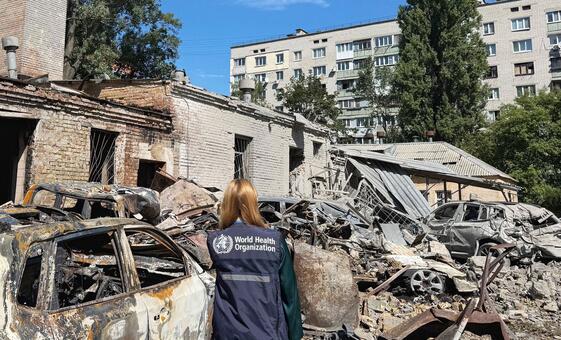
UN reports confirm a tragic 24 hours in Ukraine, with at least 12 civilians killed and over 65 wounded in nationwide attacks. Frontline regions suffered the most severe impact.
It's the kind of news that makes you stop and take a breath. A stark reminder that geopolitical events have a very real, human dimension. The latest reports coming from Ukraine paint a somber picture, one that we need to look at directly, even when it's difficult.
As of Friday, according to the United Nations Office for the Coordination of Humanitarian Affairs (OCHA), the past 24 hours have been devastating. The numbers are more than statistics; they represent families and communities. At least 12 civilians have been killed, and more than 65 others were wounded in attacks across the country.
It’s a sobering update that hits you right in the gut. You read that and you can't help but think about the mornings that started normally for those people. The conversations they had, the plans they made. It’s a heavy reality to process.
### Where the Impact Is Most Severe
If there's one thing these reports make painfully clear, it's that the frontline regions are bearing the brunt of this violence. These are the areas where the conflict is most active, where the distance between relative safety and danger is measured in just a few miles. Communities living there are facing challenges most of us can hardly imagine.
Think about the logistics of daily life. Getting groceries, taking kids to school, going to work—all of it happens under a constant cloud of uncertainty. The psychological toll is immense, a slow-burning stress that doesn't let up. For professionals analyzing global events, understanding this ground-level reality is crucial. It's the context behind the headlines on your screen.
### Beyond the Headline Numbers
When we see figures like '12 killed' and '65 wounded,' it's easy for them to become abstract. But let's break that down for a second. Each one of those numbers is a person. They're neighbors, shopkeepers, teachers, parents. The 'wounded' category covers a wide spectrum, from minor injuries to life-altering trauma that will require years of medical care and rehabilitation.
Consider the infrastructure damage that accompanies these attacks. We're talking about:
- Homes and apartment buildings reduced to rubble
- Critical power lines and water systems being knocked out
- Roads and bridges damaged, complicating evacuation and aid
- Hospitals and schools, which should be sanctuaries, coming under fire
The ripple effects are enormous. A damaged power plant means no heat in the middle of winter, where temperatures can plunge well below freezing. A destroyed bridge cuts off an entire village from supplies. This is the layered reality of modern conflict.
### The Role of International Reporting
Why does this report from OCHA matter? It acts as a vital, neutral record. In the fog of war and conflicting narratives, having a body like the UN verifying facts on the ground provides a clearer picture. They coordinate with local authorities, cross-reference information, and try to cut through the noise to report what's actually happening to civilians.
This isn't about taking sides in a political sense. It's about humanitarian principle—the idea that civilians should be protected, that schools and hospitals shouldn't be targets. For anyone trying to understand the full scope of this situation, these reports are an essential piece of the puzzle. They remind us what's truly at stake.
As one aid worker on the ground recently noted, *'Our job isn't just to deliver food and medicine. It's to be a witness, to ensure the world doesn't look away from the human suffering that happens when the guns don't stop.'* That sentiment sticks with you.
### What This Means Going Forward
So where does this leave us? For professionals and concerned citizens alike, it underscores the prolonged and grinding nature of this crisis. Each day of fighting deepens the humanitarian need. It stretches local resources thinner and pushes recovery timelines further into the future.
The needs are vast and ongoing: emergency shelter, medical supplies, trauma counseling, and basic sustenance. The coming months will be critical, especially with harsh winter conditions setting in across the region. The resilience of these communities is being tested in ways we can scarcely comprehend from a distance.
It's a complex, heartbreaking situation with no easy answers. But staying informed, understanding the human cost behind the strategic maps, is the first step toward any meaningful response. It's about keeping our perspective grounded in reality, not just rhetoric. And sometimes, that reality is incredibly hard to face.