The Human Cost of Conflict: A Stark Update from Ukraine
Jessica Moore ·
Listen to this article~4 min
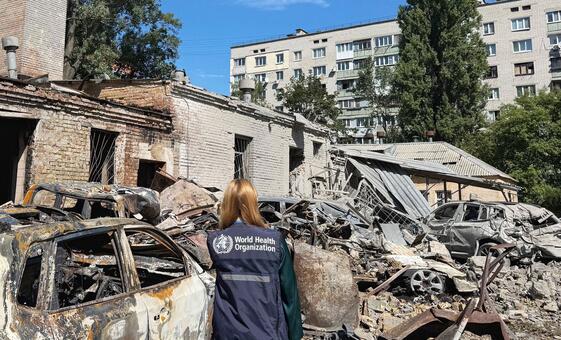
A UN report cites Ukrainian officials, stating at least 12 civilians were killed and over 65 wounded in attacks across the country in the past day, with frontline regions suffering the most severe impact.
Hey there. Let's talk about something that's been weighing on my mind, and I'm sure it's on yours too. It's easy to get lost in the technical details of our work, the formulas and the data streams, but sometimes we need to pause and look at the bigger picture. The human one.
A sobering report came out recently that really puts things into perspective. According to UN humanitarian officials, citing Ukrainian authorities, the past 24 hours of conflict have resulted in a devastating human toll. At least 12 civilians lost their lives, and more than 65 others were wounded. The numbers are stark, and they represent real people, real families.
### Where the Impact Hits Hardest
You can probably guess where the situation is most critical. It's the frontline regions, the areas closest to the active fighting, that are bearing the brunt of this. These communities are caught in an incredibly difficult position, facing dangers that are hard for most of us to even imagine. Infrastructure is damaged, daily life is disrupted, and the constant threat looms large. It’s a reminder that conflict, no matter how it's analyzed from afar, has a very real and immediate ground-level reality.
Think about it for a second. That's over 75 people directly affected in just one day. That's more people than fit in a standard conference room. It’s a scale of impact that's difficult to process, but it's crucial that we try.
### Beyond the Headlines: The Ripple Effects
Now, as professionals who analyze systems and outcomes, we know that the initial data point is rarely the whole story. The immediate casualties are the tragic, direct result. But the ripple effects? They spread out much further. Let's break down what that likely means on the ground:
- **Medical Systems Under Strain:** Every injury requires medical attention, stretching already stressed hospitals and clinics thin. Resources like bandages, medicines, and surgical equipment are diverted, impacting non-conflict-related care.
- **Psychological Trauma:** The wounds you can't see are often the deepest. The constant stress, the loss, the sound of sirens—this takes a profound psychological toll on entire communities, including children.
- **Displacement and Disruption:** Attacks often force people to flee their homes. This creates internal refugees, putting pressure on safer regions and severing community and family ties.
- **Economic Halt:** When safety is the primary concern, commerce and daily work grind to a stop. This cripples local economies and makes recovery, whenever it comes, that much harder.
It's a complex web of interconnected challenges. One event triggers a cascade of problems that analysts and humanitarian groups have to untangle.
### Why This Matters to Us
You might be wondering why I'm bringing this up in a professional context. Well, it's simple. Our work, in its own way, is about understanding cause and effect, about measuring impact and predicting outcomes. The events on the ground in conflict zones are the ultimate, and most somber, case study in real-world impact analysis.
It teaches us about resilience, about system failure, and about the human variables that never quite fit neatly into a spreadsheet. Keeping aware of this reality grounds our technical expertise. It reminds us that the data points we manipulate often represent lives, homes, and futures. That perspective is invaluable, no matter what field we're in.
As we go about our day, dealing with our own professional puzzles, let's hold a bit of space for that reality. The work of humanitarian coordination—trying to get aid to the right places, tracking needs, and advocating for protection—is perhaps the most critical analysis happening right now. It's a stark, human reminder of what's truly at stake.