The Human Cost of Conflict: A New Report's Stark Figures
Robert Maxwell ·
Listen to this article~4 min
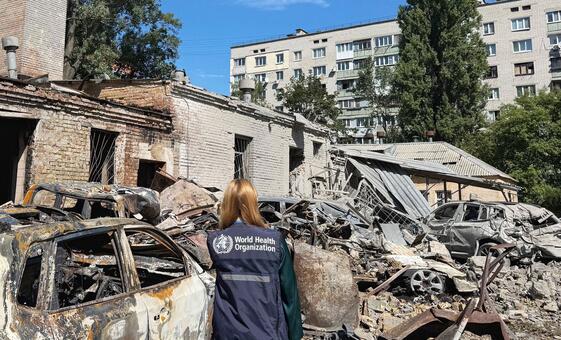
A new UN report details a tragic 24-hour period in Ukraine, with at least 12 civilians killed and over 65 wounded, highlighting the severe impact on frontline communities.
You know, sometimes you read a headline and the numbers just don't land. They're statistics. Data points. But then you dig a little deeper, and the reality hits you. It's not about figures on a page; it's about people. Lives. Communities. That's what came to mind when a new UN report crossed my desk this Friday.
It's a heavy thing to process. According to the UN Office for the Coordination of Humanitarian Affairs, citing Ukrainian authorities, the latest wave of attacks across the country has resulted in a tragic human toll. We're talking about at least 12 civilians killed in just the last 24 hours. More than 65 others were wounded.
### The Frontline's Heavy Burden
Now, the report makes something painfully clear. The regions closest to the active fighting lines are bearing the brunt of this. It's these frontline communities that are suffering the most. That detail changes everything. It's not a random, evenly distributed tragedy. It's concentrated in areas where people are already living under immense pressure, with infrastructure strained and daily life a constant challenge.
Think about what that means for a second. These aren't just coordinates on a map. They're towns and neighborhoods where families are trying to hold on. Where parents are trying to keep kids safe. Where the simple act of going to a market or a doctor carries a risk most of us can't even fathom. The report underscores a brutal pattern: civilian areas are being hit, and the consequences are devastating.
### Beyond the Immediate Impact
When we hear '65 wounded,' it's easy to gloss over it. But let's break that down. Each one of those numbers represents a person with a life suddenly interrupted. A person facing:
- Physical recovery that could take months or years.
- The psychological trauma of surviving an attack.
- The strain on local medical systems, which are often operating beyond capacity.
- The long-term economic impact on a family if a breadwinner is injured.
The ripple effects are enormous. A single attack doesn't just stop when the dust settles. It echoes through hospitals, through families, through the social fabric of a community for a very long time. This report is a snapshot of a 24-hour period, but the scars it documents will last much, much longer.
### Why This Report Matters for Professionals
For those of us working in fields connected to conflict analysis, humanitarian response, or international policy, this isn't just news. It's a critical data point. It's a measure of escalation, of tactics, and of human suffering that informs everything from aid delivery logistics to diplomatic efforts. Understanding where and how civilians are impacted is the first step to trying to protect them. It's grim work, but it's essential.
As one analyst I spoke to recently put it, 'Our job is to count the cost so others might work to reduce it.' That's a weighty responsibility. These reports, as dry as their language sometimes is, are the foundation for that work. They turn anecdotes into evidence and personal tragedies into a collective call for action.
In the end, what we're looking at here is a stark reminder. Behind every briefing, every policy debate, and every headline, there's a human reality. Twelve lives lost. Sixty-five people recovering from wounds. Countless others living in fear. It's a sobering Friday update, and one that deserves more than a passing glance before we move on to the next item in our feed.