The Human Cost of a Day's Conflict: A Sobering Update
Anna Becker ·
Listen to this article~4 min
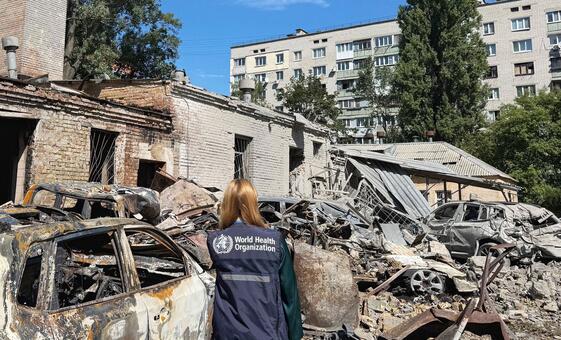
A UN report details a devastating 24 hours in the conflict, with at least 12 civilians killed and over 65 wounded. Front-line communities bore the brunt of the attacks.
Let's be honest, we see the headlines flash by. Another day, another report. But sometimes, a single update cuts through the noise and makes you stop. Today is one of those days.
I was reviewing the latest humanitarian briefings this morning, and the figures just sat there on the page. They weren't abstract numbers. They represented people—families, neighbors, friends—whose lives were irrevocably changed in a single 24-hour period.
According to a Friday report from the UN Office for the Coordination of Humanitarian Affairs (OCHA), which cites Ukrainian authorities, the past day's attacks across the country resulted in at least 12 civilian deaths. More than 65 others were wounded. It's a stark, sobering reminder of the ongoing reality for millions.
### Behind the Headline Numbers
What does that number—12—actually mean? It's easy to gloss over. But let's pause there for a second. That's potentially a dozen separate stories of loss. A dozen families receiving news that will define their grief for years to come. The wounded, numbering over 65, now face recovery, trauma, and a future that looks completely different from what they imagined just yesterday.
We often talk about strategy, territorial gains, and geopolitical moves. We must also hold space for the human impact, the collateral damage that isn't collateral at all—it's central. The report specifically notes that front-line regions were hit the hardest. These are communities already living under immense strain, where the sound of sirens is a constant backdrop to daily life.
- **Immediate Aftermath:** For every casualty statistic, there's a chain reaction. Emergency services are stretched. Hospitals manage influxes of injured. Neighbors become first responders.
- **Long-Term Trauma:** The psychological toll extends far beyond the physical injuries. Children, adults, entire communities are processing events that no one should ever have to experience.
- **Displacement:** Attacks like these often force more people to flee their homes, adding to the already massive internal and external displacement crisis.
### The Day-to-Day Reality in Conflict Zones
Think about your own routine. The school run, the commute, the trip to the market. Now imagine doing all that with the underlying knowledge that your city is a target. The resilience of people living in these areas is staggering, but it shouldn't have to be a required survival trait. The term 'front-line regions' encompasses towns and cities where ordinary people are trying to live ordinary lives under extraordinary, unthinkable pressure.
As one aid worker recently shared in an off-the-record conversation, 'We're not just delivering supplies; we're delivering a message that they haven't been forgotten.' That sentiment feels crucial. In the flood of global news, individual tragedies can blur. Our role, as professionals and as humans, is to resist that blurring. To see the specific cost of a single day.
This isn't about assigning blame in this space—that's for historians and courts. This is about acknowledgment. It's about looking clearly at the consequence of sustained conflict. The economic costs are measured in billions of dollars. The humanitarian costs are measured in lives lost, families shattered, and futures derailed. And those are the costs that truly defy measurement.
So, what do we do with this information? We don't look away. We sit with the discomfort it brings. For those of us working in connected fields, it reinforces the critical need for our work—whether in logistics, aid, diplomacy, or communications—to be precise, empathetic, and relentlessly focused on alleviating suffering. It's a grim update, but an essential one. It grounds the abstract in the painfully real. And in doing so, it reminds us why staying informed, and caring, matters.