The Human Cost of Escalating Attacks Across Ukraine
William Taylor ·
Listen to this article~5 min
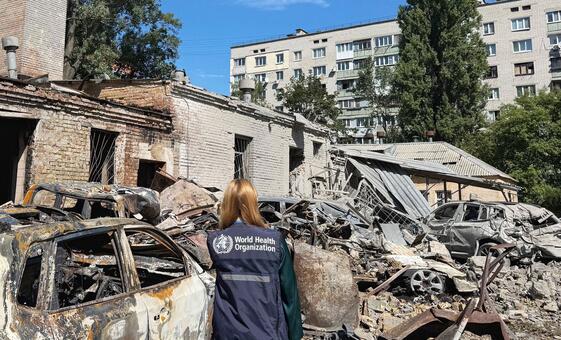
UN reports confirm a devastating 24 hours in Ukraine, with at least 12 civilians killed and over 65 wounded. Frontline communities are suffering the most severe impacts.
Hey there. It's Friday, and like many of you, I was hoping for a quiet end to the week. Instead, we're getting another grim update that hits you right in the gut. The latest reports are just coming in, and they paint a stark picture of the situation on the ground. It's the kind of news that makes you pause your coffee and really think.
The United Nations Office for the Coordination of Humanitarian Affairs (OCHA) has released new figures, based on information from Ukrainian authorities. They cover the last 24 hours, and the numbers are sobering. At least 12 civilians have been killed. More than 65 others have been wounded. These aren't abstract statistics. They're people—mothers, fathers, grandparents, kids—whose lives have been shattered in a single day.
### Where the Fighting Is Hitting Hardest
You can probably guess where the impact is most severe. It's the frontline regions, the areas where the conflict is most intense. Towns and villages close to the fighting are bearing the brunt of this violence. Infrastructure gets hit, homes are destroyed, and the simple act of trying to live your life becomes an immense risk. The reports specifically highlight these communities as suffering the most.
Think about what that means for a second. It means people living under constant threat, not knowing if the next strike will hit their street, their school, their market. The psychological toll is immense, on top of the physical danger. It creates a cycle of displacement and trauma that's incredibly hard to break.
### The Ripple Effects of a Single Attack
When we hear a number like "12 killed," it's easy for it to feel distant. But let's break that down a bit. Each one of those numbers represents a cascade of consequences.
- **Families Torn Apart:** A death leaves a hole that never fully closes. It means children without parents, parents without children, and partners left alone.
- **Communities in Mourning:** In smaller towns, everyone knows everyone. A loss is felt by the entire community, shaking its social fabric.
- **Overwhelmed Systems:** For every person injured, there's a strain on medical resources—ambulances, hospitals, doctors, and nurses who are already stretched thin.
- **Economic Hardship:** A breadwinner lost, a business destroyed, fields that can't be farmed. The economic damage compounds the human suffering.
It's not just about the immediate moment of an attack. The aftermath lasts for years, sometimes generations. Rebuilding a life, let alone a community, after such an event is a monumental task.
### Why These Reports Matter
You might wonder why we pay attention to reports from the UN and other agencies. It's not just about keeping score. These figures serve a few critical purposes.
First, they provide a measure of accountability. Documenting the human cost is a way of bearing witness. It creates a record that can't be easily ignored. Second, this data is essential for humanitarian organizations. They use it to figure out where aid is most desperately needed—where to send medical supplies, food, shelter materials, and support teams.
Finally, for the rest of the world, it's a crucial reality check. It cuts through the noise of politics and strategy and reminds us of the central truth: real people are paying the price. As one aid worker on the ground recently put it, *"Our job isn't about politics or sides. It's about getting help to the person in front of us who is scared, hurt, and has lost everything. The numbers tell us where to go, but the faces tell us why we're here."*
That quote sticks with me. It brings the statistics back to a human level. Behind every data point in today's report is a face, a story, and a life irrevocably changed.
Looking at a map, the frontline might seem like a line. But in reality, it's a blurred, chaotic zone where danger doesn't respect borders. Civilians living there are caught in a terrible limbo, trying to survive day-to-day. The international community continues to call for the protection of civilians and civilian infrastructure, as mandated by international law, but the reports keep coming.
So, what do we do with information like this? We absorb it. We let it inform our understanding of a complex and painful conflict. We support the organizations doing the hard work on the ground. And perhaps most importantly, we don't let the numbers make us numb. We remember that each one represents a profound loss, and a story that deserves to be heard.