The Human Cost of Escalating Attacks: A New UN Report Details the Toll
Sarah Wilson ·
Listen to this article~5 min
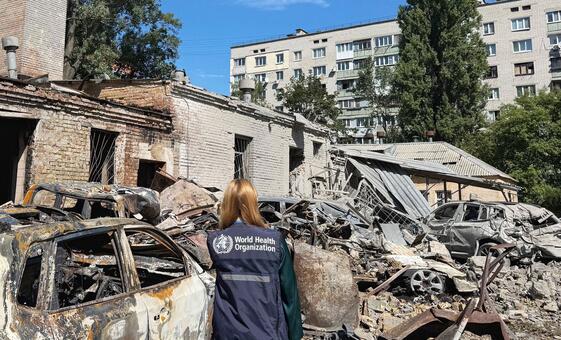
A new UN humanitarian report details a devastating 24-hour period in the conflict, with at least 12 civilian lives lost and over 65 injured, highlighting the severe impact on frontline communities.
We often get caught up in the big picture—the strategy, the movements on a map, the political statements. But sometimes, a single report can bring the reality of a conflict into sharp, heartbreaking focus. That's what happened this week with the latest update from the United Nations Office for the Coordination of Humanitarian Affairs (OCHA). The numbers they shared aren't just statistics; they're a stark reminder of the human toll that continues to mount.
The UN's report, citing Ukrainian authorities, details a devastating 24-hour period. According to their findings, at least 12 civilians lost their lives across the country, with more than 65 others sustaining injuries. These aren't combatants; these are people in their homes, on their streets, trying to live through a situation no one should ever have to face.
### The Frontline Communities Bearing the Brunt
The report makes a critical point that shouldn't be overlooked. It notes that the regions closest to the active fighting lines, the frontline areas, were hit especially hard. This pattern isn't new, but it underscores a brutal reality. These communities are often caught in a relentless cycle, with limited ability to evacuate or find consistent safety. Infrastructure—hospitals, schools, power grids—is frequently damaged or destroyed, making recovery and daily survival a monumental challenge.
When you think about it, the impact goes far beyond the immediate casualties. For every person injured, there are families shattered. For every life lost, a community is diminished. The trauma ripples out, affecting mental health, disrupting education for children, and crushing local economies. It's a multi-layered crisis that humanitarian organizations are struggling to address with often insufficient resources.
### Understanding the UN's Role and Reports
You might wonder, why is the UN's voice important here? The OCHA doesn't take sides in a conflict. Its mandate is purely humanitarian—to coordinate the global response to emergencies and, crucially, to bear witness. Their reports are based on verified information from their teams on the ground and from official sources. They serve several vital purposes:
- **Documenting the Facts:** In the fog of war, impartial documentation is essential for history and for potential future accountability.
- **Guiding Aid:** This data helps direct where emergency food, medical supplies, and shelter are most desperately needed.
- **Advocating for Protection:** By publicly stating the consequences of attacks on civilian areas, they advocate for the protection of non-combatants under international humanitarian law.
It's a difficult, often dangerous job. Their teams work in precarious conditions to ensure the world doesn't look away. As one aid worker put it recently, "Our job is to be there, to see, and to make sure others see too. Silence helps no one."
### The Ripple Effects on Daily Life
Let's break down what these numbers mean on a human scale. Beyond the tragic loss of life, consider the 65+ injured. Many will need long-term medical care, rehabilitation, and psychological support. Hospitals, already strained, face increased pressure. Families lose breadwinners. Children lose parents.
The damage to homes and critical infrastructure creates a domino effect. Without electricity or running water, basic hygiene becomes a struggle, raising the risk of disease. Damaged roads block aid convoys and make evacuations impossible. For farmers, destroyed fields mean no harvest, threatening food security for the coming seasons.
Here’s what often gets lost in the headlines:
- **The Mental Health Crisis:** Continuous exposure to violence creates profound, lasting psychological wounds in adults and children alike.
- **The Displacement:** Even those not physically injured are often forced to flee, becoming internally displaced persons with an uncertain future.
- **The Economic Collapse:** Local businesses close, jobs vanish, and savings are wiped out, creating poverty that will last for generations.
The international community's response to these detailed reports is a mixed picture. While humanitarian funding is pledged, there's frequently a gap between what's promised and what actually reaches the ground where it's needed most. Furthermore, safe access for aid workers to deliver that help remains a persistent and deadly challenge in active war zones.
So, what can we take from this? A UN report like this is more than a news item. It's a call to attention. It reminds us that behind the geopolitical analysis and the tactical discussions, there's a relentless human cost. It challenges us to stay informed, to support credible humanitarian efforts, and to remember that the ultimate measure of this—or any—conflict is found in the lives of ordinary people caught in the crossfire. Their safety, their survival, and their future must remain at the center of the conversation.