The Human Cost of Escalation in Ukraine's Frontline Regions
William Johnson ·
Listen to this article~4 min
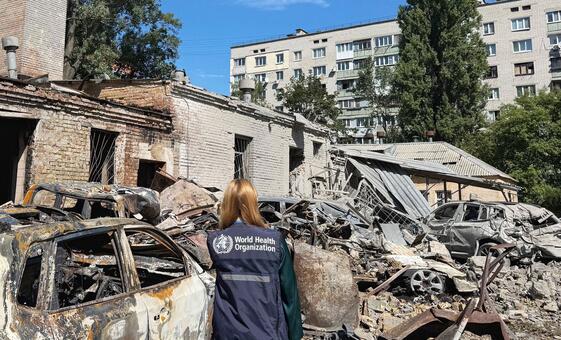
A recent UN report details a sharp rise in civilian casualties in Ukraine, with frontline regions suffering the most. This escalation challenges humanitarian efforts and underscores the ongoing human cost of the conflict.
Let's talk about something that's been on my mind, something that's easy to miss in the daily noise of headlines. It's about the real, human impact happening right now. We got a sobering update recently that highlights a tragic pattern of escalation, and I think it's important to step back and understand what these numbers actually mean for people on the ground.
### The Latest Figures from the Frontlines
According to a recent UN humanitarian coordination report, citing Ukrainian authorities, the last 24-hour period saw a significant spike in civilian casualties. We're talking about at least 12 civilians killed and more than 65 wounded in attacks across the country. Now, numbers on a page can feel abstract, but let's be clear—that's 12 families shattered, 12 communities mourning. The over 65 injured? That's a hospital ward filled with pain and recovery that will take months, if not years.
It's not random, either. The data points squarely to the frontline regions bearing the brunt of this. These are areas where people have been trying to hold onto some semblance of normal life, often just miles from active combat zones. They're the farmers checking fields, the shopkeepers opening their doors, the parents getting kids to school—or what's left of it.
### Why This Pattern Matters
You see, this isn't just a 'bad day' in a long conflict. It feels like a shift, an intensification. When civilian infrastructure and populated areas see increased strikes, it changes the entire calculus for aid workers, for evacuation plans, for basic survival. The psychological toll is immense. Imagine trying to sleep, to work, to live, with that constant uncertainty. It wears you down in ways that are hard to measure.
- **The Aid Challenge:** Delivering food, medicine, and shelter becomes exponentially harder and more dangerous.
- **The Evacuation Dilemma:** For those who haven't left, the decision to flee becomes a terrifying gamble between known danger and the unknown of displacement.
- **The Long-Term Scars:** Beyond physical wounds, the trauma for children and adults alike will shape a generation.
It reminds me of a quote I once heard from a relief worker: "We count the casualties, but we can't quantify the fear." That's what's happening here. Each number represents a wave of fear that radiates through a town, a city, a region.
### Looking Beyond the Immediate Headline
So what does this mean moving forward? For professionals and observers, it underscores the critical need for robust, adaptable humanitarian corridors. It's not just about moving people out; it's about getting supplies in consistently and safely. The winter months, which can see temperatures drop well below freezing, add another layer of urgency. Will there be enough fuel for heating? Enough materials to repair damaged homes?
The international response mechanism is being tested in real-time. The coordination between UN agencies, NGOs, and local authorities is a complex dance under fire. Every escalation forces a reevaluation of routes, supply chains, and security protocols. It's a grim, logistical puzzle where the stakes are human lives.
In the end, behind every briefing and every report, there are faces. There's the exhaustion of doctors working with limited power, the determination of volunteers driving supplies down battered roads, and the quiet resilience of those who simply have nowhere else to go. This latest update isn't just a statistic; it's a stark reminder of the conflict's enduring and expanding human cost. It challenges the global community to find more effective ways to protect civilians, because the current trajectory is simply unsustainable for those caught in the middle.