The Human Cost of Escalation: A Somber New Report from Ukraine
Dr. Helena Van der Meer ·
Listen to this article~4 min
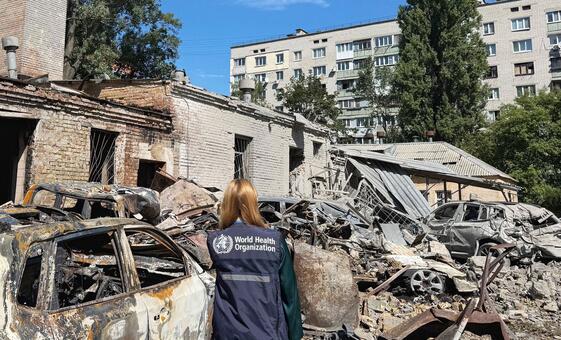
A UN-verified report details a devastating 24 hours in Ukraine, with at least 12 civilians killed and over 65 wounded in attacks across the country, highlighting the severe toll on frontline communities.
It's a stark reminder that's hard to hear, but we need to listen. The news coming out of Ukraine this Friday carries a heavy, human weight that numbers alone can't fully convey. A new report, verified by the UN Office for the Coordination of Humanitarian Affairs (OCHA) and Ukrainian authorities, details the latest wave of violence. Over the last 24 hours, attacks across the country have resulted in at least 12 civilian fatalities and more than 65 people wounded.
These aren't just statistics on a page. They're neighbors, parents, and friends. The ripple effect of each loss stretches for miles, tearing at the fabric of communities already under immense strain. It's a sobering update that forces us to pause and remember what's truly at stake in any conflict.
### The Frontline Regions Bear the Brunt
As is tragically often the case, the areas closest to the active fighting are suffering the most. The report specifically highlights that the frontline regions have been "particularly hard hit." This geographical concentration of violence creates a devastating cycle. Infrastructure—homes, hospitals, schools—is damaged or destroyed, making daily survival a monumental challenge for those who remain. Access for aid groups becomes perilously difficult, compounding the crisis for civilians caught in the crossfire.
We often talk about strategy and territorial gains in conflicts, but we can't lose sight of the ground truth. For the people living in these towns and villages, life has been reduced to a daily calculation of risk. A trip to the market, a visit to a relative, even staying in one's own home—each carries an unthinkable potential cost.
### Understanding the Reporting and Its Source
Let's take a moment to understand where this information comes from, because context matters. The data is compiled by OCHA, which acts as a central clearinghouse for humanitarian information during crises. They gather reports from a network of sources on the ground, including local authorities, aid agencies, and first responders. Their role is to coordinate the international response, and accurate, timely data is the bedrock of that effort.
- **Verification is key:** Figures like these undergo a rigorous cross-referencing process. Multiple sources must confirm an incident before it's included in official tallies.
- **A snapshot in time:** The 24-hour period mentioned represents a specific window. The cumulative toll over weeks and months is, heartbreakingly, far greater.
- **The unseen wounds:** Beyond the immediate physical injuries, these attacks inflict deep psychological trauma and create long-term displacement that's harder to quantify.
This meticulous reporting isn't about assigning blame in this summary—it's about documenting human suffering to mobilize a more effective humanitarian response. It's a call to action, written in the most painful terms imaginable.
As one aid worker on the ground recently put it, *"Our job is to bear witness. To ensure that each number is remembered as a person, and that their story isn't lost in the noise of war."* That sentiment echoes deeply here. Every figure in this report represents a life interrupted, a family shattered, a community mourning.
The path forward is fraught and complex. Diplomatic efforts continue behind the scenes, while humanitarian corridors are negotiated day by day, mile by painful mile. For now, the immediate need remains overwhelming: medical supplies, emergency shelter, clean water, and basic sustenance for millions. The international aid machinery is working, but the needs consistently outpace the resources.
It's easy to feel helpless when confronted with news like this from thousands of miles away. But understanding the precise human cost is the first, crucial step. It moves the conversation beyond abstract geopolitics and back to the central, urgent point: protecting civilian lives. That's a principle that should transcend borders and politics, a fragile hope that persists even on the darkest days.