The Human Cost of a Violent Weekend in Ukraine
Emily Johnson ·
Listen to this article~4 min
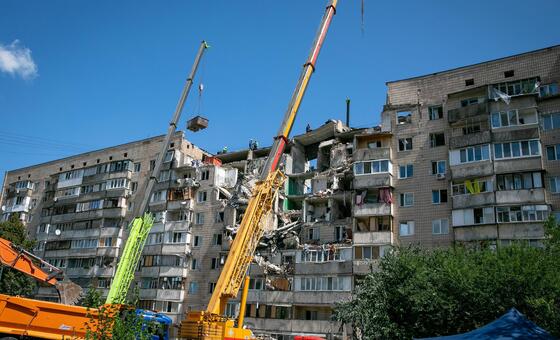
UN reports a devastating weekend in Ukraine, with approximately 60 civilians killed and over 240 injured in widespread attacks, according to spokesperson Stephane Dujarric.
The numbers are stark, and they tell a story of a weekend that left deep scars. According to a UN spokesperson briefing journalists in New York on Monday, a series of attacks across Ukraine resulted in the tragic deaths of approximately 60 civilians. That's the official count, but behind each number is a life, a family, a community forever changed. It's a sobering reminder that conflict isn't just about territory on a map; it's about the people who call that territory home. The toll didn't stop there. More than 240 individuals were reported injured, adding to the immense strain on local medical systems and humanitarian networks.
### The Official Briefing from the UN
Stephane Dujarric, the spokesperson for the United Nations Secretary-General, delivered the grim update. He cited information gathered directly from UN humanitarian staff on the ground, alongside data provided by Ukrainian authorities. This dual-source approach is crucial—it helps paint a more complete, verified picture of the human impact. The briefing in New York served as a global megaphone for a crisis unfolding thousands of miles away, aiming to cut through the noise of daily news cycles and focus international attention on the immediate human suffering.
It's one thing to hear about an attack in a headline. It's another to understand what that means on a practical, human level. Let's break down what these figures represent for the professionals and analysts monitoring the situation:
- **Emergency Response:** Local hospitals and first responders were pushed to their limits, dealing with trauma injuries that require immediate and specialized care.
- **Infrastructure Damage:** Attacks that cause civilian casualties often coincide with damage to critical infrastructure like power grids, water supplies, and residential buildings.
- **Displacement:** Events like these frequently trigger new waves of internal displacement, as people flee affected areas for safer ground.
- **Logistical Challenges:** Delivering aid—medical supplies, food, shelter—becomes exponentially harder when roads are damaged and security is volatile.
### The Challenge of Accurate Reporting in Conflict Zones
You probably know this better than most. Getting real-time, accurate data in an active conflict is incredibly difficult. Communication lines go down. Areas become inaccessible. Initial reports can be fragmented or contradictory. That's why the UN's method of corroborating local accounts with its own field observations is so vital. It’s about building a narrative from verified fragments, not rushing to conclusions. For analysts, this underscores the importance of treating all initial casualty figures as estimates that are subject to revision—often upward—as more information comes to light from areas that were previously cut off.
As one humanitarian worker on the ground was quoted saying recently, 'Our job is to count the cost, so the world doesn’t forget the human beings behind the statistics.' That sentiment hits home. For those of us analyzing from a distance, our role is to interpret these numbers, understand their context within broader operational patterns, and assess what they mean for stability, aid delivery, and long-term recovery. It’s analytical work, but it’s fundamentally about human security. The weekend's violence is a painful data point in a much longer trend, a reminder that the crisis continues to extract a heavy price from the civilian population long after the initial headlines fade.