The Human Toll Beyond the Headlines: A Grim Update from the Frontlines
Michael Miller ·
Listen to this article~4 min
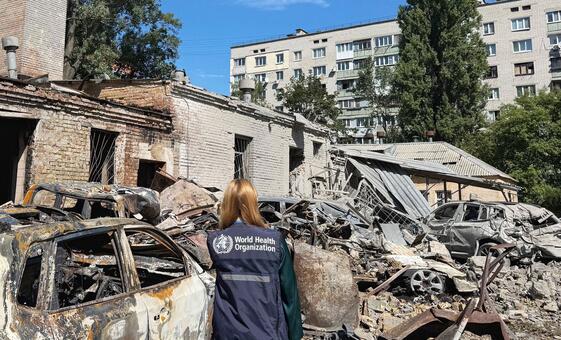
A UN report details a devastating 24-hour period in the conflict, with at least 12 civilians killed and over 65 wounded. Frontline regions continue to suffer the most severe humanitarian consequences.
It’s easy to get lost in the big numbers, the maps with shifting lines, and the political statements. But sometimes, a single report cuts through all that noise and reminds us what’s really at stake. The human cost. A recent update from the UN, relying on information from Ukrainian authorities, paints a stark picture of just one day’s violence. It’s a sobering reminder that behind every strategic briefing, there are communities living in fear.
We’re talking about real people going about their days, or trying to, when the unthinkable happens. According to the report, attacks across the country over a 24-hour period resulted in the deaths of at least 12 civilians. More than 65 others were wounded. Those aren’t statistics; they’re neighbors, parents, shopkeepers, and friends. Their stories are the ones that often don’t make the international news cycle, but they define the reality on the ground.
### Where the Impact Is Felt Most Deeply
Unsurprisingly, the regions closest to the active fighting are bearing the brunt of this suffering. These are the front-line areas where the conflict isn’t a distant rumble but a constant, terrifying presence. Life there has been upended for years, with people facing impossible choices every single day. Do you stay in the home your family built for generations, or do you flee for safety and risk losing everything? There’s no right answer, only degrees of heartbreak.
The infrastructure in these zones is often shattered. Think about what that means for daily survival:
- Access to clean water can be a miles-long trek.
- Reliable electricity is a luxury, not a guarantee.
- A trip to the market or a doctor’s appointment carries immense risk.
- Simple routines, like sending kids to school, are fraught with danger.
Living under these conditions takes a psychological toll that’s hard to measure. The constant stress, the grief for lost loved ones, and the anxiety for an uncertain future create wounds that aren’t always visible.
### Understanding the Broader Context
Now, a single day’s report is just a snapshot. It doesn’t capture the full scale of a conflict that has dragged on. But these snapshots are crucial. They help humanitarian organizations understand where the needs are most acute. They guide where medical supplies, emergency shelter, and food aid should be prioritized. For the rest of us watching from afar, it’s a vital dose of perspective.
It reminds us that geopolitical analysis often misses the core truth: war is, first and foremost, a human tragedy. The front lines aren’t just lines on a map; they’re someone’s backyard, someone’s street, someone’s shattered community. The phrase 'collateral damage' is a sterile term that utterly fails to capture the agony of a family torn apart.
As one aid worker on the ground put it, 'Our job isn't about politics or strategy. It's about delivering a bag of flour to a grandmother who hasn't eaten in two days, or finding warm blankets before the temperature drops below freezing.' That’s the human reality behind every casualty figure.
### The Path Forward Isn't Simple
There’s no neat conclusion here, no easy solution to offer. The path to peace is complex and tangled. But acknowledging the individual cost is the first step toward any meaningful resolution. It grounds the conversation in what matters most—people’s lives and their right to safety. When we reduce conflicts to troop movements and territorial gains, we lose sight of the fundamental truth that every number in a report represents a world of lost potential and profound sorrow. Our attention, our empathy, and our support for those providing aid are the least we can do while diplomats and leaders search for a longer-term answer. The need on the ground is immediate, and it’s measured in lives, not just miles.