The Human Toll Behind the Latest Conflict Updates
Liam Bennett ·
Listen to this article~5 min
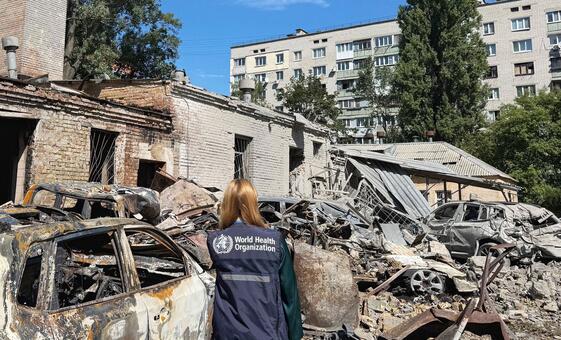
A UN report citing Ukrainian authorities states at least 12 civilians were killed and over 65 wounded in attacks across the country in the last 24 hours, with frontline regions suffering most heavily.
It's easy to get lost in the numbers, isn't it? The daily reports roll in, and we skim headlines about strikes and counter-strikes, about territories gained or lost. But sometimes, a single report cuts through the noise and reminds us of the real, human cost happening right now. That's what happened this Friday when a new update from the United Nations Office for the Coordination of Humanitarian Affairs (OCHA) landed, citing Ukrainian authorities.
The core of the report is sobering. Over the last 24 hours, attacks across the country resulted in the deaths of at least 12 civilians. More than 65 others were wounded. These aren't abstract figures; they're people. They're fathers, mothers, grandparents, and children whose lives were irrevocably changed or ended in a single day's violence.
### Where the Conflict Hits Hardest
As you might expect, the regions closest to the active front lines bore the brunt of this latest wave of violence. These frontline communities are living under a constant, grinding pressure that's hard for most of us to fully comprehend. The threat isn't a distant possibility; it's a daily reality that dictates where people sleep, if children can go to school, and whether a trip to the market is worth the risk.
The toll in these areas isn't just measured in immediate casualties. It's in the shattered infrastructure—homes, hospitals, and power lines—that takes communities years to rebuild. It's in the psychological trauma that lingers long after the immediate danger has passed. When we talk about 'frontline regions suffering the most,' we're talking about a compounding disaster that affects every single aspect of civilian life.
### Understanding the Humanitarian Reporting Chain
You might wonder how these numbers are gathered. It's a crucial process, and understanding it adds context. The UN's OCHA doesn't generate this data itself in a vacuum. They coordinate and compile information from a network of sources on the ground, which in this case included official Ukrainian authorities.
- **On-the-ground verification:** Teams work, often at great personal risk, to corroborate reports of civilian casualties.
- **Multi-source cross-referencing:** Information is checked against multiple channels to ensure accuracy.
- **Daily coordination:** This isn't a one-off report; it's part of a relentless effort to track the humanitarian impact in near real-time.
This process is imperfect—many fear the actual numbers are higher—but it represents a structured attempt to quantify the human suffering, making it visible to the world.
### The Ripple Effects Beyond the Headline Numbers
Let's think beyond that initial count of 12 and 65. Each number represents a cascade of pain and disruption. For every person killed, a family is plunged into grief. For every person injured, there's a long road to recovery, often without adequate medical supplies or facilities. Hospitals in these regions are overwhelmed, running low on everything from bandages to anesthesia.
Then there's the displacement. Attacks don't just injure people; they force entire communities to flee. Imagine packing your life into a single bag, not knowing if you'll ever see your home again. That's the decision thousands are facing, adding to the millions already displaced since the conflict began. The strain on neighboring areas and host countries is immense, testing resources and social structures to their limits.
A colleague who works with aid groups shared a perspective that stuck with me. They said, *"We report the numbers because the world needs to see the scale. But we work for the individuals, because behind every number is a story that deserves to be told and a life that deserves peace."* That tension—between the statistical scale and the personal story—is what we have to hold onto.
### Why This Matters for a Global Audience
You're reading this thousands of miles away, perhaps. It's natural to ask why a daily casualty report from a conflict zone should command your attention. Here's the thing: these reports are the heartbeat of the humanitarian response. They determine where emergency funding is allocated, which corridors are safe enough for aid trucks, and which areas need the most urgent medical evacuations.
Public awareness creates public pressure. It influences policy decisions about aid, sanctions, and diplomatic efforts. When the world pays attention, it becomes harder for the human cost to be ignored or normalized. Staying informed, with a focus on the human impact, is the first step toward demanding accountability and supporting a path to peace.
So next time you see a headline with a number, pause for a second. Remember it's not just data. It's a snapshot of a profound human tragedy unfolding in real-time, and our collective awareness is part of the response.