The Human Toll of Recent Attacks in Ukraine
Sarah Taylor ·
Listen to this article~4 min
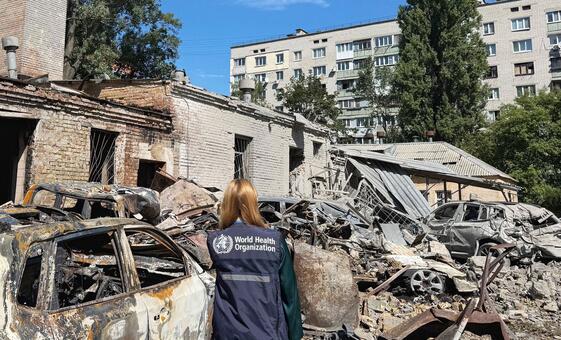
UN reports confirm a tragic escalation in Ukraine, with at least 12 civilians killed and over 65 wounded in recent attacks, highlighting the severe impact on frontline communities.
It's a stark reminder that's been hitting the headlines again, and it's one we need to talk about. According to reports from the United Nations Office for the Coordination of Humanitarian Affairs, citing Ukrainian authorities, a series of attacks across the country over a recent 24-hour period resulted in tragic civilian casualties. The numbers are more than just statistics—they represent real lives, families, and communities forever altered.
At least 12 civilians lost their lives, and more than 65 others were injured. That's the grim update. It's a sobering moment that pulls us away from abstract discussions and back to the human reality of conflict. The weight of that number—12—hangs in the air, doesn't it? Each one is a story cut short.
### The Impact on Frontline Regions
The report highlights that frontline regions bore the brunt of the violence. These are areas where daily life is already a precarious balance, where the sounds of conflict are never far away. The escalation there means deeper disruption, more families displaced, and critical infrastructure pushed closer to collapse. It's in these communities that the immediate need for humanitarian aid is most acute—for medical supplies, shelter, and basic necessities.
We often hear about strategic positions and territorial gains, but it's crucial to remember the people living in these zones. Their resilience is tested every single day.
### Understanding the Humanitarian Response
When news like this breaks, the immediate question is: what happens next? The UN's coordination role becomes central. Their teams work to assess the most urgent needs, often navigating incredibly dangerous and complex logistics to deliver aid. It's a race against time, especially when dealing with injuries that require immediate medical attention.
The response typically involves a multi-layered effort:
- Rapid deployment of emergency medical teams and supplies
- Evacuation assistance for the critically wounded
- Provision of temporary shelter for those displaced from damaged homes
- Psychological first aid for trauma survivors
It's a massive undertaking, and the scale of need can quickly overwhelm local systems.
### The Ripple Effects Beyond the Headlines
An event like this sends shockwaves far beyond the immediate casualty count. Think about the local hospitals suddenly inundated with patients, stretching staff and resources thin. Consider the schools that might close, interrupting children's education and a sense of normalcy. Family members become separated in the chaos, leading to agonizing searches and uncertainty.
There's also the economic impact. Damaged infrastructure means disrupted supply chains, shuttered businesses, and lost livelihoods. The recovery from a single day's violence can take years, long after the international headlines have moved on.
A humanitarian worker on the ground once shared a perspective that stuck with me: "We count the casualties in numbers, but we measure the loss in generations." It's a poignant reminder that the true cost is often invisible and long-term.
### Why This Information Matters
You might wonder why we focus on these updates. It's not to dwell on the grim, but to bear witness and understand the ongoing human cost. This information shapes the international community's response—how aid is allocated, where diplomatic efforts are focused, and how public awareness is maintained.
For those of us watching from afar, it's a call to informed empathy. It challenges us to look past the geopolitical narratives and see the individual human stories at the heart of the conflict. Knowing the specifics, like the distinction between frontline and rear areas, helps us comprehend the uneven distribution of suffering and the targeted nature of the humanitarian crisis.
Ultimately, reports like this underscore a fundamental truth: in any conflict, civilians are disproportionately affected. Their safety and protection must remain a non-negotiable priority in all diplomatic and humanitarian efforts. The conversation needs to keep circling back to that, no matter how complex the situation becomes.