July 2026 Just Shattered Heat Records Across the Globe
Sarah Jones ·
Listen to this article~5 min
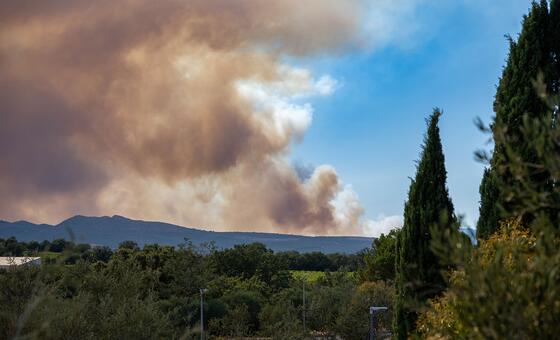
July 2026 was the second hottest on record globally, with ocean surface temperatures hitting an all-time high for the month. The WMO reports extreme heat, drought, wildfires, and floods are causing widespread damage worldwide.
July 2026 wasn't just another hot month—it was a wake-up call. According to the World Meteorological Organization (WMO), last month ranked as the second hottest July ever recorded on a global scale. But here's the part that should really grab your attention: the average temperature of the world's oceans hit an all-time high for any July in recorded history. That's not a small detail. That's a massive red flag.
We're not talking about a few warm days here and there. We're talking about extreme heat waves, devastating droughts, wildfires tearing through entire regions, and floods that have upended communities. The WMO's latest report paints a sobering picture of how these events are hammering people, economies, and ecosystems across every corner of the planet. And the numbers are hard to ignore.
### What the Data Actually Shows
The WMO's findings aren't just about feeling sweaty on your morning commute. They're based on rigorous global temperature tracking that combines land-based weather stations, ocean buoys, and satellite data. Here's what stood out:
- Global air temperatures in July 2026 were nearly 1.5 degrees Fahrenheit above the 20th-century average for the month.
- Ocean surface temperatures soared to about 2.2 degrees Fahrenheit above normal, breaking the previous July record set just a few years ago.
- Several regions, including parts of the southwestern United States, southern Europe, and Southeast Asia, experienced their hottest July on record, with daytime highs topping 115 degrees Fahrenheit in some spots.
When you stack those numbers together, the trend becomes unmistakable. We're not dealing with a random blip. We're dealing with a pattern that keeps pushing further into dangerous territory.
### Why Ocean Heat Matters More Than You Think
Here's the thing most people miss: the ocean isn't just a passive bystander in this story. It's the engine that drives much of our weather. When ocean surface temperatures climb to record levels, it's like adding fuel to a fire that's already burning. Warmer oceans mean more evaporation, which means more energy for storms to draw on. That's why we're seeing hurricanes intensify faster, monsoon seasons become more erratic, and rainfall patterns shift in ways that catch entire communities off guard.
But the impact doesn't stop at the shoreline. Marine ecosystems are struggling to cope. Coral reefs, which support roughly a quarter of all marine life, are bleaching at alarming rates. Fish populations are migrating toward cooler waters, disrupting the livelihoods of fishing communities that depend on predictable patterns. And for people living in coastal areas, rising ocean temperatures contribute to sea-level rise, making storm surges more destructive than ever before.
### The Human and Economic Toll
It's easy to get lost in the statistics, but let's bring this down to ground level. The extreme weather events tied to this July's heat have already caused billions of dollars in damage. In the United States alone, the National Oceanic and Atmospheric Administration (NOAA) has tracked multiple billion-dollar disasters this year, including wildfires in California and flooding in the Midwest. Farms are losing crops, insurance premiums are climbing, and local governments are scrambling to repair infrastructure that wasn't built for this kind of stress.
And it's not just about money. People are losing their homes, their livelihoods, and in some tragic cases, their lives. The elderly, children, and those with pre-existing health conditions are especially vulnerable to extreme heat. Emergency rooms across the country have reported spikes in heat-related illnesses, and public health officials are urging communities to take precautions seriously.
### What Comes Next
The WMO's message is clear: this isn't a problem we can afford to ignore. While the report doesn't prescribe specific policies, it underscores the urgent need for adaptation and mitigation strategies. That means investing in resilient infrastructure, improving early warning systems for extreme weather, and accelerating the transition to cleaner energy sources. It also means recognizing that the choices we make today will determine what future Julys look like—for us and for generations to come.
So, what can you do? Stay informed, support climate-smart policies, and take steps to protect yourself and your community during extreme heat events. This July was a record-breaker, but it doesn't have to be a preview of every summer to come. The data is in, and the message is loud and clear: we need to act now.
### The Bottom Line
July 2026 will go down in the history books as a month of extremes. The second hottest July globally. The hottest ocean surface temperatures ever recorded for the month. And a stark reminder that climate change isn't a distant threat—it's happening right now, in our backyards, and it's accelerating. The WMO's report is more than just a collection of numbers. It's a call to action that none of us can afford to ignore.