July's Civilian Toll in Ukraine Reaches a Grim Milestone
Jan van Dijk ·
Listen to this article~5 min
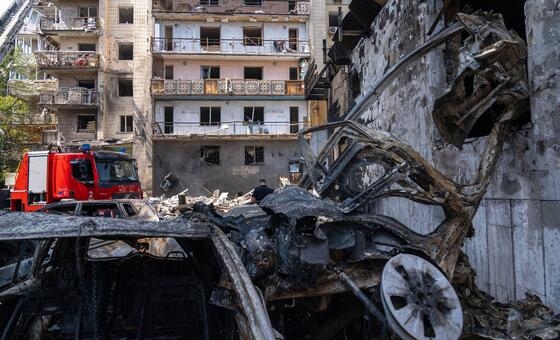
In July 2026, civilian casualties in Ukraine hit their highest monthly total since March 2022, according to the UN. A grim milestone that demands our attention and action.
The numbers are stark, and they demand our attention. In July 2026, the United Nations Human Rights Monitoring Mission in Ukraine reported the highest number of civilian casualties—both killed and wounded—for any single month since March 2022. That's a staggering statement, and it's one that should give us all pause.
When we talk about casualties, we're not just talking about statistics on a page. We're talking about real people: parents, children, neighbors, and friends. Each number represents a life forever changed, a family shattered, or a community grieving. The UN's report, released on a Thursday, underscores a troubling trend that has been building for months.
### What the UN Report Actually Says
The Monitoring Mission's data is clear: July 2026 was brutal. The civilian death and injury toll eclipsed every other month since the full-scale invasion began in late February 2022. That includes some of the darkest periods of the conflict, which is saying a lot. It's a sobering reminder that the war is not winding down—it's intensifying in ways that are hitting ordinary people the hardest.
To put this in perspective, think about the early months of 2022. Cities like Mariupol and Bucha became synonymous with tragedy. Yet, even with those horrors fresh in our memories, July 2026 managed to surpass them in terms of raw civilian suffering. That's not just a statistic; it's a signal that the dynamics on the ground have shifted, and not for the better.
### Why Is This Happening Now?
There are several factors at play, and none of them are easy to untangle. First, the nature of the fighting has changed. Urban areas, where civilians are densely packed, have become the primary battlegrounds. When artillery and airstrikes hit cities, the collateral damage is almost inevitable. Second, there's been a noticeable uptick in the use of certain weapons that are notoriously indiscriminate, like cluster munitions and thermobaric devices. These don't distinguish between soldiers and civilians; they just cause maximum devastation.
- **Urban warfare**: Dense populations make it nearly impossible to avoid civilian harm.
- **Weapon types**: Indiscriminate munitions are causing higher casualty rates.
- **Displacement**: People fleeing the front lines often move into harm's way.
Another layer is the displacement crisis. When people are forced to evacuate, they often move into areas that are still under threat. They're not safe, but they have nowhere else to go. It's a tragic Catch-22 that the UN has been documenting for years.
### The Human Cost Beyond the Numbers
It's easy to get lost in the data, but we need to remember what's behind it. Every single casualty is a person with a story. There's the elderly woman who refused to leave her home, the young father who was caught in a strike while fetching water, the child who was playing outside when the sirens didn't go off in time. These are the realities that the UN monitors are documenting, and they're gut-wrenching.
> "The true measure of this conflict is not in territory gained or lost, but in the lives it has upended." — This is the sentiment that echoes through every report filed by the mission.
The psychological toll is also immense. Communities that have been under constant threat for years are showing signs of collective trauma. Children are growing up knowing nothing but war. That's a legacy that will take generations to heal, even after the guns fall silent.
### What Does This Mean for the Future?
The UN's findings should serve as a wake-up call to the international community. The situation is not improving; it's deteriorating. If the current trajectory continues, we could see even higher numbers in the coming months. That's a terrifying prospect, but it's also a call to action. Diplomacy, humanitarian aid, and protective measures for civilians need to be prioritized—not just in words, but in deeds.
For those of us watching from afar, it's easy to feel helpless. But we're not powerless. Staying informed, advocating for policy changes, and supporting humanitarian organizations that are on the ground are all ways we can make a difference. The people of Ukraine have shown incredible resilience, but they can't do it alone. The world needs to step up, and it needs to do so now.
In the end, this report is more than just a collection of grim statistics. It's a mirror held up to our collective conscience. The question is: what are we going to do about it?