The Land That Feeds the World: How Kenya and Kazakhstan Are Healing Their Pastures
Jessica Albright ·
Listen to this article~4 min
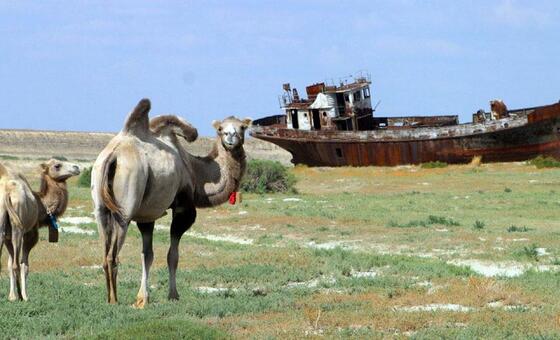
Kenya, Kazakhstan, and Botswana share a powerful lesson: restoring pastureland works best when science and traditional knowledge combine. Here's how it's changing food security.
What do Botswana, Kazakhstan, and Kenya have in common? At first glance, not much. Different continents, different climates, different cultures. But after years of trial and error, they've all landed on the same powerful lesson: restoring pastureland works best when science teams up with traditional knowledge.
It's a simple idea, but it's changing how we think about food security. And for anyone who cares about where our food comes from, it's worth understanding.
### Why Pastures Matter More Than You Think
Here's the thing: pasturelands cover roughly 40 percent of Earth's land surface. That's not a typo. These aren't just empty fields. They're the backbone of global livestock production, which supports billions of people. When pastures degrade, everything downstream suffers — less food, less income, and more pressure on already fragile ecosystems.
But here's what surprised me: the fix isn't always high-tech. Sometimes it's about listening to the people who've been grazing cattle on the same land for generations.
### The Science Meets Tradition Sweet Spot
In Kenya, researchers started working with Maasai herders who had been moving their livestock across the savanna for centuries. The scientists brought soil data and satellite imagery. The herders brought something just as valuable: decades of observation about how rainfall patterns shifted and which grasses rebounded fastest after grazing.
Together, they developed a rotational grazing system that mimics the natural movement of wild herds. The results? Healthier soil, more diverse plant life, and cattle that actually gained more weight. Not bad for a technique that costs almost nothing to implement.
Kazakhstan offers a different but equally powerful example. After the Soviet era, vast stretches of pastureland were abandoned. When the land came back into use, officials tried to manage it with modern agricultural methods alone. It didn't work. The land was too varied, too unpredictable.
So they turned to local herders who remembered how their grandparents managed the steppe. Those elders knew which areas could handle heavy grazing and which needed rest. By combining that wisdom with modern mapping tools, Kazakhstan has started to bring nearly 30 million acres of degraded land back to life.
### What This Means for the Rest of Us
Here's why I think this matters beyond the obvious environmental angle. We're facing a global food challenge. By 2050, we'll need to feed nearly 10 billion people. We can't do that on degraded land. But we also can't do it by ignoring the people who know the land best.
A few takeaways I've gathered from these success stories:
- **Local knowledge is data.** It might not come in a spreadsheet, but it's just as valuable.
- **Small changes scale.** Rotational grazing isn't flashy, but it works across millions of acres.
- **Collaboration beats isolation.** Neither scientists nor herders have all the answers alone.
### The Path Forward
The lesson from Botswana, Kazakhstan, and Kenya is clear: restoration isn't about choosing between modern science and traditional practices. It's about combining them. That's the recipe that works, and it's one we can replicate in the United States too.
Think about the ranching communities in the Great Plains or the Pacific Northwest. They face similar pressures. And they have the same untapped resource: the collective memory of people who've worked the land for generations.
The next time you hear about pasture restoration, don't picture a lab full of scientists in white coats. Picture a rancher and a researcher standing side by side, looking at the same patch of grass, and learning from each other. That's where the real magic happens.
Because at the end of the day, the land that feeds the world doesn't care where the good ideas come from. It just responds to what works.