The Land That Feeds the World: How Kenya and Kazakhstan Are Bringing Pastures Back to Life
Eleanor Vance ·
Listen to this article~5 min
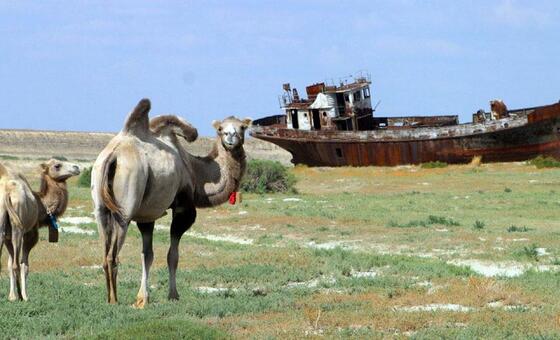
Kenya and Kazakhstan are restoring degraded pastures by pairing modern science with traditional knowledge. Discover how this powerful combination is bringing grasslands back to life and feeding a hungry world.
What do Botswana, Kazakhstan, and Kenya have in common? At first glance, not much. Different continents, different cultures, different climates. But over the years, all three have learned a powerful lesson: restoring rangelands works best when science and traditional knowledge join forces.
That's not just a nice idea. It's a survival strategy. Across the globe, grasslands cover about 40 percent of the Earth's land surface. They support billions of livestock and millions of families. Yet many of these pastures are degraded, struggling under the weight of overgrazing, drought, and poor land management.
### Why Pastures Matter More Than You Think
You might not think about pastures all that often. But they're the backbone of the global food system. Grass-fed beef, dairy, wool, and leather all start here. In the United States alone, rangelands cover roughly 770 million acres — that's about one-third of the country's total land area.
When these lands degrade, the consequences ripple outward. Soil erodes, water cycles break down, and carbon stored in the ground escapes into the atmosphere. The result? Less food, more poverty, and a warmer planet.
### The Kenyan Approach: Community-Led Recovery
In Kenya, pastoralist communities have been herding livestock across the savanna for centuries. They know the land intimately. But modern pressures — population growth, climate change, and shifting land policies — have pushed many pastures to the brink.
What's turning things around is a blend of modern monitoring and ancestral wisdom. Here's how it works:
- Satellite imagery helps identify degraded zones from space
- Local herders share their knowledge of seasonal patterns and wildlife movement
- Rotational grazing plans are designed by community elders, not outside experts
- Simple fencing and water catchment systems are built with local materials
This approach has produced real results. In some areas, grass cover has increased by more than 50 percent within three years. Soil moisture is up, erosion is down, and wildlife is returning to areas that were barren just a few seasons ago.
### Kazakhstan's Steppe Revival
The Kazakh steppe is one of the largest grassland areas on Earth. It's vast, remote, and beautiful in a stark, open way. But decades of intensive farming during the Soviet era left much of it degraded. When the USSR collapsed, huge tracts of land were simply abandoned.
For years, nobody knew what to do with them. Then something unexpected happened: scientists and local herders started working together.
Researchers brought in soil analysis and remote sensing data. The herders brought something just as valuable — generations of practical knowledge about grazing cycles, animal behavior, and water sources. Together, they developed a restoration playbook that's now being used across the region.
Key elements include:
- Restoring native grass species that are drought-resistant
- Using mobile herding systems that mimic the movement of wild herds
- Building partnerships between universities and rural communities
- Monitoring progress through both scientific instruments and local observation
### A Shared Lesson for the World
Here's the thing: this isn't just about Kenya or Kazakhstan. It's a lesson for everyone who cares about food security, climate resilience, and rural livelihoods. The most effective solutions don't come from a lab or a boardroom alone. They come from listening to the people who live on the land.
As one Kenyan pastoralist put it, "The land speaks to those who listen. Science gives us a map, but our elders give us the compass."
That combination is proving itself across continents. And it offers a blueprint for restoring degraded lands everywhere — from the American Great Plains to the Australian outback.
### What This Means for the Future
Restoring pastures isn't just an environmental issue. It's an economic one. Healthy rangelands support entire industries, from beef production to eco-tourism. They also play a critical role in carbon sequestration, helping to offset global emissions.
For the United States, these international examples offer valuable lessons. American ranchers face many of the same challenges: drought, market pressures, and changing climates. By blending time-tested traditional practices with cutting-edge science, they too can build more resilient landscapes.
The bottom line? The land that feeds the world is worth fighting for. And the path forward is clearer than ever: combine the best of what we know with the wisdom of those who came before us.