The Land That Feeds the World: How Kenya and Kazakhstan Are Bringing Pastures Back to Life
Jessica Davis ·
Listen to this article~4 min
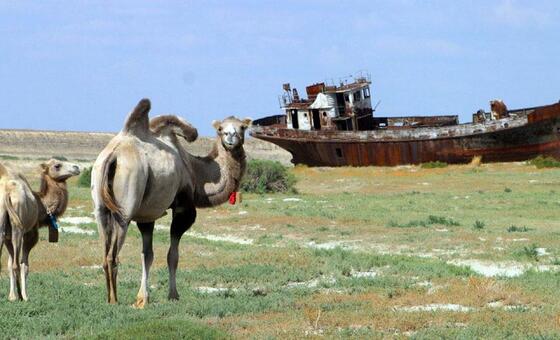
Kenya, Kazakhstan, and Botswana are proving that the best way to restore degraded pastures is to combine modern science with traditional herding knowledge. Here's how that partnership is bringing grasslands back to life.
What do Botswana, Kazakhstan, and Kenya have in common? At first glance, not much. Different continents, different climates, different cultures. But they've all learned the same hard-won lesson over the years: restoring grassland isn't something you can just throw money or machinery at. It works best when science and traditional knowledge actually sit down at the same table.
That might sound simple, but it's a radical shift from how we've approached land restoration for decades. For too long, the default move was to bring in outside experts with high-tech solutions and impose them from the top down. The results were often disappointing. The land stayed degraded, the communities stayed frustrated, and the experts went home scratching their heads.
### Why Traditional Knowledge Matters More Than You Think
Here's the thing about pastoralists in Kenya or herders in Kazakhstan: they've been reading the land for generations. They know which grasses recover fastest after drought. They know where water pools after a rare rainstorm. They know when to move livestock and when to let a pasture rest. That's not folklore—that's data, collected over centuries and passed down through families.
When scientists started actually listening to this knowledge instead of dismissing it, everything changed. Researchers began mapping where herders said the best grazing was, then cross-referencing that with satellite imagery and soil samples. The match was striking. The traditional understanding of the land was not just accurate—it was often more nuanced than what the satellite could see.
What emerged is a hybrid approach. Scientists bring the tools to measure soil carbon, track rainfall patterns, and monitor grass recovery rates over large areas. Local communities bring the context, the timing, and the on-the-ground judgment that no sensor can replicate.
### The Results Speak for Themselves
In Kenya's rangelands, this partnership has led to a measurable comeback. Restored pastures now support more livestock per acre, which means more income for families who depend on cattle, goats, and camels. In Kazakhstan, where the Soviet era left vast stretches of land degraded, similar efforts are bringing native grasses back to areas that had become dust bowls.
Here's what the data shows when science and tradition work together:
- Grass cover increases by as much as 30 percent within two to three growing seasons
- Soil carbon content rises, which helps the land hold moisture longer
- Livestock health improves because animals have access to more nutritious forage
- Local communities gain a stronger sense of ownership over restoration projects
None of this happens overnight. Restoration is a slow, patient process. But the direction is clear, and the momentum is building.
### A Blueprint for the Rest of the World
The lesson from Botswana, Kenya, and Kazakhstan isn't just for those three countries. It's a blueprint for any region struggling with degraded land. The next time you hear about a big restoration project, ask one question: who's actually doing the work on the ground? If the answer doesn't include the people who live there, the project is probably in trouble.
The land that feeds the world is too important to be left to a single approach. We need the best of both worlds—the precision of science and the wisdom of lived experience. That's not a compromise. It's a superpower.
As one Kenyan elder put it during a restoration workshop: "The soil remembers what we have forgotten. But if we listen, it will teach us again." That's the spirit driving this movement forward.