The Land That Feeds the World: How Kenya and Kazakhstan Are Restoring Grasslands
Emily Moore ·
Listen to this article~4 min
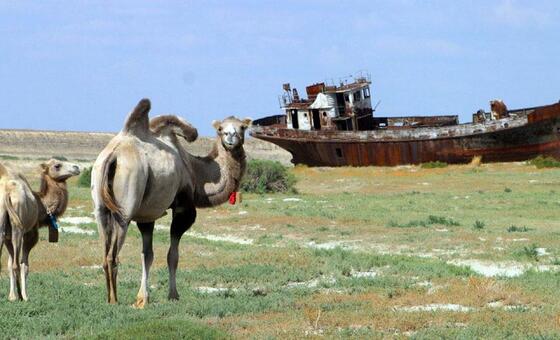
What do Botswana, Kazakhstan, and Kenya have in common? The lesson they've all learned: restoring pastureland works best when science joins forces with traditional knowledge.
What do Botswana, Kazakhstan, and Kenya have in common? At first glance, not much. Different continents, different climates, different cultures. But over the years, they've all learned the same hard-won lesson: restoring pastureland works best when science teams up with traditional knowledge. It's not about picking one over the other. It's about letting them work together.
For decades, the approach to land restoration was pretty top-down. Scientists would fly in, run their tests, and hand down recommendations. Local herders were often sidelined, treated as part of the problem rather than part of the solution. That mindset didn't just fail to restore the land. In many cases, it made things worse.
### Why Traditional Knowledge Matters More Than You Think
Here's the thing about pastoralists in places like Kenya's Maasai Mara or the vast steppes of Kazakhstan. They've been reading the land for generations. They know which patches of grass recover fastest after a drought. They understand the subtle signs that tell them when to move their herds and when to let a pasture rest. This isn't folklore. It's data, collected over centuries and passed down through families.
When scientists started actually listening to this knowledge, something clicked. Researchers in Kenya found that herders could predict grazing patterns with remarkable accuracy. In Kazakhstan, where Soviet-era policies turned millions of acres of grassland into dust, local elders remembered how the land used to behave. That memory turned out to be a blueprint for recovery.
### The Science That Complements the Herders
Now, don't get me wrong. Science is absolutely essential here. Satellite imagery, soil sampling, and climate modeling give us a big-picture view that no single herder could ever have. But the real magic happens when that data is layered on top of local expertise. It's a bit like having a GPS while also knowing the shortcuts that only a local would know. You get the best of both worlds.
In practice, this looks like collaborative planning sessions where scientists and herders sit down together. They map out grazing rotations, identify degraded zones, and set recovery timelines. The results have been impressive. In parts of Kenya, grasslands that were nearly barren just a decade ago are now supporting healthy herds again. In Kazakhstan, restored pastures are helping to stabilize soil and bring back native plant species.
### A Shared Playbook for the World
Here's what's fascinating. Even though Botswana, Kenya, and Kazakhstan are thousands of miles apart, the playbook is remarkably similar. It boils down to a few core principles:
- **Listen first, then act.** Local communities aren't obstacles. They're the ones who know the land best.
- **Let the land rest.** Overgrazing is the enemy. Rotational grazing gives grass time to recover.
- **Blend old and new.** Use modern tech to enhance, not replace, traditional practices.
- **Think long-term.** Quick fixes rarely stick. Real restoration takes years of patience.
These aren't complex ideas. But they require a shift in mindset, one that values collaboration over control. And that's the hard part.
### What This Means for the Future
The stakes are high. Grasslands cover about a quarter of the Earth's land surface and support billions of people. When they degrade, it's not just an environmental problem. It's an economic and humanitarian one. But the stories coming out of these three countries offer real hope.
We're not talking about some far-off, idealistic solution. We're talking about practical, proven methods that are already working on the ground. And the beauty of it is, the approach is scalable. The same principles that work in a Kenyan savanna can be adapted to the American plains or the Australian outback.
At the end of the day, the lesson is pretty simple. We don't have to choose between science and tradition. When we let them work together, we get something far more powerful than either could achieve alone. The land that feeds the world is counting on us to get this right.