The Land That Feeds the World: How Kenya and Kazakhstan Are Bringing Pastures Back
Jessica Miller ·
Listen to this article~5 min
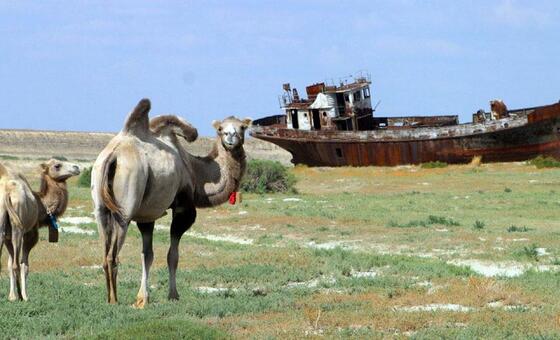
Kenya, Kazakhstan, and Botswana share a powerful lesson: restoring grasslands works best when science and traditional knowledge join forces. Here's how that partnership is reshaping pastures and feeding the world.
What do Botswana, Kazakhstan, and Kenya have in common? At first glance, not much. Different continents, different climates, different cultures. But they've all learned the same hard-won lesson over the years: restoring grassland is most effective when science teams up with traditional knowledge. Not instead of it, but alongside it. That combination is quietly changing the way we think about food security, climate resilience, and the future of farming.
### Why Pastures Matter More Than You Think
We tend to overlook grasslands. They're not as dramatic as rainforests or as photogenic as coral reefs. But these vast stretches of land are doing heavy lifting for the entire planet. They feed billions of livestock, support millions of families, and store massive amounts of carbon in their roots and soil. When pastures degrade, the effects ripple outward: soil erosion, water shortages, and even climate change.
Here's the thing though. The land we're talking about isn't just dirt and grass. It's a living system. And for generations, the people who live on it have understood how to work with it. The problem is that modern, industrial approaches often ignore that wisdom. They push for quick fixes and maximum output, without considering the long-term health of the ecosystem.
### The Power of Blending Old and New
So what does it actually look like when science meets tradition? In Kenya, pastoralists have been moving their herds across the landscape for centuries. They follow the rains, let the grass recover, and avoid overgrazing. Scientists are now studying these patterns and confirming what herders already knew: rotational grazing can actually improve soil health and boost plant diversity.
In Kazakhstan, the story is a bit different. The country was a major grain producer under the Soviet Union, but that came at a cost. Vast areas of grassland were plowed up, and when the system collapsed, the land was left degraded. Now, researchers are working with local communities to restore those pastures. They're using satellite data and soil analysis, but they're also listening to the herders who remember how the land used to behave.
- Rotational grazing mimics natural herd movement
- Native grass species are reseeded with local help
- Satellite imagery tracks recovery over time
- Community knowledge shapes restoration plans
### A Lesson for the Rest of Us
Here's the part that feels genuinely hopeful. This isn't about going back to some romanticized past. It's about using every tool we have, old and new, to solve a very modern problem. Traditional knowledge isn't a relic. It's data that's been collected over generations, tested by experience, and refined by necessity.
Science, on the other hand, offers precision and scale. It can tell us exactly which nutrients are missing from the soil, or how much carbon a restored pasture can capture. But without the local context, those numbers are just numbers. The real magic happens when the two come together.
> "The land doesn't care where the knowledge comes from. It just responds to being treated well."
That's a sentiment you hear echoed by ranchers in Montana, herders in Mongolia, and farmers in the American heartland. It's a reminder that we're all working with the same basic elements: soil, water, and sunlight. The specifics change, but the principles don't.
### What This Means for American Ranchers
You might be wondering what any of this has to do with you. Well, if you manage land in the United States, the lessons from Kenya and Kazakhstan are directly relevant. The same principles of rotational grazing, native species recovery, and community collaboration apply on a ranch in Texas or a pasture in Colorado. The scale and climate might differ, but the underlying logic holds up.
There's also a growing market for sustainably raised beef and other pasture-based products. Consumers are paying attention to how their food is produced, and they're willing to pay a premium for practices that protect the land. That's not just good ethics. It's good business.
### The Bottom Line
Restoring pastures isn't just about saving grass. It's about securing the future of food, protecting biodiversity, and building resilience against a changing climate. And the path forward isn't a choice between science and tradition. It's a partnership. The land that feeds the world is telling us, in no uncertain terms, that it needs both.