The Land That Feeds the World: How Kenya and Kazakhstan Are Healing Their Soil
Robert Miller ·
Listen to this article~4 min
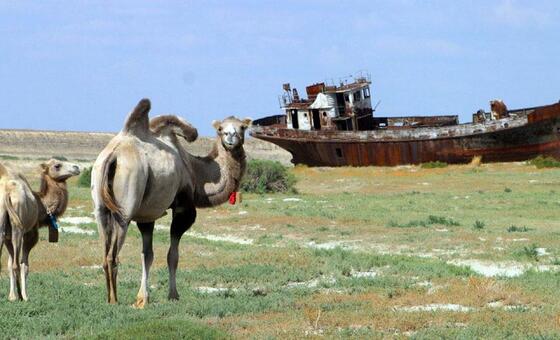
Kenya, Kazakhstan, and Botswana share a powerful lesson: restoring pastureland works best when science meets traditional knowledge. Here's how it's transforming lives.
What do Botswana, Kazakhstan, and Kenya have in common? It's not a shared border or a common language. It's a hard-won lesson about the ground beneath our feet: restoring pastureland works best when modern science shakes hands with traditional knowledge.
For decades, we've treated soil like a factory floor—push it harder, squeeze out more, and move on when it's spent. But that approach has left vast stretches of land degraded, cracked, and barren. The good news? There's a better way, and it's already taking root in some of the most unlikely places on Earth.
### Why Pasture Restoration Matters More Than You Think
Healthy pastures aren't just pretty landscapes. They're the backbone of food systems, local economies, and even climate stability. When grasslands thrive, they store carbon, hold water in the ground, and support livestock that feed millions of families.
But when land degrades, the dominoes fall fast: less grass means fewer animals, which means less income and more pressure to overgraze what's left. It's a vicious cycle that's hard to break—unless you change the approach entirely.
### The Science Behind the Solution
In Kenya, researchers have been mapping soil health with satellite imagery and drone surveys. These tools reveal exactly where nutrients are depleted and where water pools after rain. That data helps communities decide where to rest certain areas and when to reintroduce grazing.
Meanwhile, in Kazakhstan, scientists are experimenting with drought-resistant grass varieties that can survive on a fraction of the rainfall they used to get. These aren't lab creations—they're native species that have been carefully selected and bred for resilience.
### The Traditional Knowledge Piece
Here's where it gets interesting. All that high-tech data means very little if it ignores what local herders have known for generations. In Botswana, for example, herders have long practiced rotational grazing—moving livestock in patterns that let grass recover naturally.
When scientists started listening to these herders instead of just lecturing them, something clicked. The combination of satellite data and local intuition turned out to be far more powerful than either approach alone.
### What This Looks Like on the Ground
- **Kenya:** Community-led grazing plans that rotate livestock across designated zones, giving each area at least 60 days of rest between uses
- **Kazakhstan:** Reintroducing traditional migration routes that had been abandoned during the Soviet era, now guided by real-time soil moisture sensors
- **Botswana:** Using fire as a management tool, but only at specific times and intensities that mirror natural patterns
These aren't theoretical models. They're working right now, and the results are measurable:
> "We stopped fighting the land and started working with it. The grass came back faster than anyone expected." — a Kenyan pastoralist who participated in a pilot program
### The Economic Ripple Effect
Restored pastures don't just help the environment—they put money back into local pockets. Healthier grass means heavier cattle, which means better prices at market. In some Kenyan communities, household incomes have risen by as much as 30 percent within two years of adopting rotational grazing.
In Kazakhstan, the return of migratory herding has reduced the need for expensive supplemental feed. One rancher we spoke with said his feed costs dropped by nearly half after he shifted to a science-informed grazing schedule.
### What Other Regions Can Learn
This isn't just a story about Africa and Central Asia. The same principles apply to degraded grasslands everywhere—from the Great Plains to the Australian outback. The key is humility: acknowledging that technology is a tool, not a replacement for lived experience.
If there's one takeaway from these three countries, it's that restoration isn't about choosing between modern methods and ancient wisdom. It's about letting each inform the other. The land that feeds the world deserves that kind of respect.
And honestly? It's working. The grass is greener, the soil is healthier, and the people who depend on it are finally seeing a path forward that doesn't require sacrificing tomorrow for today.