The Land That Feeds the World: How Kenya and Kazakhstan Are Bringing Pastures Back to Life
Jennifer Taylor ·
Listen to this article~5 min
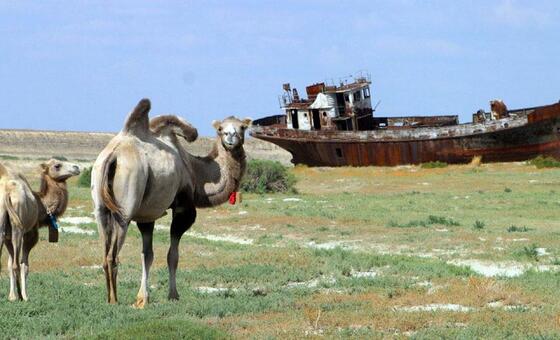
What do Botswana, Kazakhstan, and Kenya have in common? They've all learned that restoring pastureland works best when science joins forces with traditional knowledge. Here's how these countries are healing the land that feeds the world.
What do Botswana, Kazakhstan, and Kenya have in common? It's a question that might stump you at first. These three countries sit on different continents, have different histories, and face different political climates. But they've all learned the same hard-won lesson over the years: restoring pastureland works best when modern science joins forces with traditional knowledge.
That's a big deal, especially when you consider that nearly 70 percent of the world's grasslands are already degraded. For the millions of herders and farmers who depend on these lands, this isn't an academic issue. It's about survival.
### Why Pasture Restoration Matters More Than Ever
Here's the thing about degraded land: it doesn't just stop producing grass. It stops holding water. It stops storing carbon. It stops supporting wildlife. And when the soil blows away or turns to dust, the whole ecosystem starts to unravel.
In the United States, we've seen this play out in places like the Dust Bowl region, where poor land management turned fertile plains into a disaster zone. The stakes are just as high in Kenya and Kazakhstan, but the solutions are taking a different shape.
The key insight that these countries have landed on is pretty simple: you can't just throw modern technology at an ancient problem. You have to listen to the people who've been living on that land for generations.
### The Kenyan Approach: Blending Herding Wisdom With Data
In Kenya, pastoralists have been moving their cattle across the landscape for centuries. They know when the rains are coming, which patches of grass recover fastest, and where the water hides beneath the surface. That knowledge isn't just folklore. It's a sophisticated system of land management that has kept ecosystems healthy for millennia.
What's changed recently is that scientists are now mapping those herding routes using GPS collars and satellite imagery. By tracking where cattle graze and how the land responds, researchers can identify the sweet spots for recovery. The results have been impressive, with some restored areas showing grass regrowth within a single season.
- Satellite imaging tracks vegetation health in real time
- GPS collars show exactly how livestock move across the land
- Local herders contribute decades of observation about weather patterns
- Restoration plots are measured in acres, not hectares, to make data accessible to local communities
### Kazakhstan's Steppe Revival
Kazakhstan, on the other hand, has a different story. The country's steppe once stretched for millions of acres, but Soviet-era farming policies turned much of it into degraded cropland. When the Soviet Union collapsed, many of those fields were simply abandoned, leaving behind compacted soil and dust storms.
The recovery effort there has taken a more scientific approach. Researchers are testing different grass seed mixes, studying soil chemistry, and using drones to map the landscape. But here's the twist: they're also working with elderly herders who remember how the steppe looked before the plows arrived.
One herder in his 80s described the old grazing patterns as "a conversation between the land and the animals." That kind of perspective is hard to quantify, but it's proving invaluable for deciding where to focus restoration efforts.
### The Power of Combining Two Worlds
The most successful projects share a common thread: they treat local knowledge as equal to scientific data. When scientists and herders sit at the same table, the results are more than the sum of their parts.
> "Science tells us what's possible. Tradition tells us what's sustainable. You need both to heal the land." — A Kenyan restoration project coordinator
This approach also cuts costs. Restoration projects that rely on local expertise tend to be more efficient, saving money that can be redirected to other conservation efforts. In a world where every dollar counts, that's a significant advantage.
### What This Means for the US
So why should we care in the United States? Because the same principles apply here. Our own grasslands in the Great Plains are facing pressures from drought, overgrazing, and changing climate patterns. The lessons from Kenya and Kazakhstan remind us that we don't have to choose between modern science and traditional wisdom.
We can have both. And when we do, the land gives back in ways that benefit everyone.
The next time you drive past a field of golden grass, take a moment to think about the invisible work happening beneath the surface. That land is not just scenery. It's a living system that feeds the world, and it's worth fighting for.