The Land That Feeds the World: How Kenya and Kazakhstan Restore Their Grasslands
David Brown ·
Listen to this article~4 min
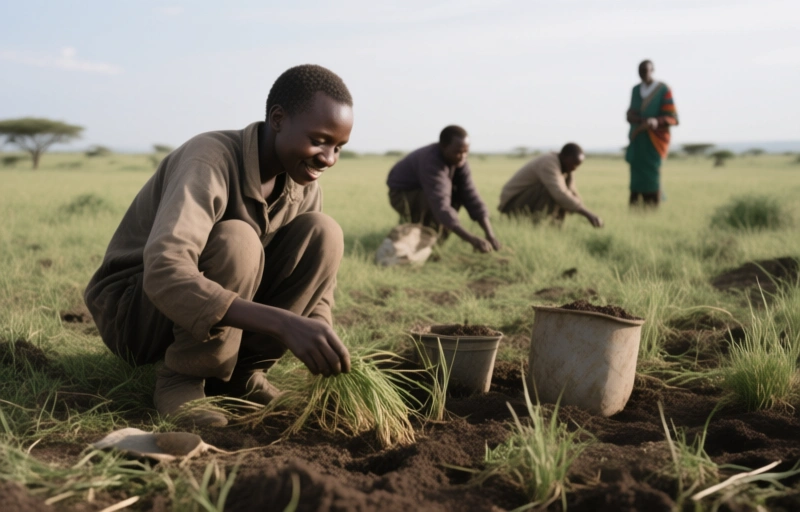
Kenya, Kazakhstan, and Botswana share a powerful lesson: restoring pastures works best when science and traditional knowledge join forces. Here's how it's happening.
What do Botswana, Kazakhstan, and Kenya have in common? It's a question that might not keep you up at night, but the answer could change how we think about feeding a growing planet. These three nations, scattered across different continents with vastly different climates, have all learned the same hard-won lesson over the years: restoring pastureland works best when science shakes hands with traditional knowledge.
That's not just a nice sentiment. It's a practical strategy that's reshaping how communities manage the land beneath their feet. And honestly, it's about time we paid attention.
### Why Pasture Restoration Matters More Than You Think
Let's back up for a second. Pastures aren't just empty fields where cows happen to graze. They're living systems that store carbon, filter water, and support entire economies. In the United States, we've seen the Dust Bowl era teach us what happens when grasslands collapse. The same lessons are playing out in Africa and Central Asia right now, but with a twist: they're finding solutions that actually work.
The numbers are staggering. Degraded pastures cover millions of acres globally, and every acre lost means less food, less income, and more pressure on the land that remains. But here's the thing nobody tells you: restoration isn't about planting a few seeds and hoping for the best. It's a long game that requires patience, local wisdom, and a willingness to let go of quick fixes.
### The Science Meets Tradition Sweet Spot
Here's where it gets interesting. For decades, the default approach to pasture management was top-down. Governments and NGOs would fly in with satellite imagery and soil samples, deliver a plan, and leave. The results? Mixed at best, disastrous at worst. The missing piece was always the people who actually live on that land.
Traditional herders in Kenya's Maasai communities have been rotating grazing patterns for generations. They know which grasses thrive after a dry season, which areas need rest, and when to move their livestock. Meanwhile, Kazakh herders have their own set of practices, honed over centuries of surviving harsh continental winters and scorching summers.
What's changed is that scientists are finally listening. Research teams now work alongside these communities, combining modern soil testing with indigenous observations. The outcome is a hybrid approach that's both data-driven and culturally grounded. It's not glamorous, but it works.
### What This Looks Like on the Ground
Let's get specific. In Kenya, community-led restoration projects have brought back native grasses that had all but disappeared. The process involves:
- Mapping degraded areas using GPS technology
- Setting up rotational grazing schedules based on traditional calendars
- Monitoring soil health with simple, low-cost tools
- Training younger herders in both modern techniques and ancestral practices
In Kazakhstan, the challenge is different. The Soviet era left behind vast tracts of overgrazed land, and the transition to independence brought its own pressures. But recent projects have shown that even severely degraded pastures can bounce back. The key is giving the land time to heal, then reintroducing grazing in controlled pulses that mimic natural herd movements.
### The Bottom Line for a Hungry World
Here's what all of this means for you and me. The global food system is fragile, and pasture-based livestock production is a critical piece of the puzzle. If we can restore just a fraction of the world's degraded grasslands, we're talking about sequestering significant amounts of carbon, boosting rural economies, and securing food supplies for millions of people.
It's not a silver bullet. Nothing is. But the lesson from Botswana, Kazakhstan, and Kenya is clear: the best solutions are born when we stop choosing between modern science and traditional wisdom. We need both. And the sooner we embrace that, the better off we'll all be.
So the next time someone tells you that fixing the land is a simple problem with a technical fix, remember this: the answer might just be sitting in the collective memory of people who've been stewarding the earth for generations. All we have to do is listen.