Latest Conflict Toll: Assessing the Human Impact in Ukraine's Frontline Regions
Robert Brown ·
Listen to this article~5 min
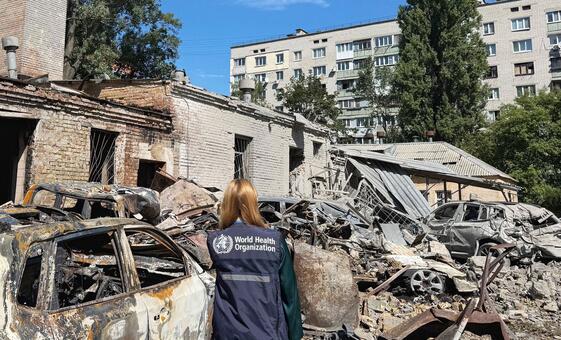
UN reports at least 12 civilians killed, 65+ wounded in latest attacks across Ukraine, with frontline regions suffering the most severe impact in the past 24 hours.
It's a stark and sobering update that makes you pause for a moment. The human cost of conflict is always the hardest part to process. This Friday, the UN Office for the Coordination of Humanitarian Affairs, citing Ukrainian authorities, reported that attacks across the country over the last 24 hours have resulted in the tragic loss of at least 12 civilian lives, with more than 65 people wounded.
These aren't just numbers on a page. They're people, families, communities shattered. It's the kind of news that brings the reality of the situation into sharp, painful focus, no matter how far away you might be. The reports specifically highlight that the frontline regions have been hit especially hard.
### Understanding the Frontline Reality
What does it mean to be a 'frontline region' in this context? It's not just a geographic term. It describes areas where the daily reality is defined by proximity to active hostilities. The constant threat, the strain on infrastructure, the immense pressure on emergency services—it creates an environment of sustained crisis for the civilians who remain.
Life there operates under a different set of rules. Something as simple as a trip to the market or getting children to school carries a weight of risk that's difficult for most of us to fully comprehend. The resilience shown by people in these communities is extraordinary, but it comes at a profound human cost.
### The Ripple Effects of a Single Attack
We often hear the immediate casualty figures, but the impact of a single strike radiates outwards in ways that are less frequently measured. Let's break down what these numbers often represent beyond the initial tragedy:
- **Immediate Trauma and Loss:** Families grieving, individuals facing life-altering injuries.
- **Strained Medical Systems:** Local hospitals and clinics, which may already be operating under severe duress, are pushed further.
- **Displacement:** Attacks often force more people to leave their homes, adding to the already significant number of internally displaced persons.
- **Psychological Toll:** The constant stress and anxiety inflicted on entire populations, including children, which will have long-term consequences.
- **Infrastructure Collapse:** Damage to power, water, and heating systems, especially critical as temperatures drop.
It's a cascade of secondary crises triggered by a primary event. Humanitarian organizations on the ground are constantly navigating this complex web of needs, trying to plug gaps in a system that is perpetually under strain.
As one aid worker recently put it to me, 'We're not just treating wounds. We're trying to hold together the fabric of daily life where it's being torn apart.' That sentiment sticks with you. It reframes the mission from pure crisis response to something more holistic—sustaining human dignity in the most undignified of circumstances.
### The Challenge for Humanitarian Response
Coordinating aid and protection in an active conflict zone is arguably one of the most difficult operational challenges in the world. Access is restricted, logistics are a nightmare, and the safety of aid workers themselves is never guaranteed. The UN and other agencies operate on principles of neutrality and impartiality, but delivering on those principles requires constant negotiation and immense courage.
Their work involves a brutal calculus of triage—determining where limited resources can do the most good for the most people when the needs are virtually limitless. It's a heavy responsibility. These updates from the UN serve as a crucial, if heartbreaking, mechanism for documenting need and advocating for the protection of civilians, which is supposed to be a fundamental rule of war.
When you see figures like '12 killed, 65 wounded,' remember they are a snapshot. They represent a single day's tally in a conflict that has stretched on for months. The cumulative toll is staggering. For professionals monitoring the situation, whether in policy, aid, or journalism, these daily reports are essential for understanding the evolving dynamics and the shifting geographic focus of hostilities.
They tell a story of where the pressure is greatest at any given moment. This latest report underscores that the frontline areas remain the epicenter of the humanitarian emergency, bearing the brunt of the violence. The international community's response, from funding to diplomatic pressure, needs to match the severity of what's being reported on the ground. It's a continuous, urgent call to action that, frankly, shouldn't need repeating but does, day after day.