Myanmar's Military Is Targeting Civilians: What the UN Investigation Found
Lisa Bos ·
Listen to this article~5 min
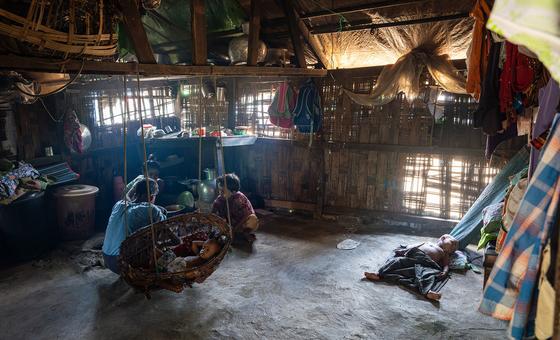
Myanmar's military is deliberately targeting civilians with airstrikes, torture, and sexual violence, according to a new UN report. Here's what it means for the world.
When you hear about conflicts happening halfway across the world, it's easy to feel like they're distant problems—something that doesn't really touch your daily life. But the latest report from the United Nations' Independent Investigative Mechanism for Myanmar (IIMM) paints a picture that's hard to look away from. It's a story about ordinary people—families, kids, teachers—caught in the crosshairs of a military that seems determined to make life unbearable for anyone who isn't part of its inner circle.
The report, released just recently, lays out a disturbing pattern. Myanmar's military isn't just fighting an armed opposition; it's actively targeting civilians. We're talking airstrikes on homes, schools, and camps for displaced families. And it doesn't stop there. Arbitrary arrests, torture, and sexual violence are part of the playbook too. For anyone following the situation, this isn't a surprise. But for those of us just tuning in, it's a stark reminder of how brutal this conflict has become.
### What the UN Report Actually Says
Let's break down the key findings without getting lost in diplomatic jargon. The IIMM is a special body set up by the UN Human Rights Council. Its job? To collect evidence of the most serious crimes under international law and prepare files for future prosecutions. So when they release an annual report, it's not just a press release—it's a legal document that could one day be used in court.
Here are the main takeaways:
- **Airstrikes on civilian infrastructure**: The military has repeatedly hit residential areas, schools, and camps for internally displaced people. These aren't accidental strikes; the report says they're intentional.
- **Widespread arbitrary detention**: People are being picked up off the streets, held without charges, and often tortured. Families are left in the dark about their loved ones' fates.
- **Sexual violence as a weapon**: The report documents cases where sexual violence is used systematically, not just as an act of brutality but as a tactic to terrorize communities.
- **Impunity for perpetrators**: Despite years of documentation, no one in the military leadership has faced meaningful consequences. That's the real kicker.
### Why This Matters Beyond Myanmar
You might be thinking, "Okay, but what does this have to do with me?" Fair question. Here's the thing: when a government gets away with this kind of behavior, it sets a dangerous precedent. International law exists to protect people everywhere, not just in stable democracies. If we look the other way now, we're saying it's okay for any military to treat its own citizens as enemies.
Plus, there's a practical angle. Myanmar sits in a strategically important region. Instability there affects global supply chains, refugee flows, and regional security. The U.S. has economic and diplomatic interests in Southeast Asia, and what happens in Myanmar doesn't stay in Myanmar.
### The Human Cost Behind the Numbers
It's easy to get lost in statistics and legal terms. But let's remember what we're really talking about. Imagine a father in a village near the Thai border. He's got three kids, a small plot of land, and a life he's built over decades. One day, a jet appears overhead. He grabs his family and runs. They end up in a camp with thousands of others, sleeping under tarps, eating whatever aid workers can bring in. That's the reality for over a million people in Myanmar right now.
The report also highlights how the military has targeted schools specifically. That's not a coincidence. By attacking education, they're trying to crush any hope of a future generation that might push back. It's calculated, and it's cruel.
### What Happens Next
So, where do we go from here? The IIMM is building cases that could lead to prosecutions in international courts. But that takes time—years, in fact. Meanwhile, the international community has options. Sanctions can be tightened. Diplomatic pressure can be applied. Humanitarian aid can be increased. But without political will, these tools are just paper tigers.
For those of us watching from the U.S., it's worth paying attention. Our government has condemned the violence, but words don't stop bombs. If you care about human rights, this is a moment to speak up. Whether that's contacting your representatives, supporting refugee organizations, or simply staying informed, every bit helps.
At the end of the day, this report is a reminder that the world is smaller than we think. The suffering of people in Myanmar isn't just their problem—it's a test of whether the international community's promises mean anything. Let's hope we pass.