Only 3% of Gaza's Farmland Remains Usable: What This Means
Margriet Bos ·
Listen to this article~4 min
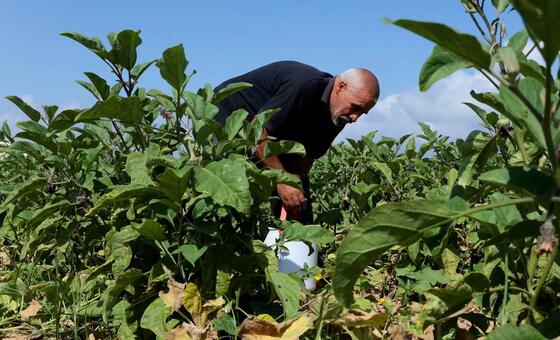
Only 3% of Gaza's farmland remains usable for crops. This is what that means for farmers, food security, and the future of the region.
The numbers are staggering, and they paint a picture that's hard to wrap your head around. According to recent assessments, only about three percent of Gaza's agricultural land is still fit for growing crops. That's not a typo. Three percent. The rest has been damaged, contaminated, or rendered completely inaccessible due to ongoing military operations.
For the farmers who have called these fields home for generations, the situation is nothing short of devastating. We're not talking about a bad harvest or a dry season. We're talking about the systematic loss of the very ground that feeds families, communities, and an entire region.
### The Reality on the Ground
When you think about farmland, you probably picture open fields, green rows of vegetables, or maybe olive trees stretching toward the horizon. In Gaza, that image has been replaced by something far more grim. Aerial surveys and satellite imagery show cratered fields, destroyed irrigation systems, and soil that's been churned up by heavy machinery and explosives.
Farmers are facing a brutal dilemma. Even if they manage to find a patch of land that looks safe, there's no guarantee it'll stay that way. The constant threat of shelling or ground operations means that planting a crop is a gamble with incredibly high stakes. You're not just risking seeds and time; you're risking your life.
### Why the Soil Matters More Than Ever
Here's the thing about soil: once it's damaged, it doesn't bounce back overnight. The physical destruction is only half the story. Contamination from munitions, fuel, and other hazardous materials can seep into the ground, making it toxic for years. Even if the fighting stopped tomorrow, the land wouldn't be ready for planting anytime soon.
And let's not forget the water. Irrigation systems have been destroyed, and the little water that's available is often too saline or polluted for agricultural use. Without clean water, even the most fertile soil won't produce a thing. It's a cascading failure that hits every link in the food chain.
### The Human Cost of Losing Farmland
It's easy to look at statistics and forget that behind every number is a person. Imagine being a farmer who has spent decades tending to the same plot of land. You know every ridge and furrow, every spot where the soil drains well and where it doesn't. Now imagine being told you can't go back there, or worse, that the land itself is gone.
For many families, farming isn't just a job; it's an identity. It's the way they feed their children, pay for school, and plan for the future. Losing that isn't just an economic blow; it's a cultural and emotional one. The ripple effects extend far beyond the fields themselves.
### What Happens Next?
Honestly, there's no easy answer. Rebuilding agricultural infrastructure in a war zone is a monumental task that requires security, investment, and time—three things that are in very short supply right now. International aid organizations are doing what they can, but their efforts are often hampered by access restrictions and ongoing violence.
Some experts suggest that innovative approaches like hydroponics or vertical farming could offer a partial solution. These methods require less land and water, making them more resilient in a crisis. But they also require significant upfront investment and technical expertise, which aren't readily available in the current environment.
### A Glimmer of Hope
Despite everything, there are stories of resilience that remind you of the human spirit's capacity to endure. Some farmers have managed to cultivate small plots in the most unlikely places—rooftops, backyards, even abandoned lots. It's not enough to feed a nation, but it's a start. It's a statement that says, "We're still here, and we're not giving up."
But hope alone can't fix a broken food system. What's needed is a sustained commitment to peace and reconstruction. Until that happens, the three percent figure will likely continue to shrink, taking with it the livelihoods and hopes of an entire generation of farmers.