Only 3% of Gaza's Farmland Remains Usable: What That Means
Jessica Taylor ·
Listen to this article~4 min
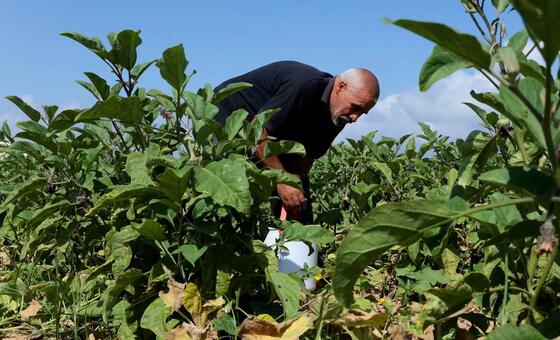
War has left only 3% of Gaza's farmland usable. Here's how soil destruction, water scarcity, and access limits are crushing farmers' livelihoods.
When you think about a crisis, you probably picture the big, dramatic moments — the explosions, the evacuations, the headlines. But there's a quieter catastrophe unfolding in Gaza that rarely makes the front page, and it's happening right under our feet. The soil itself is dying.
Recent assessments show that only about 3% of Gaza's farmland is still considered usable for growing crops. That's a staggering drop from what was once a thriving agricultural region. For the farmers who remain, this isn't just a statistic — it's the difference between feeding their families and watching their livelihoods turn to dust.
### The Quiet Crisis Beneath the Conflict
War doesn't just destroy buildings. It wrecks the land in ways that can take decades to repair. In Gaza, the combination of heavy military activity, unexploded ordnance, and restricted access to water has turned fertile fields into dangerous, barren zones.
Farmers are finding it nearly impossible to locate safe plots to plant. Even when they do find a patch of ground that looks promising, there's no guarantee it won't be hit by shelling or become a military zone overnight. It's a gamble with stakes that are impossibly high.
### What's Killing the Soil?
The reasons behind this agricultural collapse are complex, but they boil down to a few key factors:
- **Physical destruction**: Bombardment and heavy vehicle traffic have compacted the soil, making it hard for roots to grow.
- **Contamination**: Fuel leaks, chemicals from munitions, and other pollutants have poisoned the ground.
- **Water scarcity**: Irrigation systems have been destroyed, and clean water is increasingly hard to come by.
- **Access restrictions**: Farmers simply can't reach their fields safely, even if those fields are still viable.
Each of these issues compounds the others. You can't fix a water problem if you can't safely reach the irrigation pipes. You can't clean contaminated soil if you're dodging bullets to get there.
### The Human Toll of Losing Farmland
It's easy to talk about soil and water as abstract concepts, but let's bring it down to a human level. Imagine you've farmed the same plot of land for thirty years. Your father farmed it before you, and his father before that. Then, in a matter of months, that land becomes unusable. Not because of a drought or a pest infestation, but because a war rolled through and took everything with it.
That's the reality for thousands of farmers in Gaza right now. They're not just losing a crop — they're losing a way of life that has defined their families for generations. And with only 3% of farmland left, the pressure is immense.
### What Happens Next?
Without a significant change in the situation, the outlook is grim. Food prices will continue to climb as local production collapses. Dependence on international aid will grow. And the land itself will take years, possibly decades, to recover — assuming it ever gets the chance.
There are organizations working on soil remediation and agricultural recovery, but their efforts are hamstrung by the ongoing conflict. You can't plant seeds in a war zone and expect them to grow.
### Why This Matters Beyond Gaza
This isn't just a regional issue. It's a stark reminder of how fragile our food systems are. When a place that once fed itself becomes dependent on outside help, it creates a ripple effect that touches global markets and humanitarian budgets. And it raises uncomfortable questions about how we rebuild after conflicts — not just buildings, but the very land we rely on for survival.
The story of Gaza's farmland is a story about resilience, loss, and the long road to recovery. It's a story that deserves more attention than it gets. Because while the headlines focus on the immediate chaos, the quiet death of the land will shape the region's future for decades to come.