Only 3% of Gaza's Farmland Remains Usable — Here's What That Means
Sarah Miller ·
Listen to this article~6 min
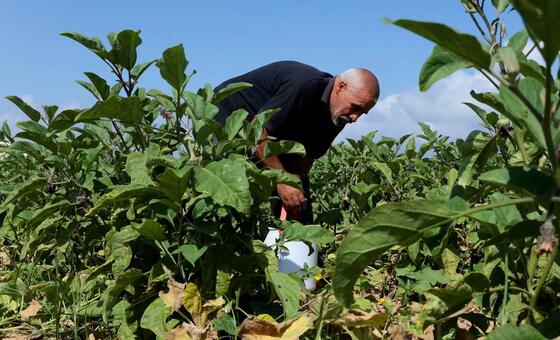
Ongoing hostilities in Gaza have left only 3% of arable land usable, threatening food security and devastating farmers' livelihoods. Here's what's happening and what can be done.
The numbers are stark, and they're hard to wrap your head around. Just three percent of Gaza's arable land is still fit for farming. That's not a typo and it's not an exaggeration — it's the reality farmers are waking up to every single day. When you think about how much of life in Gaza has always revolved around the land, this isn't just an agricultural crisis. It's a food crisis, an economic crisis, and a humanitarian one all rolled into one.
For years, Gaza's farmers have been the backbone of local food production. They grew olives, citrus, wheat, and vegetables that fed families and supported entire communities. Now, with ongoing hostilities tearing through the region, those same farmers are struggling to find even a small patch of safe ground to plant. The land that once sustained them is now either too dangerous to reach, too damaged to use, or simply gone.
### What's Happening to the Land
The damage isn't random. It's the result of months of intense conflict that has reshaped the landscape in ways that will take decades to undo. Here's what we're seeing on the ground:
- **Physical destruction**: Shelling and heavy machinery have turned fields into craters. Irrigation systems are shattered, and greenhouses are reduced to twisted metal.
- **Contamination**: Unexploded ordnance and debris make large areas unsafe to walk on, let alone farm. You can't just till soil that might hide a live shell.
- **Access restrictions**: Many plots of land sit near conflict zones or military checkpoints, making it impossible for farmers to reach them on a regular basis.
- **Water scarcity**: With infrastructure damaged, irrigation water is scarce. And what's available is often too salty or polluted for crops.
It's a cascading effect. Each problem feeds the next, and the end result is that farmers are left with almost nothing to work with.
### The Human Cost Behind the Numbers
It's easy to get lost in statistics, but let's not forget what these numbers actually mean. Behind every percentage point is a family that can't afford to buy bread. Behind every damaged field is a farmer who has lost their livelihood, their savings, and often their hope.
One farmer we spoke with described walking through his family's olive grove, a plot that had been passed down for generations. The trees were still standing, but the soil was so compacted and contaminated that he doubted they'd bear fruit this season. He said it felt like losing a member of the family.
And it's not just the farmers who are affected. When local production collapses, the entire region becomes dependent on imported food. That drives up prices, strains already limited resources, and leaves people at the mercy of supply chains that are themselves fragile.
### What This Means for Food Security
Food security isn't just about having enough to eat today. It's about knowing you'll have enough tomorrow, and next month, and next year. Right now, Gaza is in a position where that certainty is completely gone.
With only 3% of farmland usable, the region simply cannot produce enough to sustain its population. That means every meal is a logistical challenge. Every shipment of grain or vegetables becomes a matter of life and death. And every delay at a border crossing or checkpoint translates directly into empty shelves and hungry families.
The long-term implications are just as troubling. Even if hostilities were to end tomorrow, the land won't recover overnight. Restoring soil health, rebuilding irrigation systems, and clearing unexploded ordnance could take years. Some experts estimate it could take a decade or more before Gaza's agricultural sector returns to anything close to its pre-conflict state.
### What Can Be Done
It's tempting to feel hopeless in the face of such overwhelming destruction, but there are steps that can be taken — if the international community and local authorities are willing to act.
- **Immediate aid**: Emergency food assistance is critical right now, but it needs to be paired with support for farmers who want to keep working.
- **Soil rehabilitation**: Programs that focus on clearing debris, testing soil quality, and introducing drought-resistant crops can help bring land back into use faster.
- **Water solutions**: Investing in desalination and efficient irrigation technology could address the water crisis that's strangling agricultural production.
- **Safe access**: Creating designated agricultural zones, protected by ceasefire agreements, would allow farmers to work without fear of being caught in the crossfire.
None of this is easy, and none of it will happen overnight. But without these efforts, the situation will only get worse. The land is there. The people are there. What's missing is the safety and the resources to bring them back together.
### A Call for Attention
This isn't just a story about farming. It's a story about survival, resilience, and the lengths people will go to feed their families. The farmers of Gaza aren't asking for charity. They're asking for a chance to do what they've always done — work the land and provide for their communities.
As the conflict continues, it's easy for the world to look away. But numbers like 3% have a way of putting things in perspective. When a region loses nearly all of its farmland, the consequences ripple far beyond the fields themselves. They touch every household, every market, and every meal.
We can't ignore that. And we shouldn't.