Restoring 252 Million Hectares: The Successes and Gaps in Global Ecosystem Recovery
Editorial Team ·
Listen to this article~4 min
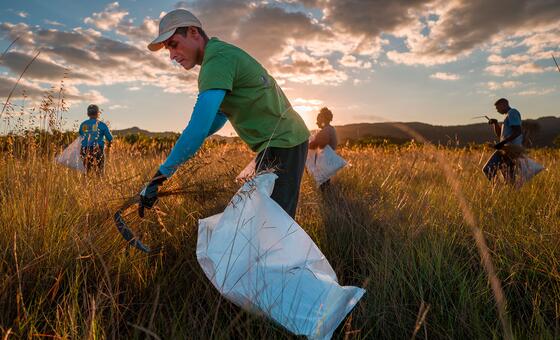
The world has restored 252 million hectares of ecosystems, creating over 1 million green jobs. But to meet 2030 goals, we need to quadruple funding and speed up efforts.
You've probably heard the phrase "every little bit helps" when it comes to the environment. But what if I told you that the world has already restored an area of land larger than Mexico? That's right—252 million hectares (about 973,000 square miles) across 149 countries are being brought back to life. That's the biggest restoration effort ever documented, according to a UN report presented last Thursday in Yerevan at the UN Biodiversity Conference (COP17). The effort has also generated over 1 million green jobs. Sounds impressive, right? But here's the catch: we're still not moving fast enough to meet the 2030 goals. In fact, we need to speed up dramatically and increase annual funding more than fourfold. Let's break down what this means and why it matters.
### The Good News: Progress Is Real
First, let's appreciate the scale. Restoring 252 million hectares is no small feat. For context, that's roughly the size of the entire United Kingdom ten times over. These efforts span forests, farmlands, rivers, and more. And it's not just about trees—it's about creating jobs. Over a million people now work in restoration-related fields, from planting to monitoring. These are real livelihoods, often in rural areas where opportunities are scarce.
But how did we get here? It's the result of years of international commitments, like the Bonn Challenge and the UN Decade on Ecosystem Restoration. Countries have pledged to restore degraded landscapes, and many are making good on those promises. Armenia, for instance, has been actively restoring its forests and wetlands, which is why COP17 was held there.
### The Not-So-Good News: We're Behind Schedule
Despite the progress, the UN report makes one thing clear: we're not on track to meet the 2030 targets. To fulfill global commitments, we need to restore an additional 1 billion hectares by 2030. That's four times the current rate. And funding? It needs to jump from about $50 billion a year to over $200 billion. That's a massive gap.
Why the shortfall? For one, restoration is expensive. It requires planning, seeds, labor, and long-term monitoring. Many developing countries lack the resources to scale up. Also, restoration isn't always a priority for governments facing other crises. But as Inger Andersen, Executive Director of the UN Environment Programme, put it: "Restoration is not a luxury. It's a necessity for our survival."
### What Needs to Happen Next
So, what's the path forward? Here are a few key steps:
- **Boost funding:** Governments and private investors need to step up. Blended finance models, where public funds leverage private capital, can help.
- **Policy support:** Clear regulations and incentives can encourage restoration. For example, tax breaks for companies that restore degraded land.
- **Community involvement:** Local communities must be at the heart of restoration. They know the land best and can ensure projects succeed long-term.
- **Technology and innovation:** Drones, satellite monitoring, and AI can help track progress and make restoration more efficient.
### Why This Matters to You
You might be thinking, "I'm not a policymaker or a scientist. What can I do?" Well, plenty. Support businesses that invest in sustainability. Vote for leaders who prioritize the environment. Even small actions like planting native species in your garden or volunteering for local clean-ups contribute to the bigger picture.
And if you're in the US, note that restoration efforts are happening here too. The US has pledged to restore millions of acres of forests and wetlands. But like everywhere else, funding and political will are the bottlenecks.
### The Bottom Line
The world has made remarkable progress in restoring ecosystems, but the job is far from done. We need to accelerate the pace and increase funding dramatically. The good news? We have the knowledge and tools. What we need now is the collective will to make it happen. After all, as the saying goes, "We don't inherit the Earth from our ancestors; we borrow it from our children." Let's make sure we hand it over in better shape than we found it.