The Ground That Feeds the World: Restoring Grasslands in Kenya and Kazakhstan
David Jones ·
Listen to this article~4 min
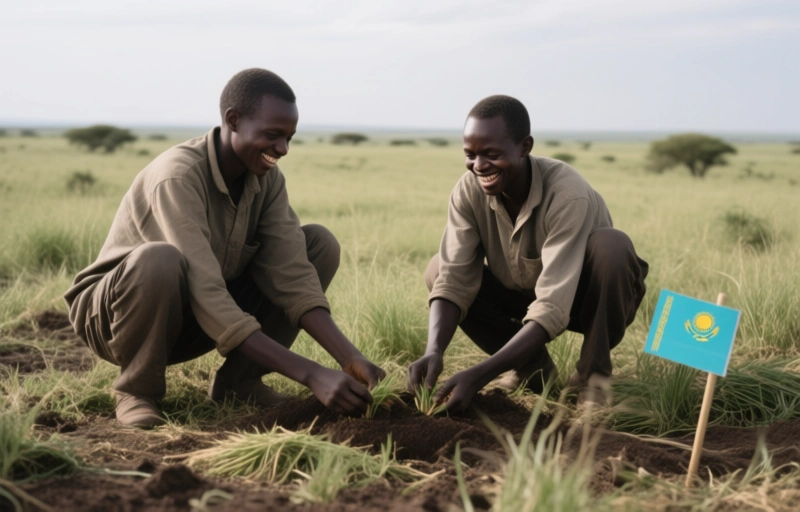
Kenya and Kazakhstan show that restoring degraded grasslands works best when science meets traditional knowledge—and the lessons could reshape how we manage land worldwide.
What do Botswana, Kazakhstan, and Kenya have in common? At first glance, not much. Different continents, different cultures, different climates. But dig a little deeper, and you'll find they've all learned the same hard-won lesson over the years: restoring pastureland works best when science teams up with traditional knowledge. It's not one or the other. It's both.
For decades, we've been told that fixing degraded land requires high-tech solutions. Drones, satellite imagery, synthetic fertilizers. And sure, those tools have their place. But here's the thing—the people who've been grazing livestock on these lands for generations already know what works. They've watched the seasons turn, the rains come and go, and the grass rebound or fail. What they lacked wasn't wisdom. It was a way to scale that wisdom.
### Why Traditional Knowledge Matters More Than You Think
Let's be honest: modern science has a habit of dismissing local expertise. Researchers fly in, collect data, and fly out with a report that nobody local gets to read. That approach has failed time and again. In Kenya, for instance, Maasai herders have long practiced rotational grazing—moving cattle to let grass recover. It's not a new idea. It's ancient. But when scientists finally started measuring the impact, they found that these rotations actually boost soil carbon and plant diversity. The data confirmed what the herders already knew.
Meanwhile, in Kazakhstan, vast steppes that once supported millions of livestock were abandoned after the Soviet era. The land didn't recover on its own. It needed a nudge—and that nudge came from combining old herding patterns with new ecological insights. The result? Grasslands that are slowly coming back to life, supporting both wildlife and rural communities.
### The Science Behind the Recovery
So what does the science actually say? Here's a quick breakdown of what's working:
- **Planned grazing**: Animals are moved in tight groups, mimicking how wild herds once roamed. This tramples old growth, fertilizes the soil with manure, and gives plants time to regrow.
- **Rest periods**: Land is left alone for months or even years at a stretch. This lets root systems deepen and native grasses reseed naturally.
- **Monitoring with drones and soil sensors**: High-tech tools help track progress, but they're used to support, not replace, local decision-making.
- **Community-led governance**: Herders set the rules for who grazes where and when. This reduces conflict and prevents overuse.
It's not rocket science. But it requires patience, trust, and a willingness to listen to people who've been doing this for centuries.
### What This Means for the Rest of Us
Here's why you should care: healthy grasslands aren't just pretty landscapes. They store massive amounts of carbon underground, filter water, and support biodiversity. They also feed millions of people. When grasslands degrade, we all lose—through more dust storms, less reliable rainfall, and higher food prices. In the United States, we're seeing similar challenges in places like the Great Plains, where overgrazing and drought have taken a toll.
The lesson from Kenya and Kazakhstan is simple: don't pick a side. Don't assume that modern technology will save us, and don't romanticize the past. Instead, bring the two together. Let the data inform the tradition, and let the tradition ground the data.
### A Call to Action
If you're a rancher, a land manager, or just someone who cares about the planet, start small. Talk to the people who know your land best. Ask questions. Test ideas. And remember that restoration isn't a one-time fix—it's a relationship. It takes years, sometimes decades, to rebuild soil health. But the payoff is worth it: more resilient land, healthier livestock, and a future where the ground beneath our feet can keep feeding the world.
The next time you hear about a high-tech solution to a land problem, ask yourself: who's actually doing the work on the ground? Because in the end, it's the people who live with the land who will decide whether it thrives or fades.