The Land That Feeds the World: How Kenya and Kazakhstan Are Restoring Their Pastures
Michael Johnson ·
Listen to this article~5 min
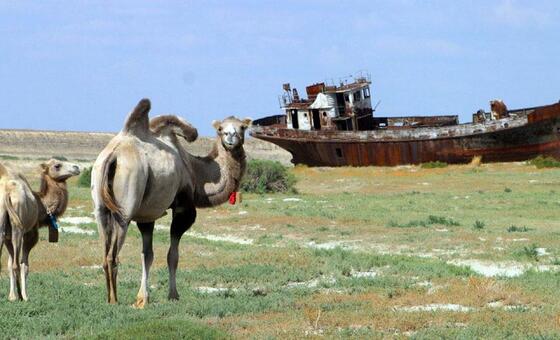
What do Botswana, Kazakhstan, and Kenya have in common? They've all learned that restoring pastureland works best when science teams up with traditional knowledge. Here's what they discovered.
What do Botswana, Kazakhstan, and Kenya have in common? It's a question that might not keep you up at night, but the answer could change how we think about feeding a growing planet. Over the years, these three nations have learned a powerful lesson: restoring pastureland works best when science joins forces with traditional knowledge.
We're talking about vast stretches of land—millions of acres that have been overgrazed, dried out, and left for dead. But here's the thing: they're not dead. With the right approach, these landscapes can bounce back in ways that surprise even the experts.
### Why Pasture Restoration Matters More Than Ever
Let's start with the obvious: healthy pastures mean healthy livestock. And healthy livestock means food on our tables. But it goes deeper than that. Grasslands act like giant sponges for carbon, pulling it out of the atmosphere and storing it in the soil. When we let those lands degrade, we're not just losing grazing space—we're releasing that stored carbon back into the air.
The numbers are staggering. Some estimates suggest that restoring degraded grasslands could sequester billions of tons of carbon dioxide annually. That's the equivalent of taking hundreds of millions of cars off the road, every single year.
But here's the catch: you can't just throw money and technology at the problem and hope it sticks. The most successful projects share a common thread—they respect the people who have been living on and managing these lands for generations.
### The Kenyan Approach: Community First
In Kenya, the Maasai have been herding cattle across the savanna for centuries. Their rotational grazing patterns—moving herds from one area to another—weren't just tradition. They were a sophisticated system that gave the grass time to recover.
Modern scientists have started to catch on. By combining satellite imagery with Maasai knowledge of local weather patterns and plant life, restoration projects have seen remarkable results. In some areas, grass that hadn't grown in decades is now knee-high within two growing seasons.
What's the secret? It's not a single technique. It's a partnership. Scientists bring data and monitoring tools. Local herders bring intuition and a deep understanding of the land that no computer model can replicate.
### Kazakhstan's Grassland Revival
The story in Kazakhstan is different but equally inspiring. After the Soviet era, huge tracts of pastureland were abandoned. It sounds like a disaster, and in many ways it was. But it also created an opportunity for a fresh start.
Restoration efforts there have focused on reintroducing native grass species and using grazing patterns that mimic the behavior of wild herds. The results? Wildlife has returned. Bird populations are up. And local farmers are reporting healthier livestock that need less supplemental feed.
One particularly clever approach involves using livestock as tools rather than just products. By carefully controlling where cattle graze and for how long, land managers can break up hard soil, spread seeds naturally, and fertilize the ground—all without a single piece of heavy machinery.
### What We Can Learn From These Success Stories
If there's one takeaway from what's happening in Kenya and Kazakhstan, it's this: humility works. The most effective solutions aren't imposed from the outside. They're co-created with the people who call these lands home.
- **Listen first, act second**: The best projects start with conversations, not plans.
- **Combine old and new**: Traditional knowledge plus modern science beats either one alone.
- **Think long-term**: Quick fixes rarely last. Restoration is a marathon, not a sprint.
- **Measure what matters**: Track soil health, biodiversity, and water retention—not just grass height.
### The Road Ahead
We're facing a global food crisis that's only going to get worse as the population climbs toward 10 billion. Every acre of restored pasture is a step toward feeding more people without destroying more land.
But we can't do it from a distance. We need to support the people on the ground, fund the research, and—most importantly—get out of the way when local communities show us what works.
The land that feeds the world deserves better than neglect. It deserves a partnership between wisdom and innovation. And if Botswana, Kazakhstan, and Kenya can figure that out, maybe the rest of us can too.