The Land That Feeds the World: Restoring Pastures in Kenya and Kazakhstan
Michael Davis ·
Listen to this article~5 min
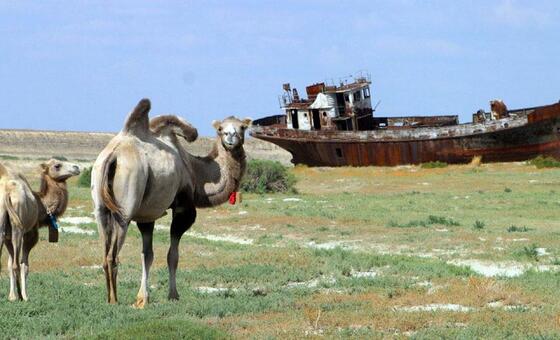
What do Botswana, Kazakhstan, and Kenya have in common? The lesson they've all learned: restoring pastureland works best when science teams up with traditional knowledge.
What do Botswana, Kazakhstan, and Kenya have in common? They've all learned the same hard-won lesson over the years: restoring pastureland works best when science teams up with traditional knowledge. It's not about choosing one over the other. It's about letting them work together, hand in glove.
### Why Pasture Restoration Matters Now More Than Ever
You might not think about rangelands all that often, but here's the thing—they cover roughly 40% of the Earth's land surface. That's a massive chunk of the planet, and it's where a huge portion of our food comes from. When these lands degrade, it's not just a local problem. It's a global one.
Degraded soil loses its ability to hold water. It releases carbon instead of storing it. And for the millions of families who depend on livestock for their livelihood, it means less grass for their animals and thinner wallets at the end of the season. The stakes are high, and the clock is ticking.
### The Kenyan Approach: Community-Led Revival
In Kenya, the shift has been nothing short of remarkable. For decades, the conventional wisdom was that overgrazing was the primary culprit behind dying pastures. But the solution wasn't simply fencing off the land and hoping for the best. Instead, communities started experimenting with something called holistic planned grazing.
Here's how it works: instead of letting cattle wander freely and graze everything in sight, herders move them in tight, concentrated groups across the land. The animals trample the soil, drop manure, and then move on. This mimics the natural patterns of wild herds that once roamed these plains. The soil gets a workout, seeds get buried, and the grass comes back stronger than before.
What's fascinating is that this isn't a new idea. It's a revival of practices that indigenous herders have used for generations. The science just caught up and confirmed what they already knew. When you combine satellite imagery with local knowledge about rainfall patterns and animal behavior, you get something powerful.
### Kazakhstan's Steppe: A Different Kind of Challenge
Kazakhstan presents a different puzzle. The steppe there is vast—we're talking millions of acres of open grassland. After the Soviet era ended, a lot of the land was abandoned, and the infrastructure that supported traditional herding fell apart. The result? Some areas became overgrown with invasive species, while others turned to dust.
The recovery effort there has focused on something called adaptive multi-paddock grazing. It's a mouthful, but the concept is simple: break the land into smaller sections and rotate animals through them systematically. This gives the grass time to recover between grazings, which is crucial in a climate where rainfall can be unpredictable.
What's working in Kazakhstan is the marriage of old and new. Herders bring their intimate knowledge of the land—knowing which patches stay green during a drought, which slopes catch the snowmelt first, where the best shelter from winter winds can be found. Scientists bring soil sampling, drone imagery, and data analytics. Together, they're turning barren patches back into productive pasture.
### The Common Thread: Listening to the Land
If there's one lesson that emerges from both countries, it's this: the land speaks, and we need to listen. Traditional knowledge isn't sentimental nostalgia. It's centuries of accumulated observation, passed down through generations. And science isn't cold or detached. It's a tool that can amplify what people already know.
- **Start small**: Successful restoration projects often begin on a few hundred acres, not thousands.
- **Measure everything**: Soil health, grass height, water infiltration—data drives decisions.
- **Involve the community**: Top-down mandates fail. Bottom-up collaboration succeeds.
- **Be patient**: Ecosystem recovery doesn't happen overnight. It takes years, sometimes decades.
### What This Means for the Rest of Us
You don't have to be a rancher in Kenya or a herder in Kazakhstan to appreciate what's happening. The principles are universal. Whether you're managing a backyard garden or a corporate sustainability program, the same logic applies: work with nature, not against it. Combine what you know with what you can learn. And never underestimate the value of local wisdom.
As the global population pushes past 8 billion, the pressure on our land will only intensify. The question isn't whether we can afford to restore these pastures. It's whether we can afford not to. The answers are emerging from places like Kenya and Kazakhstan, where necessity has sparked innovation. And the results are giving us all a reason to be hopeful.