A Rising Toll: Civilian Casualties Mount Amidst Ongoing Conflict
Eleanor Vance ·
Listen to this article~4 min
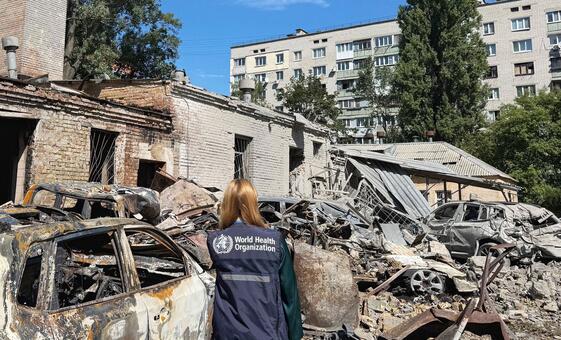
UN reports cite Ukrainian authorities, stating recent attacks resulted in at least 12 civilian deaths and over 65 injuries, with frontline regions suffering most heavily.
The latest reports from humanitarian officials paint a grim picture of the escalating human cost of the ongoing conflict. According to the United Nations Office for the Coordination of Humanitarian Affairs, citing Ukrainian authorities, attacks across the country over the past 24 hours have resulted in at least 12 civilian deaths and more than 65 injuries.
We're seeing a pattern that's becoming tragically familiar. These aren't just numbers on a page; they represent families shattered, communities torn apart, and a humanitarian crisis deepening by the day. The frontline regions, as you'd expect, are bearing the heaviest burden.
### Understanding the Humanitarian Impact
When we talk about civilian casualties, it's easy to get lost in the statistics. But behind each number is a story. It's about the grocery store hit during the day, the residential building struck overnight, the sheer unpredictability that makes everyday life a gamble for millions. The UN's role in coordinating this information is crucial—it's about verifying, documenting, and ultimately, trying to mobilize a global response to the suffering.
This isn't about taking sides in a geopolitical debate. It's about recognizing a fundamental truth: in modern warfare, the line between combatant and civilian is often blurred, with innocent people paying the highest price. The data points to several key realities:
- **Urban Centers as Battlegrounds:** Fighting is increasingly concentrated in and around cities, where civilian populations are dense.
- **Critical Infrastructure at Risk:** Attacks often damage or destroy hospitals, power grids, and water systems, creating secondary crises.
- **The Displacement Crisis:** For every casualty reported, many more are forced to flee their homes, creating immense strain on neighboring regions and aid organizations.
### The Frontline Reality
Why do the frontline regions suffer so disproportionately? It's a combination of proximity to active fighting, the intensity of shelling and aerial attacks, and the breakdown of essential services. Evacuation routes are often cut off, making it harder for the wounded to get medical care and for aid convoys to get in. It's a perfect storm of danger and deprivation.
As one aid worker on the ground recently noted, the challenge isn't just delivering food and medicine—it's doing so while navigating an active battlefield, where today's safe route could be tomorrow's target. The courage of these local and international responders is staggering.
### Looking Beyond the Headlines
So, what does this mean for professionals and observers trying to understand the situation's trajectory? The rising civilian toll is a key indicator of conflict intensity. It signals prolonged engagements in populated areas and underscores the severe limitations of current diplomatic or military efforts to establish safe zones or humanitarian corridors.
For historians and analysts, these moments are painful data points in a longer narrative. They remind us that the immediate human cost is just the beginning. The long-term consequences—psychological trauma, a lost generation of education, the destruction of cultural heritage—will be felt for decades.
We can't look away from these reports. They demand our attention, not just as a record of tragedy, but as a call to action for protecting the most basic human rights in times of war. The conversation must continue to focus on the protection of civilians as a non-negotiable principle, no matter how complex the conflict.