Settlers Block Palestinian Families in Their Homes: A New Flashpoint in the West Bank
David van der Veldt ·
Listen to this article~4 min
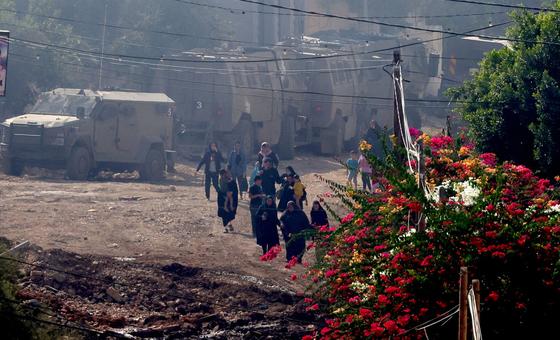
UN urges Israel to protect Palestinian families trapped in their homes by settlers in the West Bank. A growing crisis with deep human impact.
The United Nations human rights office has stepped in, but the situation on the ground remains tense. For days now, Palestinian families in the West Bank have been effectively trapped inside their own homes, unable to leave without facing harassment or worse from Israeli settlers. It's a quiet kind of siege, one that doesn't make the front pages but is reshaping daily life for those caught in the middle.
### What's Happening on the Ground?
The UN Office of the High Commissioner for Human Rights (OHCHR) issued an urgent appeal on Thursday, asking Israeli authorities to step in and help these families. The request is straightforward: allow people to move freely, to go to work, to take their kids to school, to live a normal life. But the reality is far from simple.
Settlers have been blocking the entrances to several homes, creating a standoff that has lasted for days. It's a tactic that feels both medieval and modern at the same time. Families are watching their daily routines crumble, and the fear is palpable. You can hear it in the voices of residents who describe being trapped, not by walls, but by the threat of violence.
### Why This Matters Beyond the West Bank
This isn't just a local dispute. It's a test of the international community's ability to protect basic human rights in a region where the rules are often bent or ignored. The UN's appeal isn't just about these specific families—it's about setting a precedent. If settlers can block homes without consequence, what's next? Will entire neighborhoods become off-limits?
The situation also puts the Israeli government in a tricky spot. On one hand, they want to maintain order and project an image of fairness. On the other, they're dealing with a political base that's increasingly sympathetic to settler movements. It's a balancing act that often leaves Palestinian families on the losing end.
### The Human Toll
Behind the headlines, there are real people. Kids who can't play outside. Parents who can't get to work. Elderly relatives who can't get to their doctor's appointments. The psychological toll is just as heavy as the physical restrictions. Imagine not knowing if you'll be able to leave your house tomorrow, or if you'll be met with a wall of hostility when you try.
One resident, who asked not to be named, described the feeling as "being in a cage with no key." That's a powerful image, and it's one that should stick with us. This isn't politics—it's a daily struggle for dignity and normalcy.
### What Can Be Done?
The UN's call is a step, but it's not a solution. The ball is now in Israel's court. Will they intervene to protect these families, or will they let the standoff continue? International pressure is mounting, but words alone won't unlock those doors.
- The Israeli military could enforce freedom of movement in the area.
- The international community could push for a more robust monitoring presence.
- Human rights groups could document and publicize each incident to keep the pressure on.
### The Bigger Picture
This is just one flashpoint in a long-running conflict that has seen countless escalations. But every escalation matters, because each one chips away at the possibility of a peaceful resolution. When families are trapped in their homes, the idea of a two-state solution feels like a distant dream.
We need to keep talking about this, not just in UN chambers, but in our own communities. Because the more we ignore these small-scale injustices, the more we allow them to become the new normal. And that's a future none of us should accept.
For now, the families wait. They wait for the Israeli authorities to act, for the world to care, and for a day when they can step outside without fear. Let's hope that day comes soon.