Settlers Block Palestinian Families in Their Homes: A New West Bank Flashpoint
Eleanor Vance ·
Listen to this article~6 min
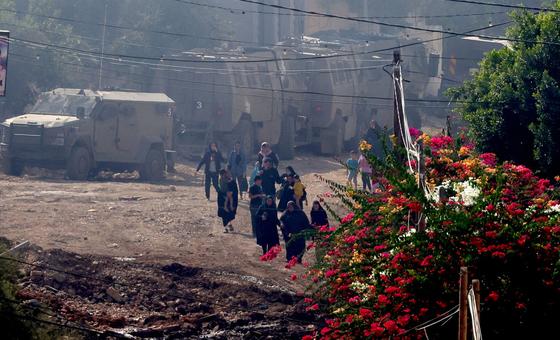
Palestinian families are trapped in their West Bank homes by settlers, and the UN is demanding action. Here's what's happening and why it matters.
The situation on the West Bank has taken a worrying turn this week, and it's the kind of story that's easy to skim past but impossible to ignore once you dig in. The UN Human Rights Office (OHCHR) has stepped in, urging Israeli authorities to do something about Palestinian families who have been effectively trapped inside their own homes for days. Settlers are blocking them from leaving, and this isn't just a minor inconvenience—it's a full-blown humanitarian concern that's escalating by the hour.
You might wonder how this even happens in 2025. How do people get boxed in like that, with no way to go to work, get groceries, or take a kid to school? The answer is complicated, but the core issue boils down to a volatile mix of settlement expansion, military presence, and a legal gray zone that leaves civilians caught in the middle. Let's break down what we know and why this matters far beyond the dusty streets of the occupied territories.
### What's Actually Happening on the Ground
According to the UN's human rights office, the situation has been simmering for several days now. The families in question are in the occupied West Bank, and they've been denied the simple freedom of movement that most of us take for granted. The OHCHR is calling on Israeli authorities to intervene and ensure these families can safely leave their homes without fear of violence or intimidation.
Here's the part that gets under my skin: this isn't a one-off incident. It's part of a broader pattern that's been intensifying over the past year.
- Settler violence has been on the rise, with attacks ranging from property damage to direct physical confrontations.
- The Israeli military often has a presence in these areas, but their role is frequently ambiguous—sometimes protecting settlers, sometimes trying to keep the peace.
- International law is clear on the matter: civilians must be protected, and collective punishment or forced confinement is a violation of basic human rights.
### Why the UN Is Getting Involved Now
The UN doesn't just wade into every local dispute. When the OHCHR issues a public call like this, it's usually because diplomatic backchannels have failed and the situation is deteriorating fast. The fact that they're going public means we're past the point of quiet negotiation.
What's particularly alarming is the duration. We're not talking about a few hours of tension during a protest. We're talking about days of confinement, which suggests a coordinated effort rather than a spontaneous outburst. That's a deliberate tactic, and it's designed to pressure families into leaving their land permanently.
### The Bigger Picture: Settlements and Displacement
To understand this, you need to look at the larger map. The West Bank is dotted with Israeli settlements—some are tiny outposts, others are sprawling communities with schools and shopping centers. The international community overwhelmingly considers these settlements illegal under international law, but that hasn't slowed their expansion.
Here's the uncomfortable truth: when settlers block Palestinian families from their homes, it's rarely just about that one house. It's about creating a climate of fear that pushes entire communities to abandon their properties. Over time, that's how the map changes. That's how land gets absorbed. It's slow, grinding, and devastatingly effective.
> "The right to leave your own home is not a luxury. It's a fundamental human right that's being stripped away in broad daylight." — A senior UN human rights official
### What Could Happen Next
The ball is now in Israel's court. The OHCHR has made their appeal, and the world is watching to see how the government responds. There are a few possible outcomes:
1. Israeli authorities could order the settlers to stand down and restore access to the homes. That would be the best-case scenario, but it's not guaranteed.
2. The military could step in and physically remove the blockades, which would be a strong statement but could also spark more violence.
3. The situation could drag on, with families remaining trapped and international pressure building toward sanctions or other diplomatic consequences.
None of these options are great, but the worst outcome would be silence. If the international community shrugs and moves on, it sends a signal that this kind of collective punishment is acceptable. It's not. It never has been.
### Why You Should Care
I know this feels like a faraway conflict, something that happens in a place you'll never visit. But here's the thing: the rule of law matters everywhere. When one group can block another group's basic freedoms without consequences, it erodes the standards that protect all of us. Whether it's in the West Bank or your own neighborhood, the principle is the same—everyone deserves to live without fear of being trapped or displaced.
The families stuck in those homes right now aren't just statistics. They're people with jobs, kids with homework, grandparents with medical appointments. They want the same things you want: safety, dignity, and the freedom to open their front door and step outside.
We'll be watching this story closely in the coming days. For now, the UN has spoken, and the question is whether anyone will listen.