South Sudan's December Elections Face a Critical Roadblock
Emily Moore ·
Listen to this article~5 min
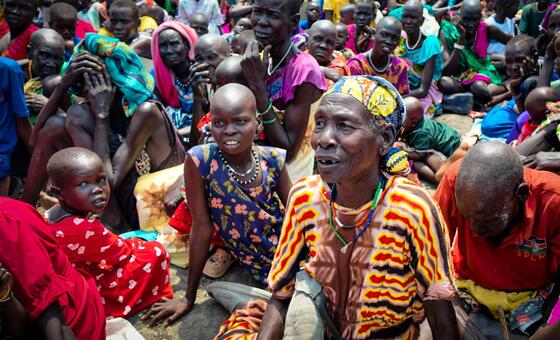
UN warns South Sudan's December elections face major hurdles: security gaps, weak institutions, and displacement. Can the country pull off a free and peaceful vote?
South Sudan is charging toward its first general elections since independence, with December now firmly on the calendar. But here's the catch: the ground isn't ready for a free, peaceful, and inclusive vote. That's the sobering message delivered by Anita Kiki Gbeho, head of the UN Mission in South Sudan, during a UN Security Council meeting on Thursday.
It's a big deal, and not just for the politicians in Juba. For everyday South Sudanese, these elections represent a long-awaited shot at stability after years of brutal civil war. The country has been through hell, and the stakes couldn't be higher. Yet, the conditions on the ground tell a different story than the political timeline.
### What's Missing on the Ground
Gbeho didn't mince words. She laid out a list of hurdles that need clearing before December can be taken seriously. Let's break down the biggest ones:
- **Security gaps:** Large parts of the country remain volatile, with armed groups still active and intercommunal violence simmering.
- **Weak institutions:** The electoral commission is underfunded and understaffed, making it hard to organize a credible vote.
- **Civic space:** Journalists and civil society groups face restrictions, which chokes off the open debate needed for informed voting.
- **Displacement crisis:** Over 2 million people are still displaced, many living in UN-protected camps. How do you register voters when they can't safely return home?
These aren't small technicalities. They're fundamental barriers to the kind of election that would actually reflect the will of the people. And without that, whatever happens in December risks being seen as a rubber stamp rather than a real mandate.
### The UN's Role and the Road Ahead
Gbeho's statement signals that the international community is watching closely. The UN Mission, known as UNMISS, has been a lifeline in South Sudan, protecting civilians and trying to build a foundation for peace. But the mission can't do it alone. The ball is really in the court of South Sudan's leaders.
Here's the thing: holding elections isn't just about picking a date and hoping for the best. It's about creating an environment where people can actually vote without fear. It's about making sure the results are credible enough that losers accept them and winners don't overreach. That's a tall order, especially in a country that's been fractured for so long.
There's also a deeper question lurking beneath the surface. Is a rushed election better than a delayed one? Some argue that any vote is progress, a step away from the chaos of the past. Others worry that a flawed election could reignite conflict, undoing years of fragile peace efforts. It's a genuine dilemma, and there's no easy answer.
### Why This Matters Beyond South Sudan
This isn't just a regional story. The stability of South Sudan has ripple effects across East Africa. Refugee flows, cross-border trade, and security dynamics all hinge on what happens in Juba. The United States, as a key player in the region, has a vested interest in seeing this process go right. The Biden administration has pushed for inclusive governance, and the UN Security Council meeting is part of that pressure campaign.
For professionals tracking African geopolitics, this is a moment to watch. The December elections could either be a turning point toward lasting peace or a flashpoint for renewed violence. The signals from the UN are clear: the conditions aren't there yet, but the clock is ticking.
### The Bottom Line
So, where does that leave us? South Sudan is at a crossroads. The political will to hold elections exists, at least on paper. But the practical reality is that a free and peaceful vote requires more than good intentions. It needs security, funding, and a genuine commitment to democratic norms.
Gbeho's warning is a wake-up call, not just for South Sudanese leaders, but for the international community. If we want to see a stable South Sudan, we need to help create the conditions for a credible election. That means more than just monitoring; it means investing in the groundwork. The December date is set, but the path to it is anything but smooth. Keep your eyes on Juba—this story is far from over.