South Sudan's December Elections Face a Harsh Reality Check
Eleanor Vance ·
Listen to this article~4 min
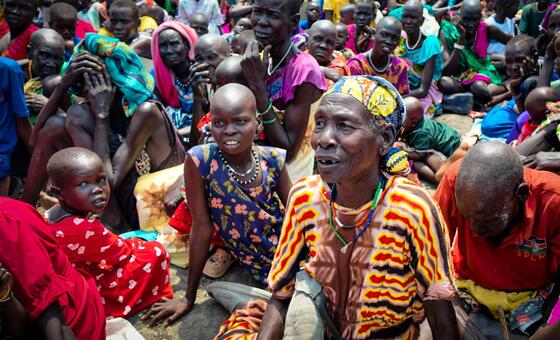
South Sudan's December elections face major obstacles. UN mission chief Anita Kiki Gbeho tells the Security Council that conditions for a free, peaceful, and inclusive vote haven't been met. Here's what's missing and why it matters.
South Sudan is barreling toward its first national elections since independence, with December set as the target date. But here's the uncomfortable truth: the groundwork for a free, peaceful, and inclusive vote simply isn't there yet. That's the stark warning from Anita Kiki Gbeho, the head of the UN Mission in South Sudan, who delivered the assessment during a UN Security Council meeting on Thursday.
For a country that has endured decades of civil war and political instability, the stakes couldn't be higher. Elections are supposed to be the moment when a nation finally turns the page. Yet, as Gbeho made clear, the current conditions on the ground are nowhere near ready for that kind of historic leap.
### What's Missing on the Ground
When we talk about "conditions for free and fair elections," it's not just about ballot boxes and polling stations. It's about the entire ecosystem that makes a vote credible. In South Sudan, several critical pieces are still missing:
- **Voter registration:** Millions of citizens haven't been registered, and the infrastructure to reach remote communities is severely limited.
- **Security guarantees:** Armed groups still operate in many regions, making it dangerous for people to even show up at a polling place.
- **Legal framework:** The electoral laws and independent oversight bodies that should govern the process are incomplete or not fully functional.
- **Civic education:** A large portion of the population has never voted before, and there's a massive need for basic education about how elections work.
These aren't small gaps you can paper over in a few weeks. They're structural issues that require time, resources, and political will to address.
### The Political Tension Beneath the Surface
The run-up to December has become the dominant topic in the country's political agenda, and that's both a good sign and a warning sign. On one hand, it shows that the leadership is at least talking about elections. On the other hand, the urgency feels more like a ticking clock than a genuine commitment to democratic process.
There's a real danger that elections held under these conditions could backfire. If people vote but don't trust the results, or if violence erupts during the process, the country could slide back into the kind of conflict that has already cost so many lives.
### Why This Matters Beyond South Sudan
You might be wondering why a professional in the United States should care about election readiness in a country thousands of miles away. Here's the thing: instability in South Sudan doesn't stay contained. The region is a tinderbox, and when it flares up, it sends shockwaves through international markets, global security, and humanitarian systems.
Plus, the United States has significant diplomatic and financial investments in the region. Every dollar spent on peacekeeping and aid is directly affected by whether South Sudan can stabilize itself. So, this isn't just a distant political drama—it's a situation with real consequences for American taxpayers and global stability.
### The Road Ahead
Gbeho's message to the Security Council wasn't all doom and gloom. She acknowledged that progress has been made in some areas, but she was unambiguous about the core problem: the timeline and the reality on the ground are out of sync.
The UN Mission's role is to support the process, not to run it. Ultimately, the responsibility falls on South Sudan's leaders to create the conditions for a credible vote. That means making hard choices, allocating resources, and building trust with a population that has every reason to be skeptical.
As December approaches, the world will be watching. The question isn't just whether elections will happen, but whether they'll mean anything when they do. For now, the answer to that question remains painfully unclear.
One thing is certain: holding elections for the sake of holding elections won't solve South Sudan's problems. What the country needs is a genuine path toward democratic legitimacy, and that path starts with acknowledging that the current conditions just aren't there yet.