South Sudan's December Elections Face a Harsh Reality Check
Jessica Miller ·
Listen to this article~4 min
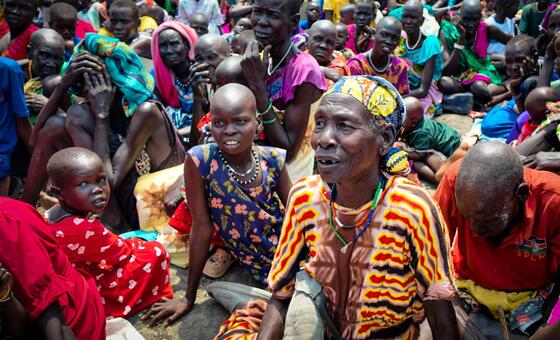
South Sudan's December elections face major hurdles. The UN says conditions for free, peaceful voting are still missing. Here's what's at stake and why it matters.
South Sudan is gearing up for what should be a historic moment—its first general elections since gaining independence. But as the December date inches closer, a sobering truth is emerging: the country simply isn't ready. The head of the UN Mission in South Sudan, Anita Kiki Gbeho, made this clear during a recent Security Council briefing, stating that conditions for free, peaceful, and inclusive voting have not yet been met.
That's a heavy statement, and it carries real weight. When a nation that has known so much conflict tries to take a step toward democratic stability, the world watches closely. And right now, the world isn't seeing a smooth runway to the polls.
### The Gap Between Plans and Reality
It's easy to plan an election on paper. You set a date, draft a voter registry, and promise transparency. But in South Sudan, the distance between those plans and the ground truth is vast. Gbeho didn't mince words: the prerequisites for a credible vote—security, political space, and institutional readiness—are still largely missing.
Think about it like this: you wouldn't host a wedding if the venue wasn't booked, the caterer hadn't confirmed, and half the guests couldn't get there safely. Elections are far more complex. They need functioning courts, an independent electoral commission, and a climate where citizens can vote without fear. None of that is fully in place.
### Why This Matters Beyond South Sudan's Borders
The stakes here aren't just local. South Sudan sits in a volatile region, and its stability affects neighboring countries and international interests. When the UN Security Council convenes to discuss this, it's not just a formality—it's a signal that the international community is worried about what could go wrong.
A rushed or flawed election could trigger renewed violence, displacement, or a legitimacy crisis that sets the country back years. On the flip side, delaying the vote—while politically uncomfortable—might actually be the safer path toward lasting peace.
### The Voices That Aren't Being Heard
One of the most troubling aspects is who gets left out when conditions aren't right. Women, youth, and internally displaced people are often the first to lose their voice in a chaotic electoral process. Gbeho's report highlighted that inclusivity isn't just a nice-to-have; it's essential for any election to be seen as legitimate.
If large segments of the population can't register, can't access polling stations, or don't feel safe participating, then the result—no matter who wins—will be contested. And a contested outcome in South Sudan is a dangerous outcome.
### What Happens Next?
So where does that leave us? The UN is urging dialogue and practical steps to close the gaps. That means funding the electoral commission, deploying security forces responsibly, and opening political space for opposition voices. It also means being honest about timelines—even if that leads to postponement.
Here's the thing: postponing an election isn't a failure of democracy. It's a recognition that democracy can't be hurried. What matters is that when South Sudan finally votes, the process holds up under scrutiny. The world will be watching, and the people of South Sudan deserve better than a rushed performance.
### The Bottom Line
December might come and go without a vote. That's not a headline to celebrate, but it's also not a reason to despair. The real test isn't whether elections happen on schedule—it's whether they happen with integrity. Right now, that integrity is in question, and the UN's message is clear: let's get this right, not just get it done.
For anyone following African politics or global peacekeeping efforts, this is a story to keep an eye on. The next few months will determine whether South Sudan takes a step forward or stumbles into another chapter of uncertainty. Either way, the conversation has just begun.